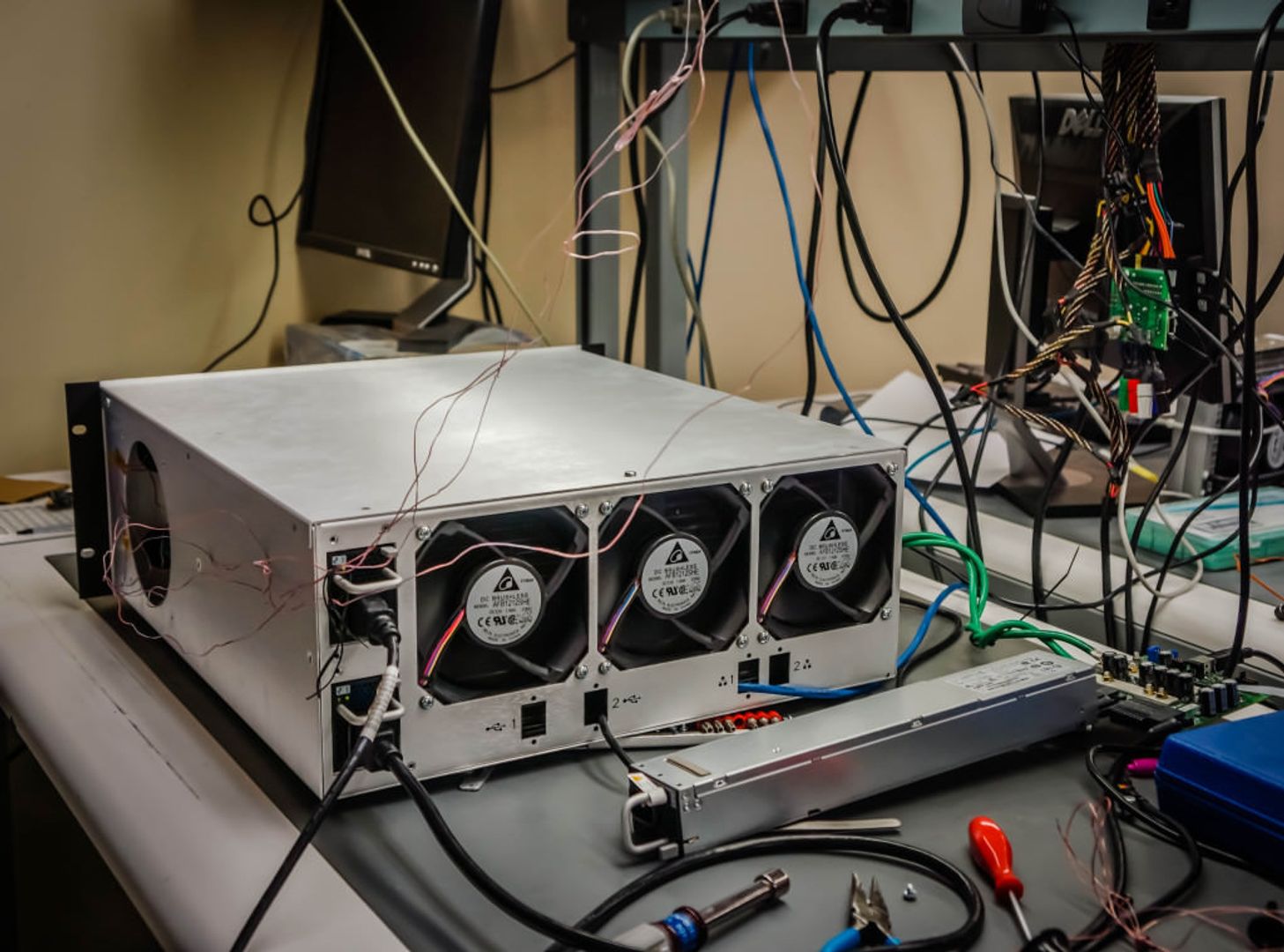
Bitcoin's mining sector faces a profitability crisis. The network hash rate suggests roughly 20% of mining operations now run underwater, with production costs exceeding revenue. This marks the longest sustained period in five months where bitcoin trades below the marginal cost to mint new coins.
The pressure shows in the data. Publicly traded miners dumped more than 32,000 bitcoin in Q1 alone to fund operations. That quarterly sell-off dwarfs the entire 2025 offload, revealing acute cash flow desperation. Miners typically hold bitcoin to benefit from appreciation, so forced selling signals distress, not strategy.
The mining economics break down like this. Each bitcoin requires energy, hardware depreciation, labor, and facility costs to produce. When spot price falls below production cost, miners bleed money on every block they validate. Smaller operations with older equipment or higher electricity expenses fail first. The survivors typically run in regions with cheap power: Iceland, El Salvador, parts of Texas, and Kazakhstan.
This squeeze serves a market function. Mining difficulty adjusts every 2,016 blocks, roughly two weeks. As unprofitable miners shut down, total hash rate declines, difficulty drops, and remaining operators recover margin. The system self-corrects, though with lag time. Five months of sustained underwater trading suggests this correction cycle ran slower than expected, or bitcoin's price collapse was sharper than typical difficulty adjustment intervals could absorb.
The public miners' balance sheets offer visibility into this pain. Their Q1 selling spree reveals that even companies with scale and access to capital cannot sustain operations without liquidating reserves. Smaller, private operations likely exited the market entirely, consolidating hash rate among the most efficient players.
Bitcoin trades around $61,000 at writing. Mining production cost varies by geography and equipment but clusters around $55,000 to $80,000 per coin depending on