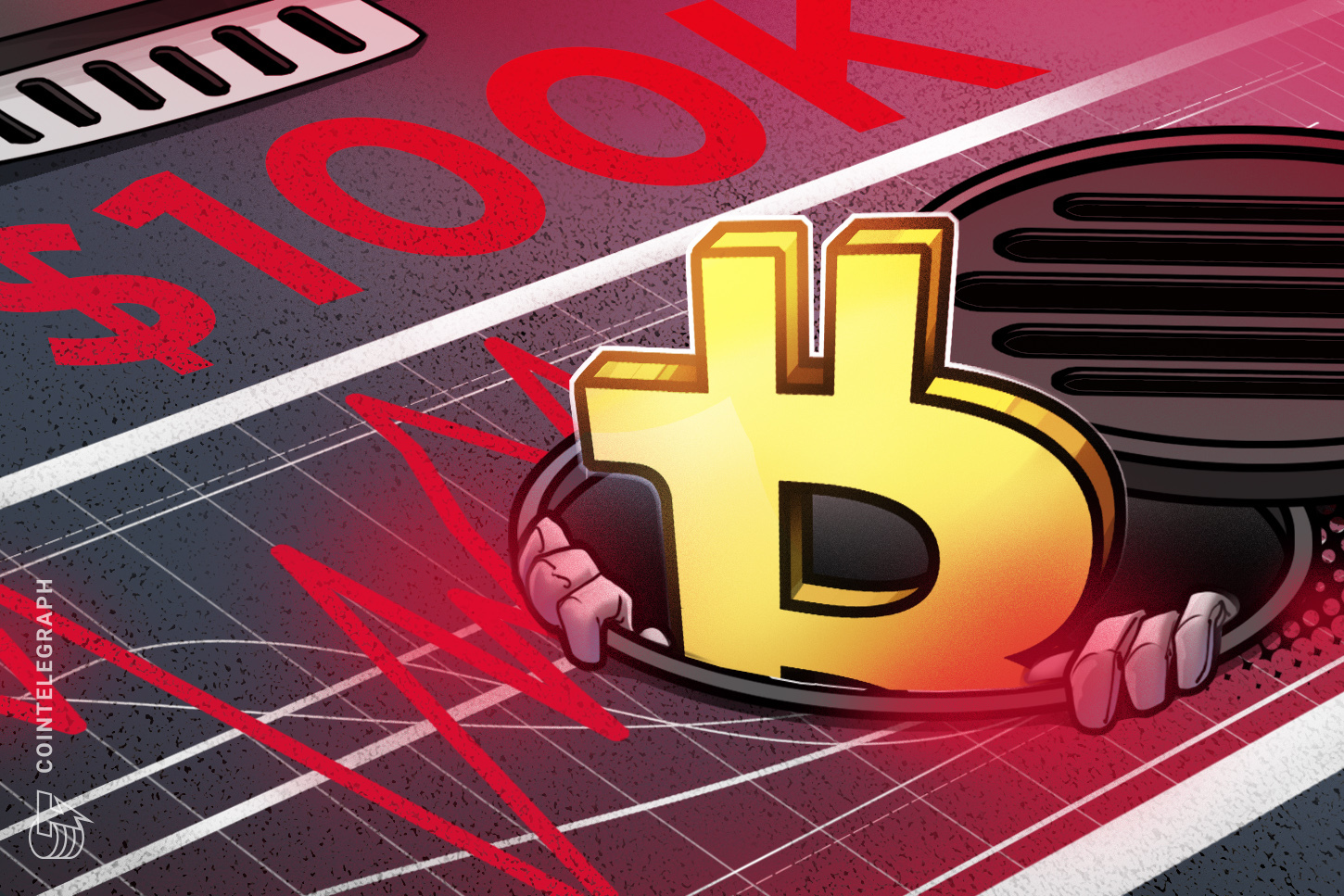
Bitcoin trades within striking distance of a technical level that historically signals capitulation and reversal. The token sits just 5,000 dollars away from its realized price, a metric that tracks the average acquisition cost of all coins in circulation weighted by transaction volume.
In Bitcoin's prior bear cycles, realized price has functioned as a floor. When BTC dips to or below this level, institutional and long-term holders face paper losses deep enough to trigger forced selling or capitulation among weak hands. That capitulation event typically precedes rebounds.
The timing matters. Bitcoin's recent decline has compressed valuations into the realized price zone, creating what analysts view as a compressed risk-reward setup. Investors who buy near realized price capture exposure at prices where historical holders break even, removing a major selling pressure layer above.
Realized price sits around 40,000 dollars, putting Bitcoin's current position roughly 10 percent above this threshold. That narrow gap reflects how severely this bear market has squeezed prices relative to average on-chain acquisition costs.
Previous cycles show pattern consistency. When Bitcoin tested realized price in 2015 and 2018, each approach preceded multi-month rallies. The metric itself carries no predictive guarantee, but it maps genuine on-chain supply mechanics. Holders who bought at the realized price carry zero incentive to sell below it except under extreme duress.
This dynamic creates asymmetric positioning. Sellers who absorbed losses at current levels already capitulated. Buyers entering near realized price purchase with minimal historical resistance above their entry, since most underwater holders have already exited or stopped selling.
The psychology shifts when realized price approaches. Fear peaks, conviction crumbles among marginal holders, and the remaining supply belongs to believers or miners forced to sell for operational costs. That transition often marks the inflection point.
Bitcoin remains volatile and dependent on macro factors, regulatory clarity, and broader crypto sentiment