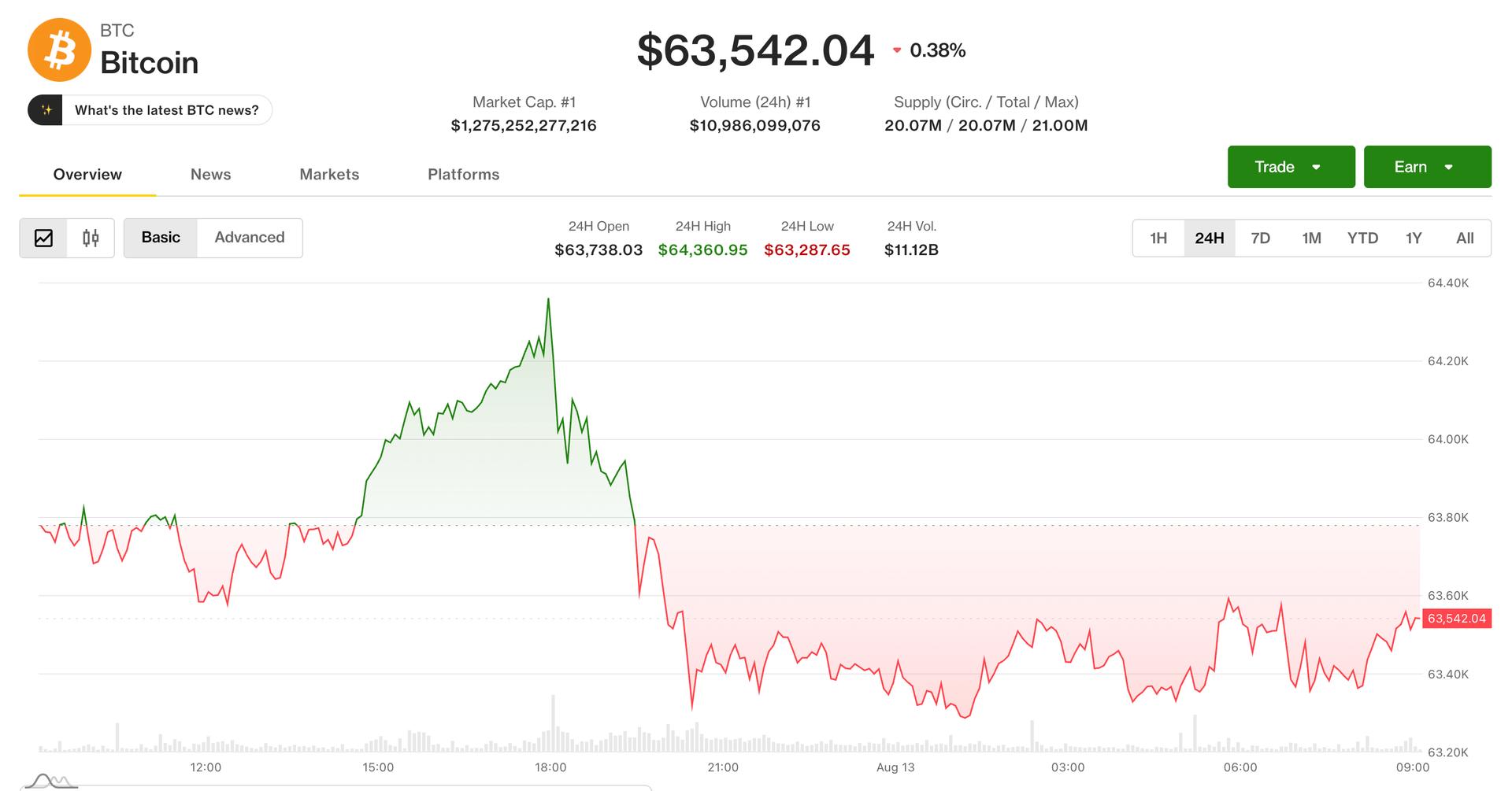
Bitcoin traded near $63,500 on Wednesday as traders digested a softer-than-feared inflation reading that failed to ignite a sustained rally. The Consumer Price Index came in line with expectations, eliminating the downside shock scenario that had weighed on crypto markets heading into the release.
The muted reaction reflects a market already priced for a stable inflation trajectory. Rather than spark fresh bullish momentum, the in-line CPI data simply removed a source of uncertainty. Traders quickly shifted focus to three upcoming events that will shape Fed policy and crypto sentiment through September.
Jackson Hole Economic Symposium tops the near-term calendar. Federal Reserve Chair Jerome Powell's speech at the annual conference carries outsized weight for asset prices, particularly regarding guidance on interest rate cuts. A dovish pivot could reignite demand for risk assets like bitcoin, which trades inversely to real yields. Conversely, hawkish remarks risk triggering another selloff in digital assets.
The jobs report lands days after Jackson Hole. Nonfarm payroll data controls the employment half of the Fed's dual mandate. A robust report could convince Powell to hold rates steady longer, pressuring bitcoin lower. A weak reading accelerates rate-cut expectations and favors crypto valuations. This binary outcome explains why traders remain cautious despite benign inflation data.
The next CPI release in September provides the third major catalyst. Month-over-month and year-over-year inflation figures will determine whether the Fed has true conviction around rate cuts or faces persistent price pressures that warrant patience. Bitcoin's $63,500 level reflects this uncertainty.
On-chain activity shows measured accumulation rather than panic selling. Large holders, or whales, continue purchasing at current prices. Spot bitcoin ETFs recorded modest inflows this week, suggesting institutional comfort with valuations but no aggressive buying. Trading volume remains elevated but directional bias is flat.
Altcoins underperformed bitcoin again, with ethereum down 3 percent on the day. The divergence highlights flight-to-quality dynamics as traders de-risk from riskier assets. Layer-2 protocols and smaller-cap DeFi tokens took the hardest hits, a pattern that typically precedes broader volatility spikes.
Technical levels matter here. Bitcoin needs to break $65,000 to reignite a rally toward $70,000. Support sits at $60,000. The range-bound price action through late August has created compressed volatility, often a precursor to sharp directional moves once catalysts hit.
Options markets price a 25 percent probability of BTC reaching $70,000 by month-end, down from 40 percent before the CPI release. Put buying has intensified around the $60,000 level, indicating hedges against deeper corrections.
Sentiment remains constructive long-term but cautious near-term. The macro regime has shifted from inflation-fighting to soft-landing narrative, but execution risk persists. Bitcoin's inability to break higher despite benign inflation data signals trader wariness ahead of Powell's Jackson Hole remarks and employment figures. The next two weeks will prove decisive for bitcoin's Q3 trajectory and whether crypto enters autumn with momentum or consolidation.