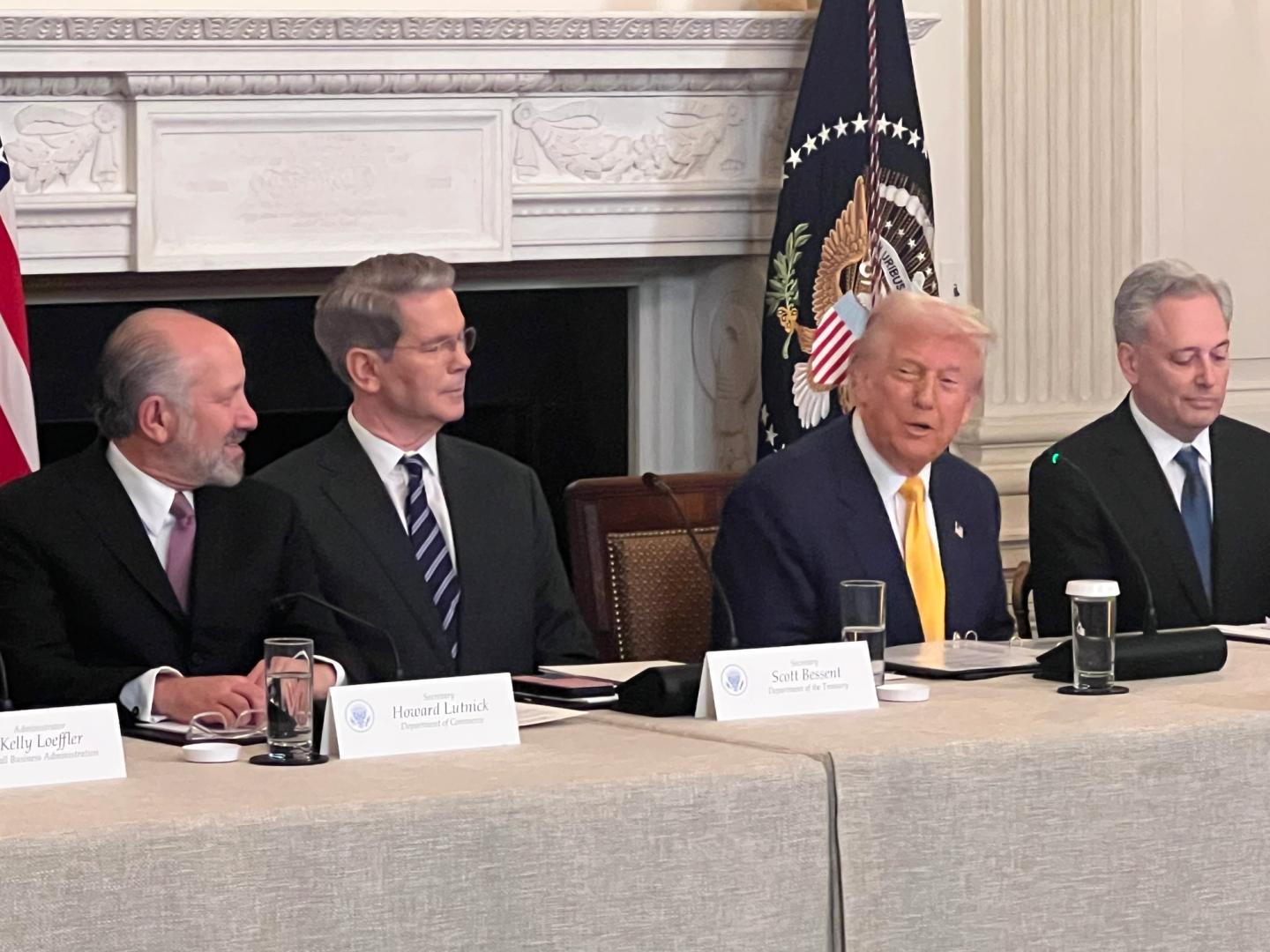
President Donald Trump plans to attend a White House meeting next week with cryptocurrency, prediction markets, and artificial intelligence CEOs, according to sources familiar with the gathering.
The meeting represents a notable shift in Trump's public engagement with the crypto sector. During his first term, the administration took a skeptical stance toward digital assets. The upcoming sit-down signals a recalibration of that posture ahead of his second term and reflects the growing political influence of blockchain and Web3 founders.
The timing matters. Trump's campaign accepted cryptocurrency donations and positioned itself as crypto-friendly during the 2024 election cycle. Major industry players including venture capitalists and exchange executives backed him financially. This meeting operationalizes those campaign commitments by bringing senior crypto figures directly into the White House for policy discussions.
The guest list reflects the breadth of what the crypto sector now encompasses. Prediction market protocols like Polymarket have grown into significant cultural and financial infrastructure. These platforms let users bet on election outcomes and geopolitical events with real money. The inclusion of prediction market CEOs signals that this corner of crypto has earned a seat at the table, despite regulatory ambiguity around wagering platforms.
AI integration into the agenda marks another trend. The crypto industry has increasingly focused on AI infrastructure, tokenized machine learning models, and decentralized AI networks. By bundling AI founders with crypto and prediction market leaders, the White House appears to be treating these sectors as interconnected innovation ecosystems rather than siloed technologies.
What this meeting could produce remains unclear. Crypto leaders likely seek regulatory clarity on staking, custody, algorithmic stablecoins, and spot Bitcoin ETF expansion. Prediction market operators probably want safe harbors to operate without enforcement action from the Commodity Futures Trading Commission or Securities and Exchange Commission. They may also push for clarity on whether these platforms fall under gambling or derivatives regulation.
For Trump, the meeting provides optics. It demonstrates responsiveness to a constituency that contributed money and grassroots support. It also positions him as pro-innovation relative to the previous Biden administration, which took a harder regulatory line on crypto through the SEC, CFTC, and Financial Crimes Enforcement Network.
The crypto industry has spent years building political capital through donations and lobbying. FIT21 and other crypto-friendly legislation gained traction in Congress under Republican leadership. A Trump meeting with sector leadership essentially validates years of industry mobilization.
Questions remain about concrete outcomes. Do crypto leaders walk away with executive orders? Do they get commitments on specific regulatory changes? Or is this largely ceremonial, a photo opportunity for both sides.
The meeting also carries downside risk for Trump. Associating too closely with prediction markets invites scrutiny around gambling regulation. Heavy-handed pro-crypto stances could alienate traditional finance constituencies. The administration will need to balance tech-forward positioning with broader financial stability concerns.
Expect announcements around regulatory streamlining or task forces after the meeting. The crypto sector views this as a turning point toward an era of lighter-touch oversight after years of enforcement-heavy regulatory regimes.