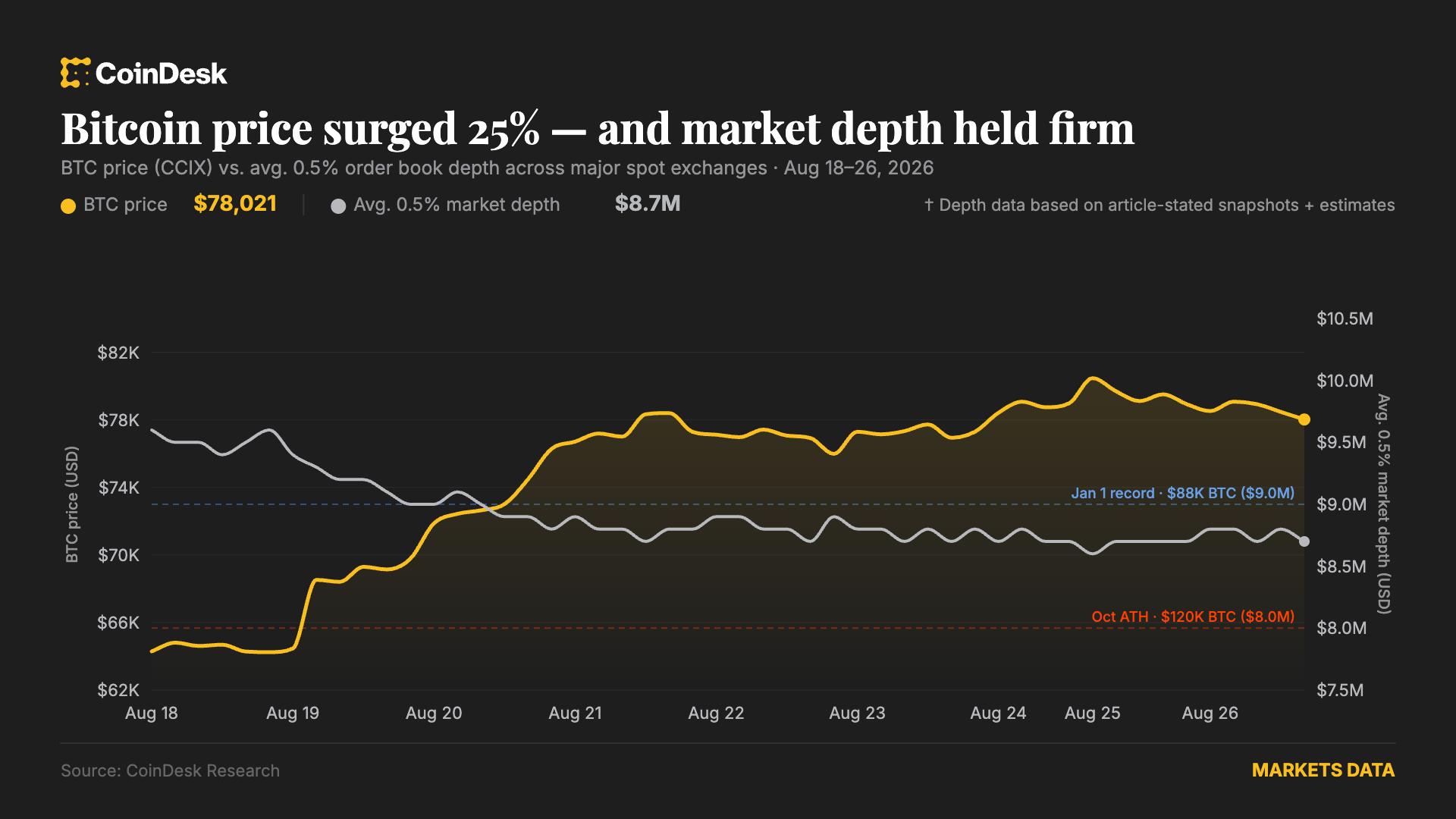
# Lesser-tracked Bitcoin Market Dynamic Lends Credibility to August Surge to $80,000
Bitcoin's climb toward $80,000 in August rests on more than retail excitement or algorithmic trading patterns. On-chain metrics reveal genuine institutional capital inflow, suggesting the rally has structural support rather than speculative froth.
The indicator in question tracks accumulated exchange inflows. When large holders deposit bitcoin into exchanges in volume, it typically signals preparation for sale. Conversely, when major players withdraw coins to cold storage, it demonstrates conviction in holding through price rallies. During bitcoin's August advance, withdrawal patterns showed net outflows, meaning long-term holders accumulated rather than distributed. This behavior contradicts the typical distribution pattern seen during hype-driven pumps.
This dynamic matters because it separates real accumulation from noise. Retail traders generate volume spikes without necessarily committing capital at scale. Institutions move fewer coins but with larger average positions. The August surge coincided with consistent withdrawal activity, suggesting entities holding significant bitcoin positions remained bullish through the run.
Several factors converged to create this environment. Spot bitcoin ETF inflows remained steady throughout the period, with products like the iShares Bitcoin Trust and Fidelity Bitcoin Trust tracking consistent demand. These vehicles allow traditional finance participants to gain exposure without operational custody challenges. The combination of ETF purchases and on-chain withdrawal patterns creates a two-layer verification system. Both channels pointed toward sustained accumulation rather than temporary euphoria.
The $80,000 level itself carries technical weight. Bitcoin had tested this region multiple times in previous cycles, making it both a psychological and structural resistance point. Breaking through required coordinated buying pressure, not random pumps. The withdrawal data confirms that coordinated buying actually occurred.
This observation contradicts bearish narratives that August's rally lacked conviction. Some analysts pointed to reduced volatility and sideways trading earlier in 2024 as evidence that buyers had lost interest. The exchange withdrawal pattern flips that script. Reduced volatility with consistent capital inflow represents the healthiest bull market structure. It eliminates whipsaw risk while confirming that patient capital continues entering.
Mining data reinforces this picture. Bitcoin miners' reserve balances remained stable during the rally, indicating they resisted the temptation to sell into strength. Miners typically sell aggressively into rallies to cover operational costs. Stable reserves suggest operational health without desperation selling. This removes a major selling pressure vector from the supply side.
The lesson extends beyond August's price action. This lesser-tracked indicator separates market structure from price movement. An indicator can appear boring in real-time. Price moves sideways or grinds higher without dramatic swings. Yet on-chain behavior reveals whether that grinding reflects serious capital deployment or hollow movement.
Bitcoin reaching $80,000 during this period therefore signals confidence from entities that can actually move markets. Retail traders might exit for profit. Institutions with consistent withdrawal patterns demonstrate they intend to hold through higher levels. That distinction fundamentally changes the probability assessment for further upside.
This on-chain narrative will remain relevant as bitcoin approaches potential new highs. Watch whether exchange inflows resume during rallies. If they do, the bull thesis weakens. If they continue to decline, institutional commitment remains intact. The price technically follows the market structure, not the reverse.