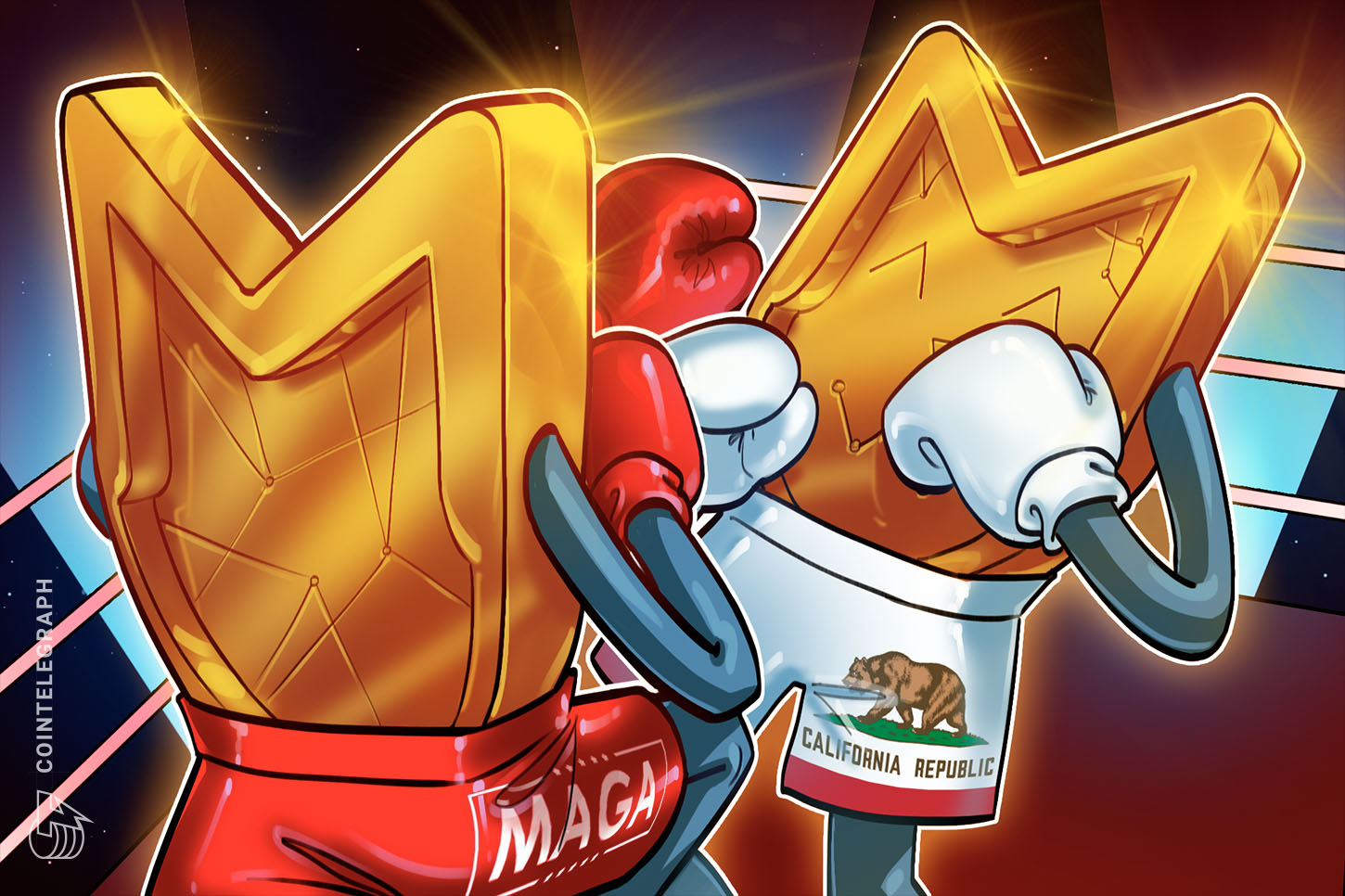
California's state senate has advanced legislation that directly targets memecoin issuance by federal public officials, marking a rare state-level intervention into cryptocurrency governance. The bill prohibits the listing and distribution of memecoins issued by federal officials to California residents, with lawmakers framing the measure around conflicts of interest and pay-to-play concerns.
The timing reflects growing anxiety around political figures entering crypto markets. Recent months have seen increased memecoin launches tied to political personalities, raising questions about whether these tokens function as legitimate projects or extractive financial instruments targeting retail supporters. California's approach treats the issue as a consumer protection problem rather than a blanket crypto ban, narrowing the scope to a specific risk category.
The bill's language centers on "pay-to-play arrangements." This phrasing suggests legislative concern that supporters might purchase memecoins expecting political favors or access in return. Such dynamics would blur the line between political donations, which face strict disclosure and contribution limits, and unregulated token purchases that bypass campaign finance rules entirely. The conflict-of-interest framing carries weight because federal officials theoretically influence markets and policy that could benefit tokens they personally promote.
This creates a novel regulatory problem. Traditional securities laws already exist to prevent insiders from profiting off positions they influence. But memecoins typically dodge securities classification through community claims that tokens lack intrinsic value or utility. California's bill sidesteps the securities debate and instead targets the source: federal officials themselves.
Implementation requires defining "memecoin." The bill would need to distinguish between tokens with genuine utility or community governance structures versus those created primarily for promotional or speculative purposes. This classification question has plagued regulators across jurisdictions. The SEC takes a case-by-case approach; some countries ban tokens outright; others regulate by function rather than name.
Broader implications extend beyond California. If the bill passes the state assembly and governor signs it, it establishes precedent that states can regulate crypto activity by public officials independently of federal law. This fragments the regulatory landscape further. A federal official banned from issuing memecoins in California could theoretically still list them in Texas or Florida, creating jurisdictional arbitrage opportunities.
The measure also raises free speech questions. Courts have granted politicians broad latitude to engage in commercial speech. Prohibiting memecoins specifically rather than all token issuance might face First Amendment challenges, though lawmakers could argue the ban targets conduct (pay-to-play schemes) rather than speech itself.
California's move reflects a pragmatic middle ground. The state avoids crypto-hostile rhetoric while targeting a specific, easily defensible problem: eliminating potential corruption vectors. Rather than banning crypto generally or regulating all tokens, the legislature focuses on a small subset of issuers and arrangements that present genuine governance risks.
The bill's path forward depends on assembly passage and gubernatorial signature. Even if signed into law, enforcement becomes the real test. State authorities would need to monitor exchange listings, track token issuance patterns, and identify federal officials involved in launches. Offshore exchanges and decentralized platforms complicate enforcement. However, targeting major U.S.-based exchanges where most retail users trade creates meaningful friction for memecoin promoters.
This legislation signals that states increasingly view crypto governance as within their purview, particularly when federal officials are involved.