# Market Makers Harvest Bitcoin Volatility Yield Without Taking Directional Risk
Bitcoin's climb back above $80,000 has triggered a familiar pattern among professional trading desks. Market makers are positioning themselves to profit from price swings without committing capital to whether bitcoin rises or falls. This strategy reflects how institutional participation has fundamentally reshaped crypto trading infrastructure.
The mechanics work straightforwardly. Market makers post buy and sell orders on both sides of the order book, capturing the spread between bid and ask prices. On centralized exchanges, this spread typically narrows as liquidity deepens. Sophisticated firms compensate by scaling volume and layering multiple positions across venues. They earn steady yield from countless small trades rather than banking on directional accuracy.
Bitcoin's recent volatility creates ideal conditions for this approach. When prices swing sharply intraday, the value of that bid-ask spread compounds across thousands of trades. A market maker executing millions of dollars in daily volume can extract meaningful returns even from razor-thin 2 to 5 basis point margins. The strategy works particularly well during rallies when retail traders and institutions actively rebalance positions, generating the order flow that market makers feed on.
This contrasts sharply with speculative traders betting directionally on $80,000 bitcoin or higher. Those traders assume price will move further in their chosen direction. Market makers assume the opposite. They want chop. They want reversals. They want uncertainty because uncertainty keeps traders moving in and out of positions.
Centralized exchanges including Coinbase, Kraken, and Binance actively court these firms with rebate programs. Market makers receive cash incentives for providing liquidity. On some platforms, aggressive makers earn 0.1 basis points per trade while aggressive takers pay 0.25 basis points. Over the course of a month, a firm moving $100 million daily can pocket six figures purely from exchange rebates.
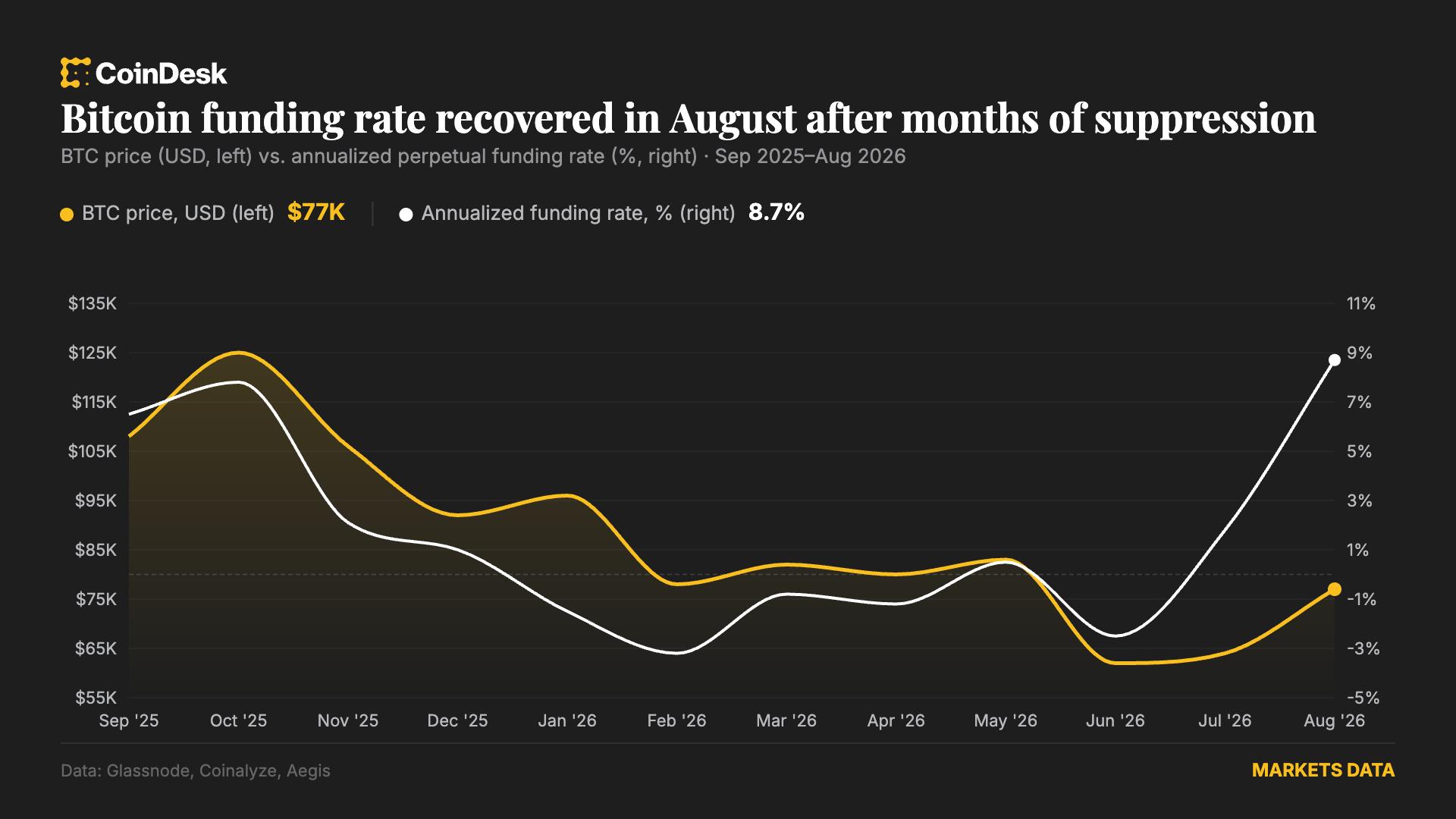
The strategy also extends into perpetual futures contracts, where funding rates create additional yield opportunities. When bitcoin rallies aggressively, perpetual markets typically trade at a premium to spot prices. Long traders pay funding fees to short traders. Sophisticated market makers simultaneously hold physical bitcoin while shorting perpetual contracts, pocketing the funding premium. This amplifies returns further.
Decentralized exchanges have begun competing for this volume through their own incentive programs. Protocols like Uniswap and dYdX offer trading rebates and liquidity mining rewards. However, the inherent latency and complexity of on-chain execution still favors centralized venues for high-frequency operations.
The rise of this strategy reflects maturation in crypto markets. Institutional money entered crypto not just to make directional bets like hedge funds, but to provide infrastructure services. Market makers occupy a middle position. They're not pure service providers like custodians or clearinghouses. They're not speculators betting on price direction. They're yield farmers capturing the spread between supply and demand.
This dynamic matters because it stabilizes exchange orderbooks and reduces price slippage for all traders. When professional market makers step back from a venue, retail traders immediately encounter wider spreads and higher execution costs. The inverse also holds. Dense market maker participation correlates with tighter spreads and better price discovery.
Bitcoin's current rally will likely sustain this market maker activity through year-end. As long as volatility persists and volume remains elevated, firms can harvest spreads without directional risk. The strategy works until it doesn't, but for now the infrastructure remains flush with patient capital betting on the only certainty that exists in markets. Someone always wants to trade.