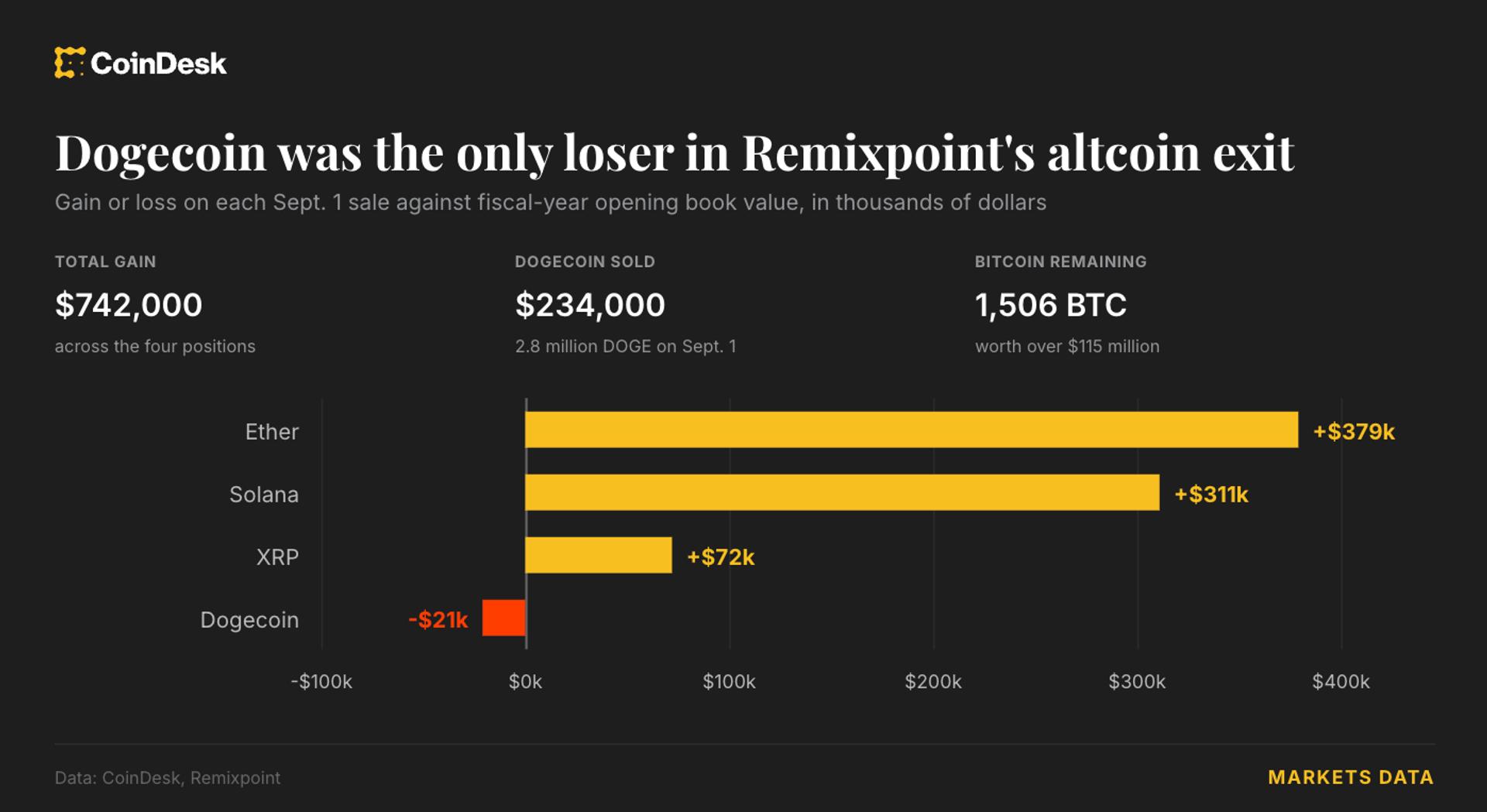
Remixpoint, the Japan-listed cryptocurrency investment firm, liquidated its altcoin positions in a strategic pivot toward bitcoin concentration, with one notable exception that turned sour. The company closed out holdings in Ethereum, Solana, and XRP at profitable prices during a period of digital asset recovery, but its Dogecoin exit landed below where the meme coin started the fiscal year.
The move reflects a broader institutional reshuffling happening across crypto asset managers. As bitcoin establishes itself as the primary institutional-grade digital commodity, firms managing public portfolios face shareholder pressure to consolidate exposure around the largest, most liquid asset. Remixpoint's choice to anchor its holdings in bitcoin while trimming secondary tokens reveals how risk management frameworks at publicly traded companies diverge from retail trading patterns.
Dogecoin's underperformance relative to the company's entry price illustrates the volatility gap between bitcoin and established altcoins. While DOGE rallies on social sentiment and celebrity endorsements, institutional money gravitates toward assets with deeper order books and lower correlation drag. Ethereum, despite its technical complexity, commands institutional confidence due to its $40-billion-plus daily transaction volume and dominant position in DeFi. Solana attracted gains likely due to its recent network stability improvements and renewed developer activity. XRP benefited from renewed clarity around its regulatory status following the SEC settlement with Ripple Labs in 2023.
The timing matters here. Remixpoint's altcoin liquidation occurred during a period when bitcoin surged past previous resistance levels and altseason enthusiasm waned. Institutions often execute these rotations when conviction in a particular asset weakens relative to the market's risk-on sentiment. Selling winners like SOL and ETH to concentrate in bitcoin represents a classic de-risking move, locking gains while reducing portfolio variance.
For Dogecoin holders, the trade underscores a hard reality. While DOGE maintains massive retail appeal and community strength, institutional capital treats it as speculative leverage rather than a genuine store of value. The meme coin lacks the technical development roadmap of Ethereum, the ecosystem adoption velocity of Solana, or the payment network moat of Bitcoin. When fund managers face quarterly reporting requirements, Dogecoin losses become transparency problems.
Remixpoint's shift also signals confidence in bitcoin's near-term trajectory. Japan's regulatory environment under the Payment Services Act grants these firms operational legitimacy, yet they still face domestic investor expectations for prudent capital allocation. Concentrating exposure in the most volatile yet institutionally backed asset class indicates management believes bitcoin offers better risk-adjusted returns than diversification across layer-one protocols.
The broader pattern here matters for the crypto market structure. As more publicly traded firms consolidate altcoin positions into bitcoin, they're reshaping token distributions and shifting who holds what. Retail investors often hold diversified altcoin portfolios. Institutions increasingly hold bitcoin. This bifurcation deepens the divide between retail speculation and institutional settlement layers, which ultimately determines which networks attract serious developer talent and enterprise adoption.