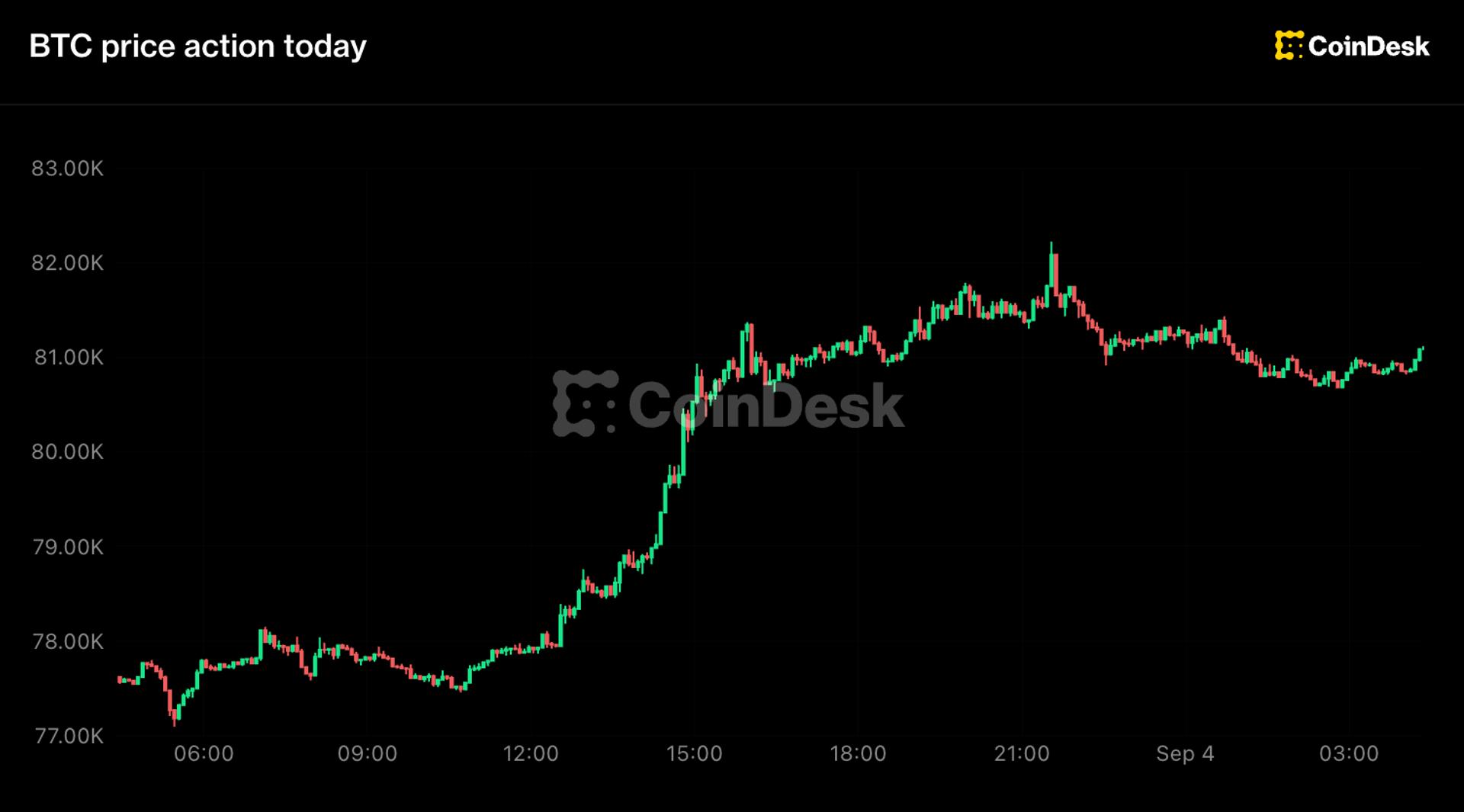
Bitcoin crossed back above the $81,000 mark on Friday as market participants aggressively reduced rate hike expectations for the Federal Reserve's September decision. The move reflects a broader shift in how crypto traders price in macroeconomic conditions, with probability of a Fed hike falling to near 50-50 odds.
The broader crypto market followed Bitcoin's lead. Every major token posted gains on the session, signaling coordinated risk-on positioning across digital assets. Zcash delivered the strongest performance, jumping 15% and significantly outpacing Bitcoin's more modest recovery. This disparity highlights how alternative tokens can move independently from Bitcoin when market conditions shift, particularly when privacy coins attract fresh capital flows.
Bitcoin's recovery to above $81,000 represents a technical rebound after recent weakness. The move came directly as Fed futures markets repriced expectations around the central bank's September policy decision. When rate hike odds moved closer to a true coin flip, traders unwound some of the defensive positioning that had weighed on risk assets throughout the week.
Most major tokens remain nearly flat on a weekly basis despite Friday's session strength. This pattern suggests the rally occurred off lower levels, with traders covering short positions rather than establishing new bullish bets ahead of the weekend. Ethereum, Solana, and other top-10 tokens participated in the bounce but lacked the conviction that typically accompanies meaningful breakouts.
The Zcash outperformance tells a different story. A 15% single-day gain for a privacy-focused token stands out in an environment where alternative narratives typically take a backseat to macro macro concerns. This could indicate specific demand for privacy features or position accumulation ahead of anticipated developments. Privacy coins historically attract cycles of demand when regulatory attention intensifies or when users seek alternatives to transparent blockchain architectures.
Friday's action reflects the current state of crypto markets: deeply embedded with macro surveillance. The Federal Reserve's policy path remains the primary driver of capital flows across digital assets. When traders see evidence that rate increases may pause or become less aggressive, risk assets respond immediately. Bitcoin's correlation to rate expectations has solidified over recent years as institutional capital has flowed into the space.
The week's overall flatness for major tokens despite Friday's session gains suggests consolidation more than trending behavior. Traders may be waiting for additional Fed communications or economic data before committing fresh capital. The September rate decision looms as a key catalyst. Probability shifts based on incoming labor data, inflation readings, and Fed speakers' remarks will likely drive continued volatility through late summer.
This environment favors tactical traders over position holders. Bounce plays following macro reversals work until they don't, and week-to-week flatness often precedes directional breaks. The gap between Zcash's 15% jump and Bitcoin's steadier recovery suggests market participants are differentiating between macro plays and alternative narratives. Whether that discrimination continues or converges back to Bitcoin dominance will shape the next leg of market direction.