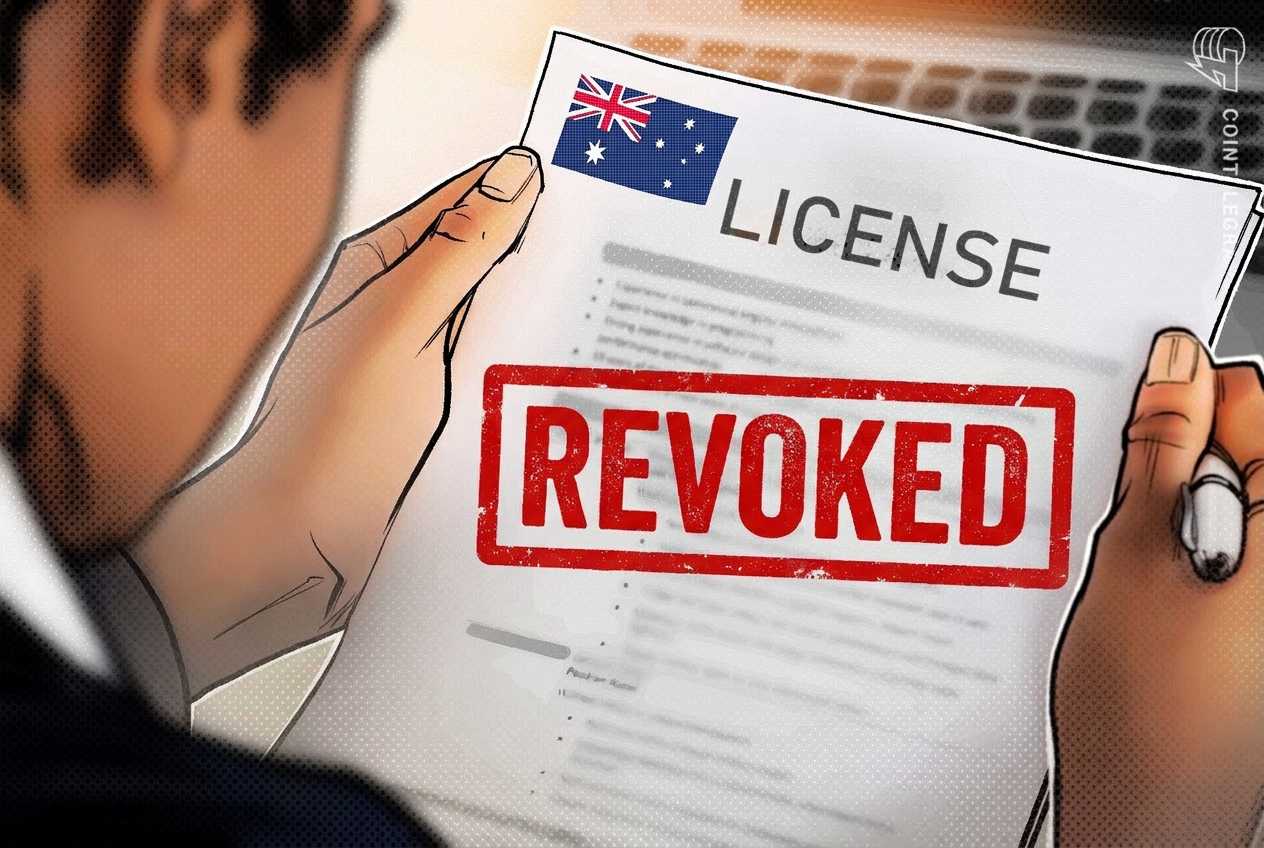
Australia's financial regulator AUSTRAC removed 45 cryptocurrency and remittance service provider registrations over the past year, according to the agency's latest enforcement update. The removals included canceled, suspended, and unrenewed registrations across digital asset platforms and money transfer operators.
The action represents AUSTRAC's ongoing crackdown on unlicensed and non-compliant operators in the crypto and remittance space. The regulator operates under the Anti-Money Laundering and Counter-Terrorism Financing Act, which requires crypto exchanges and remittance providers to maintain active registrations and meet compliance standards. Failure to comply results in registration removal and potential criminal penalties.
A notable case involved GetCoins, a platform AUSTRAC targeted to disrupt organized investment scams. The agency did not disclose specific details about GetCoins' violations, but the enforcement action signals AUSTRAC's willingness to move quickly against operators suspected of facilitating fraud schemes. Investment scams utilizing crypto platforms have become a persistent problem in Australia, with victims losing millions annually to schemes involving fake trading apps and fraudulent investment promises.
The 45 removals over twelve months represent steady regulatory pressure. AUSTRAC maintains a public register of approved crypto and remittance providers, and operators must renew registrations annually while maintaining compliance with transaction monitoring, customer due diligence, and suspicious activity reporting requirements. Non-compliance triggers warnings, suspension, or permanent removal from the register.
Australia's approach differs from some other jurisdictions. Rather than outright bans, AUSTRAC uses a registration system that creates transparency and enforces accountability. Operators who lose their registration cannot legally offer services in Australia, effectively barring them from the market. This framework applies to both centralized exchanges and remittance services, treating them similarly under anti-money laundering rules.
The timing reflects broader regulatory maturity across Asia-Pacific. Australia joined other major economies in implementing stricter crypto oversight following the FTX collapse and various exchange failures. AUSTRAC's registration system forces exchanges to maintain capital reserves, segregate customer funds, and implement robust cybersecurity measures. These requirements pushed weaker operators out of the market and concentrated activity among well-funded, compliant platforms like Kraken, Swyftx, and CoinSpot.
The GetCoins case underscores a second enforcement priority. Organized investment scams have become increasingly sophisticated, with criminals using legitimate-appearing platforms, celebrity endorsements, and aggressive marketing to deceive victims. AUSTRAC's action against GetCoins reflects coordination with law enforcement to target the operational infrastructure behind these schemes. The agency works closely with the Australian Federal Police and other agencies to identify and shut down organized fraud networks.
Looking forward, AUSTRAC faces pressure to balance regulation with innovation. Crypto businesses argue that compliance costs create barriers to entry, potentially favoring large incumbents. However, the agency maintains that registration requirements protect consumers and prevent money laundering. Recent parliamentary inquiries have examined whether Australia's framework keeps pace with evolving threats, including decentralized finance platforms and non-custodial services that operate outside traditional regulatory perimeters.
The 45 removals demonstrate that AUSTRAC treats registration breaches seriously. Operators cannot treat compliance as optional. For legitimate platforms, this creates competitive advantage by removing bad actors. For consumers, it provides recourse through Australia's financial complaints authority if registered providers fail. The enforcement pace suggests AUSTRAC will continue removing non-compliant operators throughout 2024.