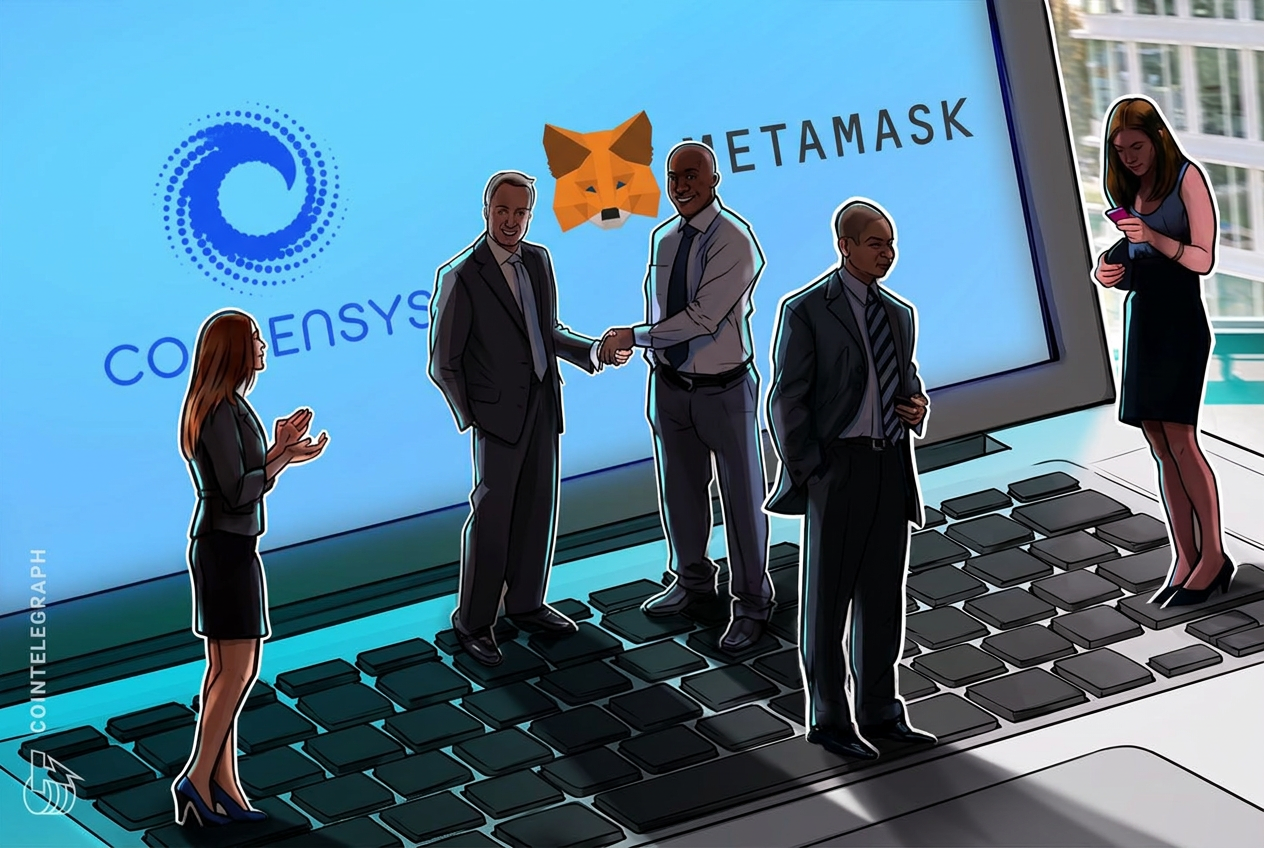
ConsenSys is breaking itself in two. The Ethereum infrastructure giant announced plans to separate its consumer-facing MetaMask wallet from its institutional blockchain and protocol operations, creating two independent companies.
The split positions MetaMask as a standalone entity focused on retail cryptocurrency adoption and user-facing services. Meanwhile, the remaining ConsenSys operation will concentrate on Ethereum protocol development, enterprise blockchain infrastructure, and institutional products. The move reflects a strategic decision to operate two distinct business models under separate leadership and governance structures.
MetaMask controls roughly 30 million monthly active users and functions as a primary entry point for retail access to decentralized finance, NFTs, and Ethereum applications. The wallet generates revenue through swap integrations, staking services, and token bridge features. Separating it allows MetaMask to pursue aggressive growth in consumer markets without organizational constraints tied to ConsenSys' institutional focus.
ConsenSys was founded by Joseph Lubin, Ethereum co-founder, in 2014. The company built infrastructure tools including Hardhat (developer framework), Infura (API service), and Truffle Suite (smart contract development). It also maintains significant Ethereum protocol involvement through participation in core development. The institutional division will retain these operations and pursue enterprise blockchain solutions with stronger commercial discipline.
This restructuring addresses a longstanding tension in ConsenSys' business model. Institutional blockchain infrastructure requires lengthy sales cycles, compliance frameworks, and relationship-based pricing. Consumer wallet services demand rapid iteration, viral growth mechanics, and aggressive feature releases. These operational demands conflict fundamentally. By splitting, each entity optimizes for its actual market dynamics.
The timing follows ConsenSys' broader strategic realignment. The company laid off roughly 14 percent of its workforce in 2023 amid cryptocurrency market volatility. The layoffs hit both divisions but signaled internal recognition that ConsenSys needed structural changes. This separation formalize that shift.
For the Ethereum ecosystem, the split raises questions about protocol governance influence. ConsenSys maintains outsized influence on Ethereum development decisions through its developer tools and protocol contributions. Separating its institutional operations from its consumer wallet removes potential conflicts of interest but also diffuses its concentrated influence across two entities.
The consumer MetaMask business faces intensifying competition from centralized exchanges like Coinbase and Kraken, which offer integrated wallet functionality with simpler onboarding. Competitors like Phantom (Solana-focused) and Rainbow also target retail users with streamlined experiences. As an independent entity, MetaMask can pursue acquisitions and partnerships that ConsenSys' institutional positioning might have discouraged.
ConsenSys' institutional division gains focus for selling to enterprise clients who require formal governance, liability clarity, and separation from consumer products. Banks and traditional enterprises prefer doing business with specialized providers rather than hybrid entities managing competing priorities.
The mechanics of the split remain under development. Details on funding, leadership structures, and timeline for independence are forthcoming. ConsenSys confirmed the restructuring plans but kept specific operational details private.
This separation reflects the broader maturation of Ethereum infrastructure. Early-stage blockchain companies often combine consumer and institutional businesses. Mature ecosystems separate them. ConsenSys' split signals Ethereum infrastructure has reached sufficient scale and sophistication to support specialized, focused providers rather than generalist platforms.