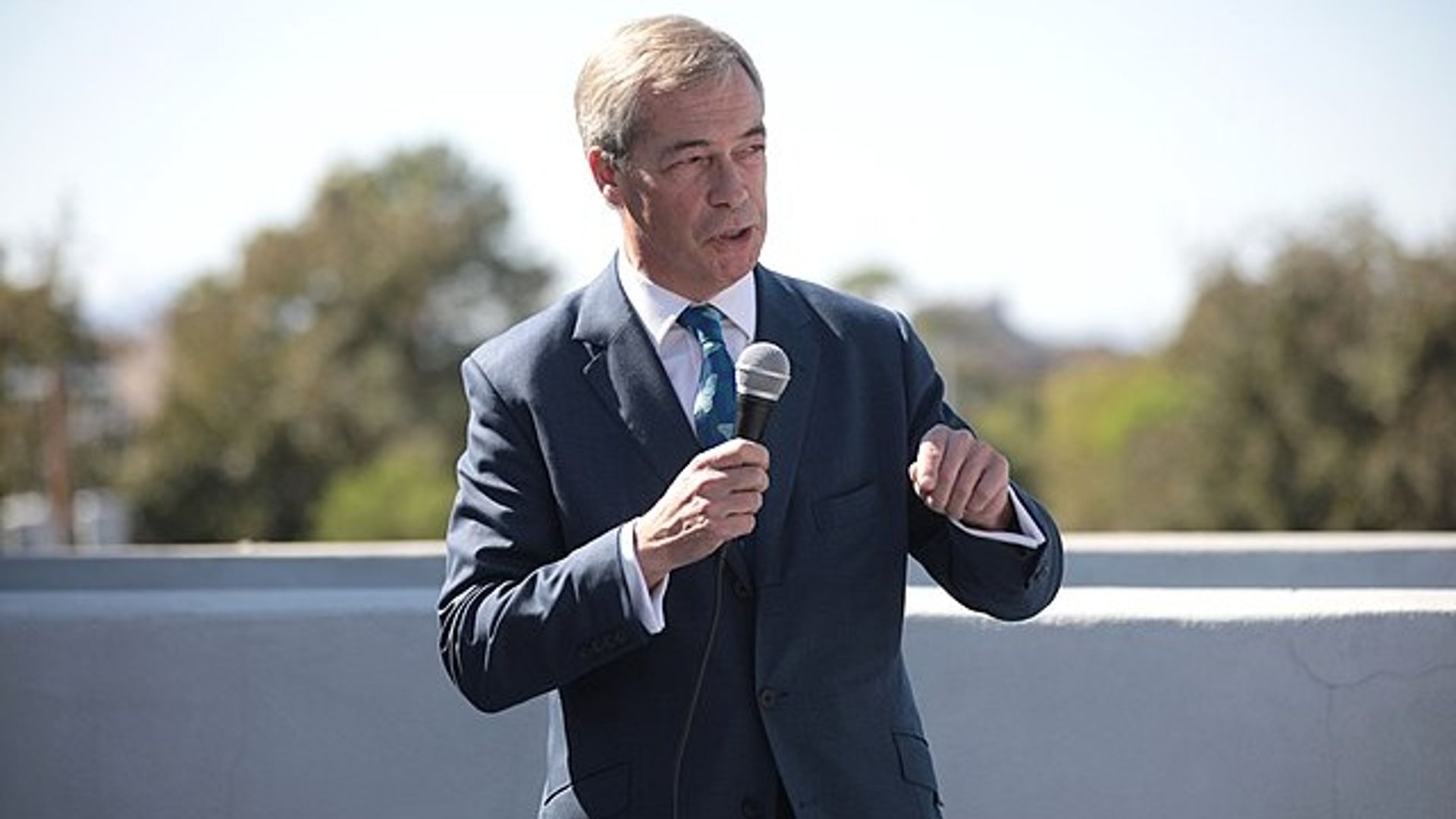
Nigel Farage's Reform UK party received $97 million in donations from two cryptocurrency billionaires within a single 24-hour period, establishing a new benchmark for individual political donations in British history. The donations arrive as the crypto industry substantially increases its political engagement within the U.K., signaling a shift toward direct capital deployment in electoral outcomes.
The donations represent the largest individual political contributions ever recorded in the U.K. Combined, they dwarf previous donation records and reflect the wealth concentration within crypto circles. The timing coincides with Reform UK's rising political prominence, particularly among voters dissatisfied with traditional Conservative and Labour positions.
Reform UK, led by Farage, operates as a populist party positioning itself against establishment politics. The party has gained traction on immigration, sovereignty, and economic policy. Farage, a veteran political operator who previously led the Brexit Party and UKIP, has repositioned Reform UK as an alternative vehicle for voters seeking anti-establishment candidates.
The donor identities connect to major crypto holdings and business operations. Cryptocurrency billionaires have increasingly moved from purely industry advocacy into direct political funding. This shift reflects growing recognition that regulatory outcomes, tax policy, and financial infrastructure decisions directly impact blockchain ecosystems and token valuations.
The $97 million haul demonstrates how crypto wealth translates into political leverage in Western democracies. Unlike traditional industries where political donations remain dispersed across multiple candidates and parties, crypto billionaires have shown willingness to concentrate resources behind specific political movements aligned with their stated values.
U.K. political funding rules differ from American structures. The U.K. permits individual donations but requires transparency through Electoral Commission filings. The donations will appear in public records, creating visibility around crypto industry preferences in British politics. This contrasts with American super-PAC structures, where donation sources can remain obscured.
The donations raise questions about regulatory expectations under a Reform-led or Reform-influenced government. Crypto industry actors typically support lighter regulatory frameworks and favorable tax treatment for digital assets. Donations at this scale create implicit expectations for policy alignment.
Traditional political parties have generally avoided concentrated crypto funding. The Conservative Party and Labour maintain broader donor bases across financial services, real estate, and industrial sectors. Reform UK's willingness to accept massive single donations from crypto sources positions the party as the primary political vehicle for concentrated blockchain wealth in British politics.
Market observers view the donations as a test of whether U.S.-style crypto political influence can replicate in U.K. governance structures. Successful policy outcomes flowing from Reform UK's rise could establish a template for crypto industries globally seeking political advantage.
The donations arrive amid broader crypto industry lobbying efforts across Europe and North America. Industry groups push for regulatory frameworks balancing innovation with consumer protection. Direct political funding represents an escalation beyond traditional lobbying infrastructure.
Reform UK's electoral prospects remain uncertain. Opinion polls show the party drawing protest votes but facing structural barriers to Westminster seat conversion. Yet the $97 million donation signals that crypto billionaires view Reform UK as a vehicle worth backing regardless of immediate electoral probability. The deposits front-load capital before potential governance involvement.