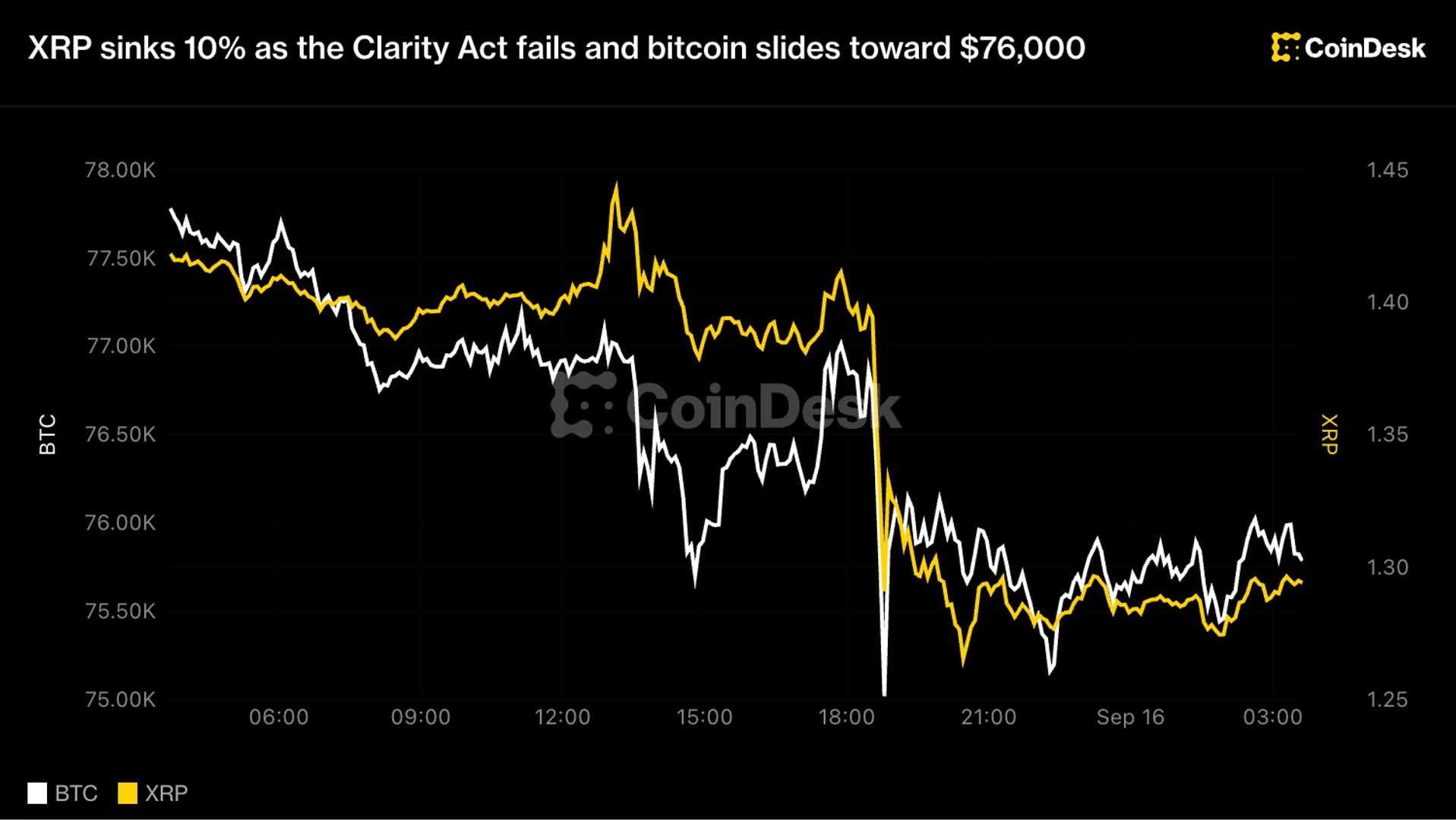
XRP plummeted 10% on Wednesday after the Senate's failed procedural vote on the Clarity Act, dragging the broader crypto market lower as bitcoin approached the $76,000 support level.
The Senate voted 49-50 on the procedural motion, leaving the bill 11 votes short of the 60 needed to advance. The Clarity for Payment Stablecoins Act, championed by Senators Cynthia Lummis and Kirsten Gillibrand, would have established clearer regulatory frameworks for cryptocurrency payments and stablecoins. The defeat represents a setback for crypto advocates who viewed the bipartisan legislation as a path toward rational regulation.
XRP bore the brunt of the selloff. Ripple's native token, which had rallied on hopes the bill would advance, lost nearly a tenth of its value in the hours following the vote. The decline reflected investor disappointment that clarity on crypto classification remained elusive. Other major tokens followed: ethereum dropped roughly 5%, bitcoin lost 2.5%, and solana fell 3%.
The Clarity Act's failure underscores the broader challenge facing crypto regulation in Washington. Despite bipartisan support from Lummis and Gillibrand, Republican and Democratic senators fragmented on the measure. The vote exposed divisions within both parties over how to handle digital assets. Some lawmakers worry the bill doesn't go far enough on investor protection, while others fear overregulation could stunt innovation.
The timing compounds recent volatility. Bitcoin had climbed above $100,000 in December following Donald Trump's election victory and promises of a pro-crypto stance. That momentum fizzled in January as profit-taking kicked in and macroeconomic headwinds returned. The failed Senate vote removes a near-term catalyst for a rebound.
For XRP specifically, the loss cuts deeper. Ripple has long positioned itself as the regulated alternative to other cryptocurrencies. XRP holders and the company itself had bet that clearer stablecoin rules would benefit Ripple's ecosystem and cross-border payment infrastructure. With the bill stalled indefinitely, that narrative collapsed.
The market now faces multiple regulatory unknowns. The Securities and Exchange Commission continues to assert jurisdiction over certain tokens. The Commodity Futures Trading Commission pursues its own enforcement agenda. State-level regulations remain fragmented. The absence of federal clarity means projects operate in legal gray zones, deterring institutional investment and retail confidence.
Lummis and Gillibrand promised to bring the bill back. Both indicated the vote was preliminary and reintroduction remained possible. However, with the Senate portfolio crowded and other legislative priorities competing for attention, a swift return appears unlikely. The 2024 midterm cycle could complicate matters further.
Bitcoin's slide toward $76,000 signals traders cutting exposure across major holdings. A break below that level could trigger cascading stops and accelerate selling. Ethereum's weakness parallels bitcoin's, suggesting broader asset class capitulation rather than rotation to alternative tokens.
The failed vote serves as a reminder that regulatory hope remains a double-edged sword in crypto. When legislation appears likely, it fuels rallies. When votes fail, the disappointment hits hard. Until Congress delivers actual clarity, tokens will swing on each procedural motion rather than underlying fundamentals.