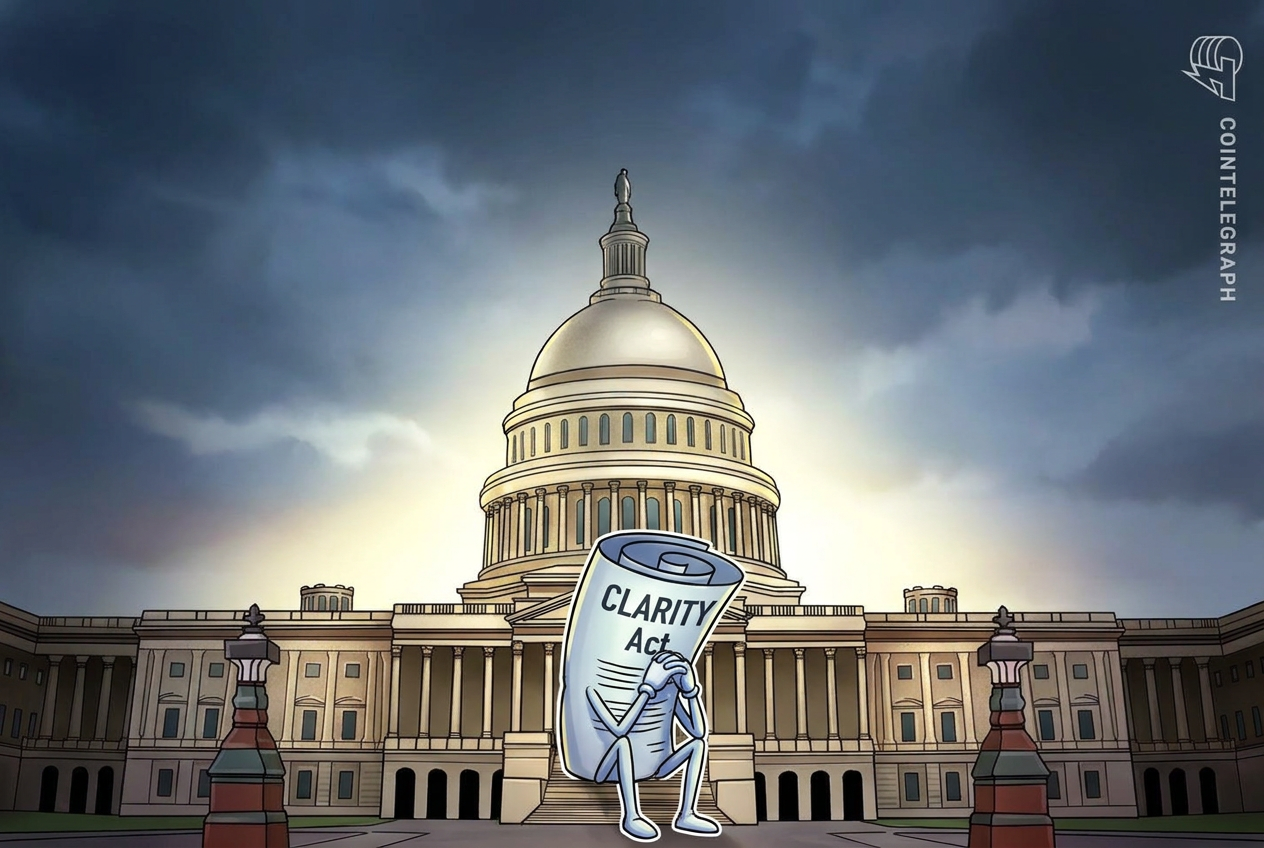
The CLARITY Act, stalled in the current Congress, faces a potential revival during the lame-duck session before lawmakers leave office, according to Adrian Wall, managing director of the Digital Sovereignty Alliance.
Wall's comments signal renewed momentum for a bill designed to establish clearer market structure rules for cryptocurrency trading and custody. The legislative push involves senators from both parties, suggesting the bill has cross-party appeal despite crypto regulation's typical partisan divides.
The CLARITY Act (Crypto Law and Regulatory Improvements for You Act) targets fragmentation in crypto market oversight. Currently, digital assets fall under multiple regulatory regimes. The SEC treats some tokens as securities. The CFTC handles derivatives. The OCC and state banking regulators govern custodians. This patchwork creates compliance nightmares for exchanges, wallet providers, and trading platforms. The bill aims to consolidate these frameworks and define regulatory jurisdiction more precisely.
Lame-duck sessions offer political cover for contentious votes. Outgoing lawmakers often feel freer to vote based on principle rather than electoral calculation. This dynamic has historically enabled passage of bills that might fail during regular sessions. For crypto, a lame-duck push makes sense. Crypto regulation polls well with younger voters but splits older demographics. Voting on it after elections shields members from immediate political blowback.
The timing matters for crypto markets too. Regulatory clarity directly impacts which exchanges operate in the US and which stablecoins survive. Bitcoin and Ethereum holders care less about market structure rules than token projects and trading venues do. But exchanges and DeFi protocols depend on knowing which regulator controls what. Ambiguity suppresses capital formation and pushes development offshore.
Previous attempts to advance crypto market structure bills failed partly due to turf wars between agencies. The SEC and CFTC have clashed over jurisdiction. The Federal Reserve and OCC disagree on bank involvement in digital assets. These bureaucratic tensions spill into Congress. Lawmakers from districts with major financial hubs often protect incumbent regulators' authority rather than consolidate it.
Wall's statement suggests sponsors found language both parties accept. This likely means compromise on SEC versus CFTC jurisdiction over spot crypto trading, agreement on custody standards, and clarity on what qualifies as a security versus a commodity token. Stablecoin issuers probably lobbied hard for favorable treatment. Exchanges certainly pushed for clearer paths to compliance.
The lame-duck window is narrow. Congress must fund the government, address debt ceiling increases, and handle other urgent business. Crypto bills compete with infrastructure, defense spending, and international crises for floor time. Getting the CLARITY Act a vote requires leadership buy-in, especially in the Senate.
If the bill passes, consequences ripple through crypto infrastructure. Custodians could consolidate. Decentralized exchanges gain relative advantage over centralized platforms if spot trading rules become lighter for DEXes. Stablecoin issuance accelerates if regulatory pathways clarify. Asset managers launch Bitcoin and Ethereum ETFs more readily with better market structure rules.
A failed push in the lame-duck session signals that crypto regulation remains lower priority than other legislative goals. Success sends the opposite message: crypto markets matter enough to warrant federal clarity before the year ends. Markets will price in the odds.