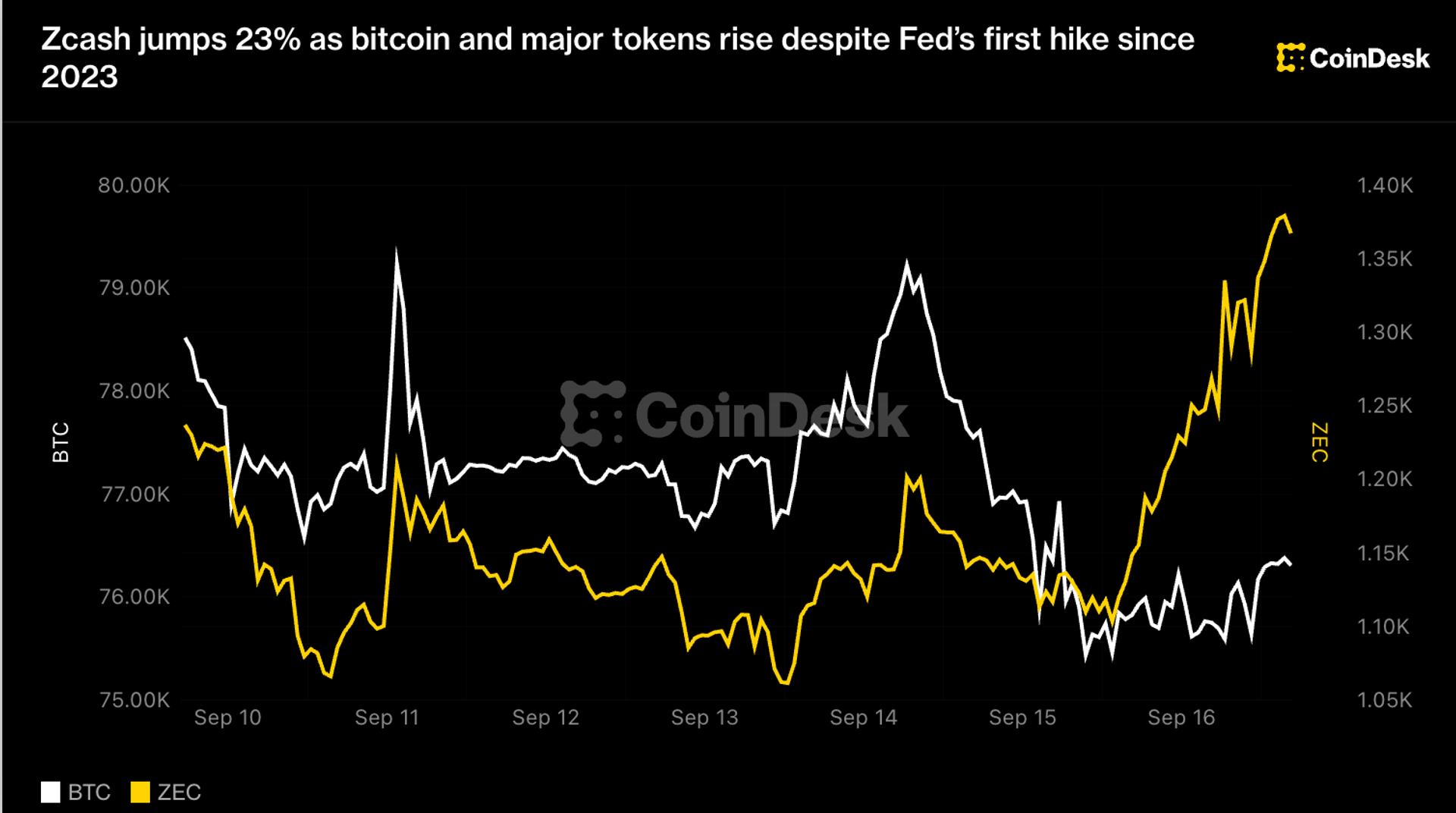
Bitcoin surged past the $76,000 level following the Federal Reserve's latest policy signals, with the central bank indicating limited appetite for additional rate hikes. This hawkish-to-dovish pivot triggered a broad rally across digital assets, with privacy-focused Zcash leading gains at a 23% jump alongside recovery in major tokens like Ethereum and Solana.
The Fed's first rate hike since 2023 landed softer than markets feared. Rather than signaling an extended tightening cycle, officials projected only modest future increases, removing a key headwind that has weighed on risk assets throughout 2024. Bitcoin's move above $76,000 reflected this relief, with the flagship cryptocurrency testing resistance levels not consistently held since mid-November. Ethereum and other large-cap alts followed, though gains varied by market cap tier.
Zcash's 23% outperformance stood out in the broader rally. The privacy coin's surge coincided with renewed industry discussion around its use case. Paradigm cofounder Matt Huang publicly characterized Zcash as a privacy complement to Bitcoin, framing the token's value proposition within the larger digital asset ecosystem rather than as a Bitcoin alternative. This positioning matters. It signals institutional recognition that privacy-focused protocols serve distinct functions rather than compete directly with the dominant cryptocurrency.
Zcash uses zero-knowledge proofs to enable shielded transactions, where sender, receiver, and amount remain encrypted on-chain. Unlike Bitcoin's transparent ledger, Zcash offers optional privacy without sacrificing decentralization. Huang's comments suggest Paradigm sees Zcash as a specialized tool for users requiring transaction privacy alongside Bitcoin holdings, rather than a replacement asset.
The timing of this commentary reflects shifting regulatory clarity around privacy protocols. U.S. regulators have historically scrutinized privacy coins over illicit use concerns. Reframing Zcash as a Bitcoin complement rather than competitor potentially addresses regulatory hesitation by emphasizing complementary functionality. Users could hold both assets for different purposes: Bitcoin for store-of-value and public settlement, Zcash for private transactions.
Fed policy remains the dominant macro driver for crypto markets. Lower expected interest rates reduce the opportunity cost of holding non-yielding assets like Bitcoin and Zcash. This dynamic persists through 2025. If inflation data softens further, the Fed may cut rates again, extending the current bull phase. Conversely, sticky inflation could force officials to maintain restrictive policy longer, capping upside.
Bitcoin's $76,000 level represents a local consolidation point. Break-throughs above $80,000 face selling pressure from 2021 bear market participants, though fund inflows from spot ETFs continue to absorb supply. Altcoins typically outperform during early bull phases when capital rotates from Bitcoin into higher-beta assets. Zcash's gains reflect this pattern, though privacy coins face execution risk around regulatory adoption.
The broader narrative shifted. Markets now price in a Fed pivot rather than indefinite tightening. This environment favors leveraged risk-on positioning in crypto. Privacy-focused protocols like Zcash stand to benefit from renewed institutional interest, particularly if Paradigm and other prominent voices continue legitimizing their role within diversified digital asset portfolios.