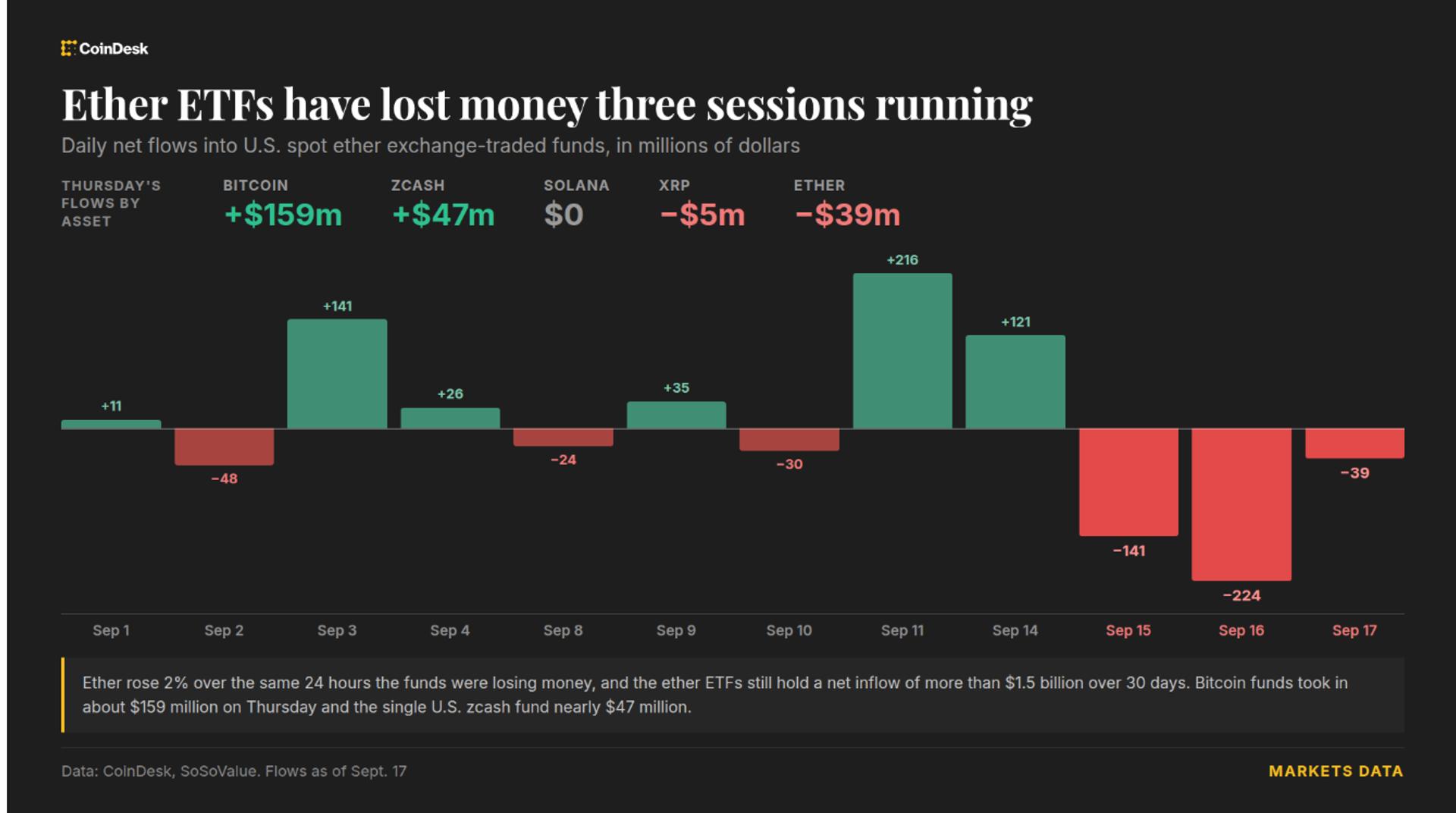
Bitcoin's surge above $77,000 marks a pivotal shift in capital allocation across crypto markets, with institutional flows telling a different story than price action alone suggests.
Ether ETFs experienced outflows for a third consecutive session despite ETH trading higher. This disconnect between price movement and fund performance reveals investor hesitation about ethereum's near-term trajectory. Spot ethereum ETF products launched in the US just months ago now face redemption pressure as traders rotate capital toward stronger performers. The outflow pattern persists even as ether benefits from broader market strength, indicating deliberate portfolio repositioning rather than panic selling.
XRP ETFs similarly posted outflows during the period. Ripple's token has faced institutional skepticism since the SEC settlement in 2023, and fund products tracking XRP remain relatively young. The combination of outflows and bitcoin's commanding move upward suggests institutional capital is consolidating around the market leader rather than diversifying into alternative L1 assets.
Bitcoin's acceleration above the $77,000 level triggers technical significance. This price point represents a decisive break from previous consolidation ranges, attracting momentum-driven capital. Every major token in the top ten gained ground, but the gains masked unequal distribution of inflows and outflows. Bitcoin captured the lion's share of institutional attention while second and third-tier assets struggled to retain capital despite positive price action.
ZCash extended its recent rally, bucking the pattern of altcoin underperformance. The privacy-focused token continues benefiting from heightened awareness around financial surveillance and regulatory scrutiny. ZEC's outperformance suggests a specific narrative driving gains rather than generalized altcoin enthusiasm. Privacy tokens remain a concentrated bet within the broader market.
The divergence between ether and XRP fund flows versus their token price performance carries implications for leverage and forced liquidations. When ETF products see consistent outflows despite rising prices, it creates conditions where institutional traders reduce positions while retail players may hold or add. This mismatch eventually resolves through either further outflows as prices decline or sudden inflow reversals if momentum accelerates.
Bitcoin's dominance in institutional inflows reflects risk-on sentiment coupled with caution about altcoin valuation. The leading asset commands 52-55 percent of total crypto market capitalization, and this period reinforced that concentration. Ether's dominance share contracted as capital preferred bitcoin exposure.
The timing matters. Bitcoin's acceleration above $77,000 occurred amid broader macro conditions, likely including traditional market movements and Fed policy interpretation. Institutional traders use ether and XRP ETF redemptions as hedging mechanisms while maintaining long bitcoin exposure. This hedging strategy protects portfolios against selective altcoin weakness while preserving upside participation through BTC concentration.
Looking ahead, sustained outflows from ether ETFs become problematic if they accelerate. Ethereum represents the second-largest blockchain ecosystem and commands significant developer activity and DeFi value lock. Extended institutional redemption pressures could force spot ETF managers to increase cash reserves, creating drag on asset growth. Bitcoin's leadership remains intact, but altcoin ETF products face structural headwinds that require narrative shifts to reverse.