# Layer-2 and DeFi Tokens Lead Crypto Rally as Fed-Rate Anxiety Eases
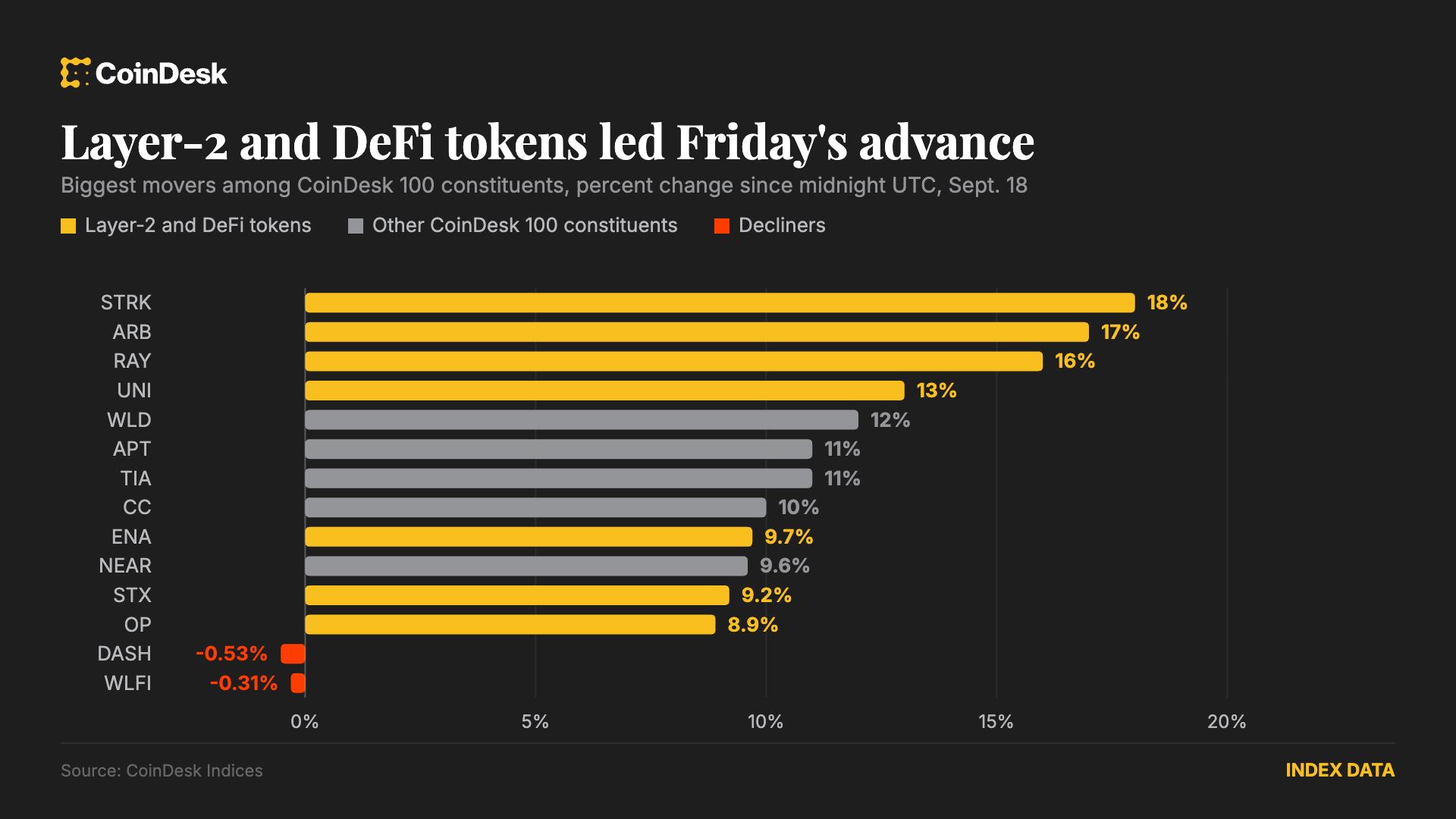
Layer-2 scaling tokens powered a broad crypto market advance as bond yields retreated and post-Federal Reserve rate hike anxiety dissipated. Starknet and Arbitrum each surged more than 17%, anchoring a rally that swept across 98 of the 100 largest cryptocurrencies by market cap.
The 10-year Treasury yield dipped below the 5% level, a pivot that removed a key headwind for risk assets. Rising real rates had weighed on crypto valuations throughout late 2023 and into 2024, as higher borrowing costs redirected capital toward fixed-income instruments. With that pressure easing, investors rotated back into growth-oriented digital assets. The shift marked a clear inflection point for sentiment in the sector.
Starknet's 17% jump reflects renewed demand for Ethereum scaling solutions. The Cairo-based rollup competes in an increasingly crowded Layer-2 race alongside Arbitrum, Optimism, and others. Both Starknet and Arbitrum benefit from Ethereum's congestion and high transaction fees. As Ethereum processes more activity, especially from DeFi protocols, rollups capture transaction volume and fees. Arbitrum's gain underscores investor appetite for exposure to these infrastructure plays.
The broad advance across 98 of CoinDesk's top 100 tokens indicates the rally was not concentrated in a handful of large-cap names. This breadth signals genuine risk-on sentiment rather than a narrow liquidity reallocation. Bitcoin, Ethereum, and other major cryptos likely participated alongside Layer-2 tokens and smaller DeFi names. When 98% of a major index advances, market participants are rotating into risk rather than simply chasing momentum in a few names.
DeFi tokens typically outperform during rallies triggered by falling real rates. Lower Treasury yields reduce the opportunity cost of holding non-yielding crypto assets. DeFi protocols offer yield through lending, liquidity provisioning, and other mechanisms, making them competitive again relative to bonds. Starknet and Arbitrum, as core scaling infrastructure, benefit from increased DeFi activity on their networks. More transactions mean higher fees for stakers and token holders.
The post-Fed context matters here. Markets had braced for higher-for-longer interest rates following recent Federal Reserve communications. That narrative shifted as economic data softened and inflation showed signs of moderating. A potential pause in rate hikes opens the door for crypto to recover from its "cash alternative" positioning. Investors no longer need to hold short-term Treasuries at elevated yields when they can take on risk again.
Arbitrum and Starknet also benefit from deployment patterns among DeFi developers. Both Layer-2s have attracted substantial locked-value and user bases. Arbitrum, as the larger and more mature network, captures more transaction volume and attracts more developers. Starknet's Stark-based architecture differentiates it technically and appeals to developers seeking alternative scaling approaches beyond EVM-compatible rollups.
The chart breakout likely triggered additional technical buying as traders recognized the rally breaking key resistance levels. Layer-2 tokens had underperformed relative to Ethereum and Bitcoin during the rate-hiking cycle, so a reversal can accelerate quickly as shorts cover and new momentum buyers enter.
Watch for sustained yield declines and dovish Federal Reserve signals to confirm whether this advance holds. If Treasury yields stabilize or reverse higher, the Layer-2 rally could face headwinds.