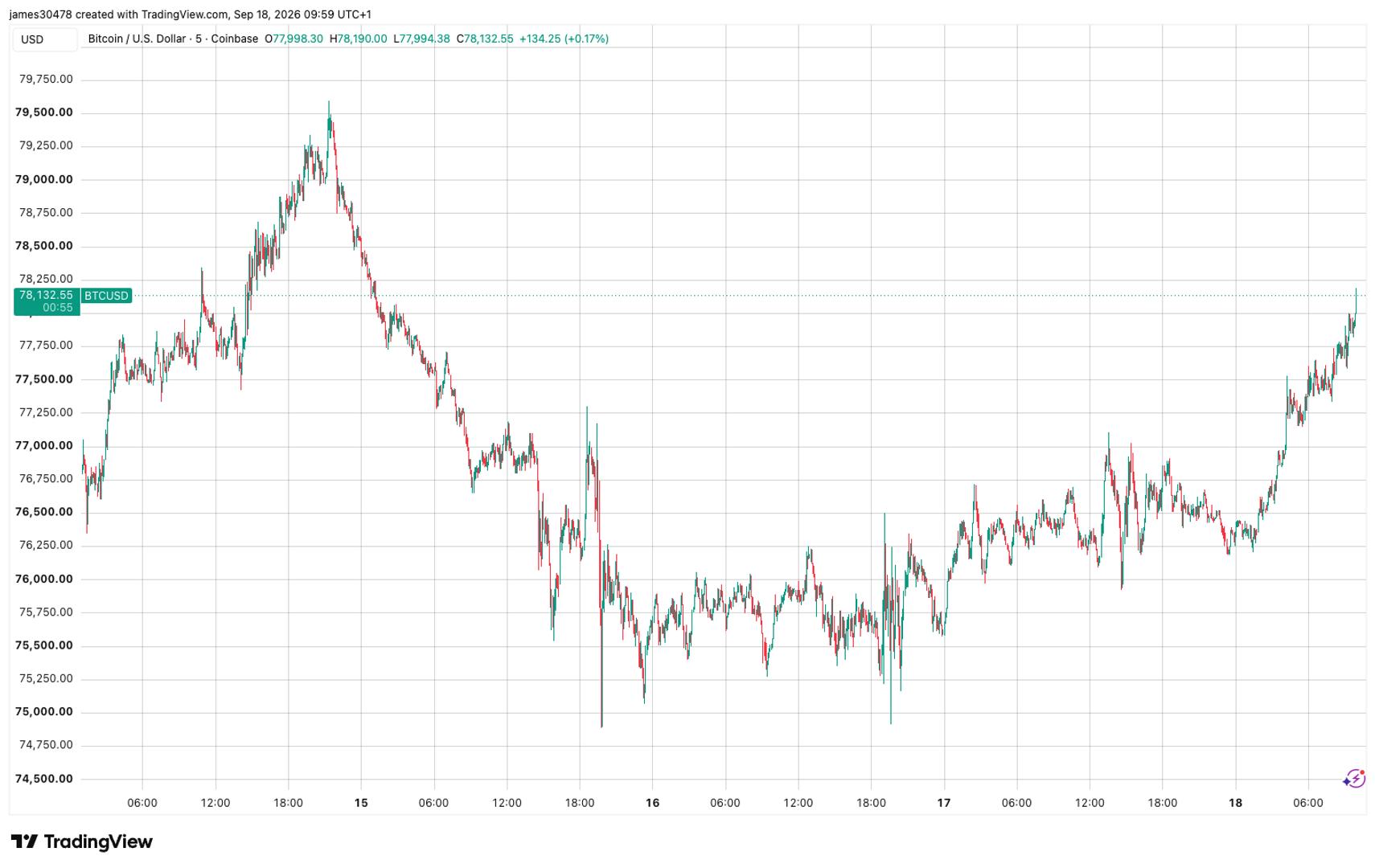
Bitcoin managed to sidestep its typical September weakness, falling only 1.5% through the month despite multiple headwinds that historically hammer risk assets. The resilience comes as the cryptocurrency approaches its first quarterly gain in a year, a meaningful shift after extended underperformance.
The digital asset absorbed pressure from three traditional macro forces simultaneously. The Federal Reserve continued its restrictive rate hiking cycle, which typically pressures assets priced in risk premiums. Oil prices surged, signaling inflation concerns that usually trigger safe-haven flows away from cryptocurrencies. The US dollar strengthened, making Bitcoin and other denominated assets less attractive to foreign buyers while increasing carrying costs for leveraged positions.
September ranks as crypto's weakest calendar month historically. Bitcoin typically faces liquidation cascades, seasonally weak inflows, and positioning unwinding as traders square books ahead of quarter-end. This year's near-flat performance stands in stark contrast to the pattern, suggesting a shift in market structure or fundamental repositioning among holders.
The quarterly trajectory matters more than monthly moves for institutional players tracking returns. Bitcoin's path to a positive Q3 after twelve months of quarterly losses signals a potential inflection point. Momentum traders keying off quarterly breaks often reload positions once the turn becomes confirmed, creating self-reinforcing bid support.
However, the article references a "Clarity act setback," pointing to legislative complications in the US regulatory environment. The legislation, which crypto advocates backed as potential clarity on asset classification and custody rules, apparently hit resistance. Regulatory uncertainty typically suppresses institutional allocation to crypto, as compliance departments struggle to navigate unclear liability frameworks. A legislative stall removes a near-term catalyst that bulls had priced in.
The combination matters for different market participants. Macro traders see Bitcoin as negatively correlated to rate hikes and dollar strength, yet it held up anyway. This suggests either short covering from previous downside bets or genuine new demand from holders building positions despite macro headwinds. Long-term accumulation patterns often develop when price holds steady despite negative conditions.
Day traders and leverage players will watch quarterly closes closely. Option expiry calendars often cluster around quarter-end, and the risk of sudden moves up or down increases as positions unwind. The 1.5% decline sits comfortably above major support levels, preserving uptrends on weekly timeframes.
The regulatory setback introduces near-term uncertainty but doesn't alter the medium-term structural story. Congress will revisit crypto legislation eventually, but the timeline now extends beyond what many bulls expected. This likely pressures altcoins tied to governance narratives more than Bitcoin itself.
Bitcoin's resilience through September storm conditions suggests conviction among holders. Institutions rarely hold during extended rate hike cycles unless conviction runs deep. The quarterly gain trajectory, if sustained through final days of the month, reshapes sentiment heading into Q4 when holiday flows and year-end positioning typically drive volatility spikes.