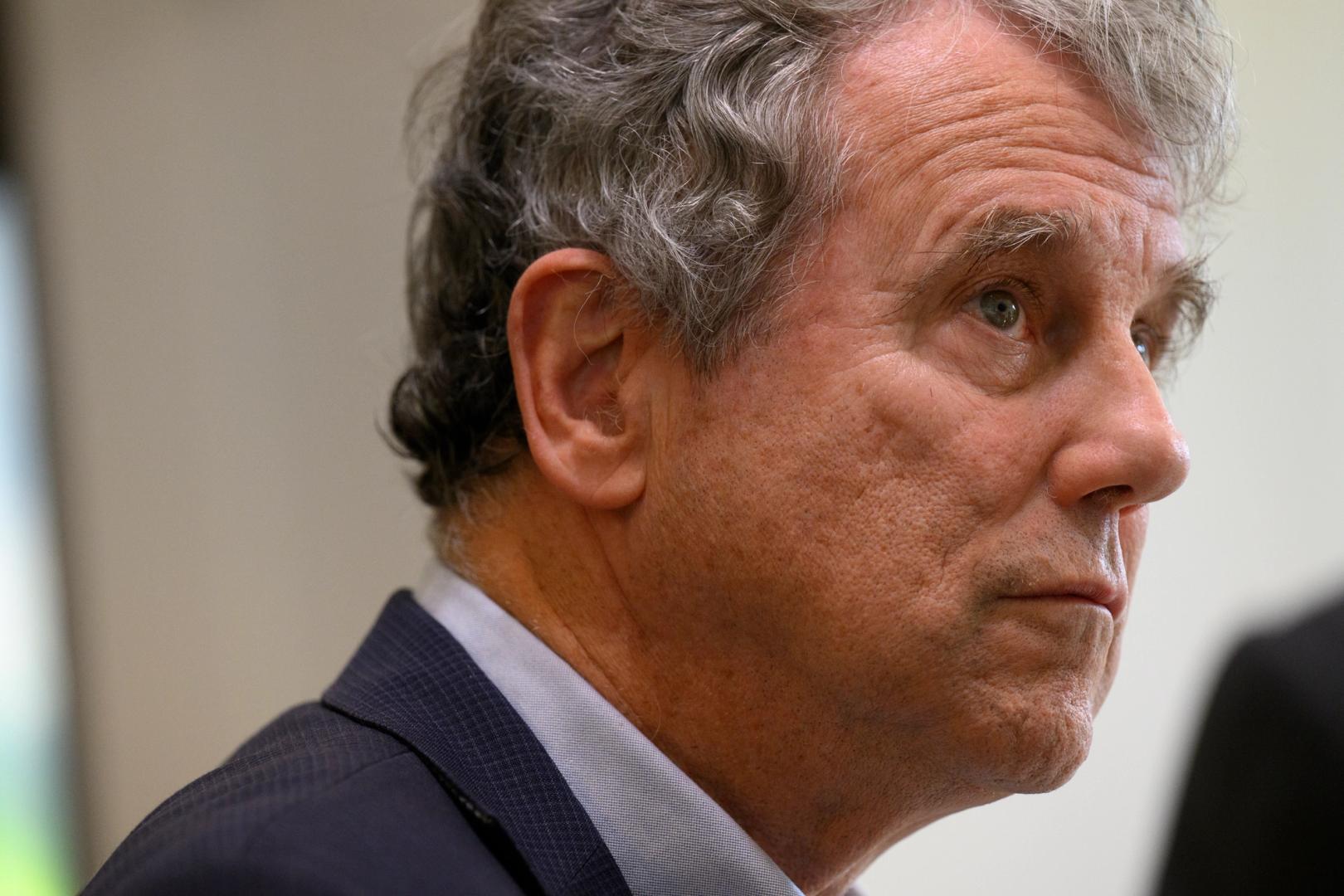
Fairshake, the crypto industry's primary political action committee, plans to deploy $30 million against Ohio Senator Sherrod Brown's 2026 reelection bid. This marks the largest spending commitment from the group in the 2026 election cycle, continuing a pattern of aggressive financial intervention in Brown's races.
The number echoes Fairshake's 2024 strategy. Two years ago, the PAC spent $40 million opposing Brown's Senate campaign, then its record expenditure. That 2024 blitz failed to unseat the longtime senator, who won reelection despite the industry's full-throttle financial assault. Now Fairshake is doubling down with fresh capital and renewed focus on the same target.
Brown represents everything crypto money wants to defeat. As a Democratic senator from Ohio, he chairs the Senate Banking Committee, a platform he has used to aggressively criticize the crypto industry. During his tenure, Brown has pushed for stricter digital asset regulation, questioned stablecoin architecture, and challenged the industry's self-regulatory claims. His regulatory skepticism and willingness to clash with industry leaders made him Public Enemy Number One for crypto's political apparatus.
Fairshake was formally launched in 2023 with $5 million in initial seed funding from crypto entrepreneurs and venture capitalists. The PAC quickly became the industry's dominant electoral vehicle, pooling resources from major exchanges, protocol developers, and wealthy crypto investors. Since its inception, Fairshake has emerged as one of the most consequential single-issue PACs in American politics, rivaling and sometimes exceeding spending from traditional sectors like pharmaceuticals and energy.
The $30 million allocation reveals something deeper about crypto's political calculus. Fairshake doesn't spend money randomly. Every dollar represents a strategic bet that defeating Brown is worth the investment. This suggests the industry views his Senate seat as uniquely winnable or uniquely important. A hostile Banking Committee chairman poses an existential threat to the industry's legislative agenda. Removing Brown creates space for friendlier voices to shape financial regulation.
The 2024 effort against Brown also included coordinated television advertising, digital campaigns, and grassroots organizing. Fairshake's ads typically framed the senator as out of step with Ohio voters on crypto jobs and innovation. Despite the intensity, Brown's advantage as an incumbent proved decisive. Ohio voters chose stability and seniority on the Banking Committee over the crypto industry's preferred alternative.
The 2026 rematch raises questions about whether Fairshake has learned from its previous failure or is simply banking on different political conditions. Midterm cycles traditionally see lower turnout and different voter compositions than presidential years. The crypto market's trajectory between now and 2026 also matters. A bull market might energize crypto voters and donors; a bear market could dampen enthusiasm.
Fairshake's commitment reflects the industry's broader political evolution. Crypto has transformed from a libertarian fringe movement into a concentrated power center capable of mobilizing tens of millions for electoral purposes. The PAC now operates alongside Democratic crypto supporters like Congressman Ro Khanna and Republican allies including former President Donald Trump. This creates a bifurcated political landscape where crypto money flows in multiple directions simultaneously.
Brown's 2026 challenge will test whether incumbent power and committee seniority can withstand sustained, well-funded industry opposition. The outcome will shape crypto regulation for the remainder of the decade.