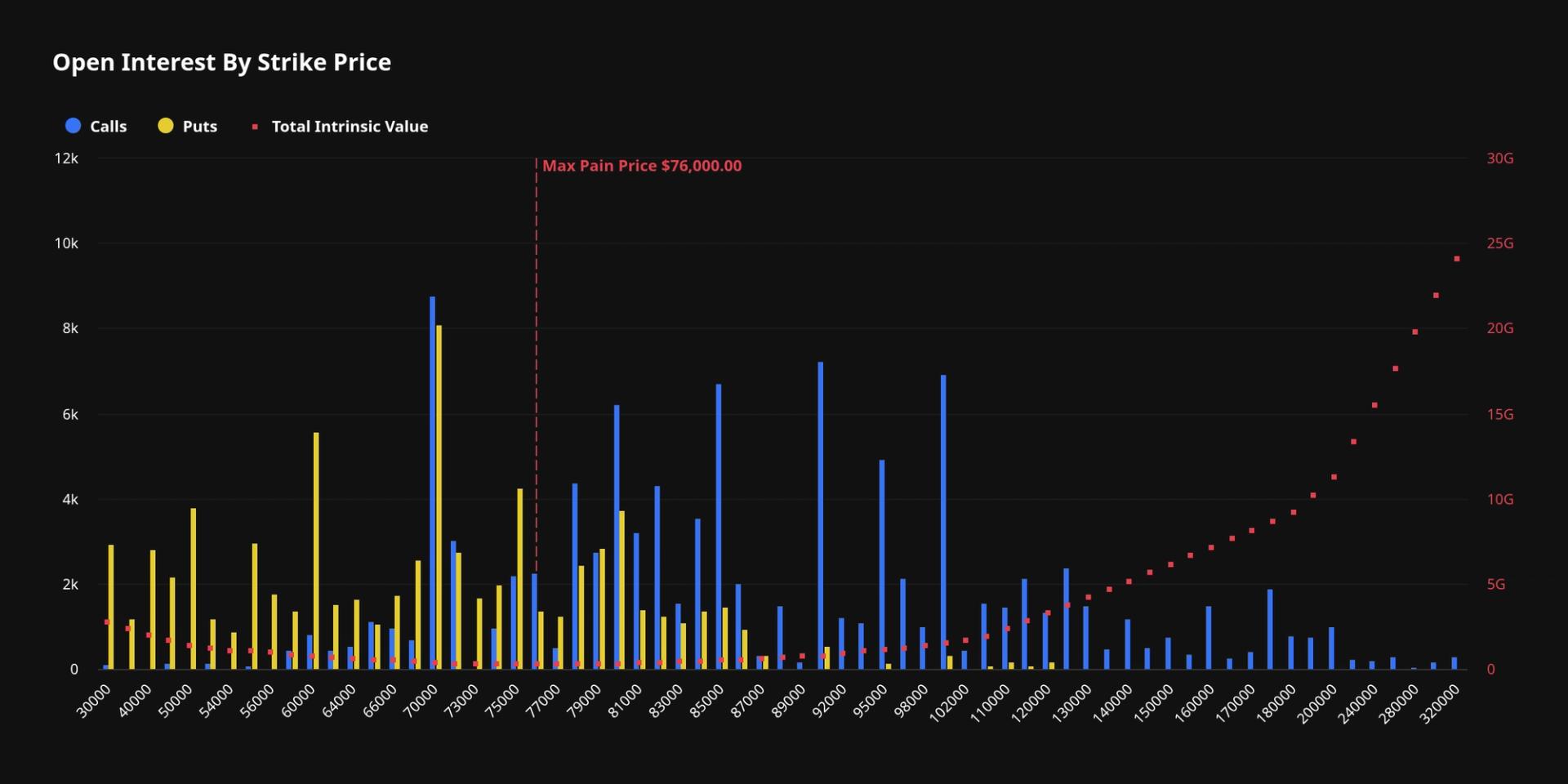
Bitcoin options traders face a $16 billion settlement event Friday as nearly $18 billion in combined bitcoin and ether derivatives expire simultaneously. The expiring book skews heavily toward call options, a positioning that typically pressures spot prices lower during the settlement window.
The quarterly cycle coincides with critical technical levels for bitcoin. Call options concentrate at strike prices above current spot, meaning dealers who sold those calls must hedge by going short or reducing long positions as expiration approaches. This creates downward price pressure in the hours before settlement.
Ether options comprise roughly $2 billion of the expiring notional. The ethereum derivatives market shows similar call-heavy bias, though with less extreme skew than bitcoin. Both markets have experienced elevated trading activity ahead of the window.
Dealers function as the primary counterparties in options markets. When traders buy calls and puts, dealers absorb the other side. Dealers then hedge their resulting exposure in spot and futures markets to stay neutral. During quarterly expirations with skewed positioning, these hedges unwind in concentrated bursts, creating outsized volatility relative to underlying sentiment.
Current bitcoin options open interest sits near all-time highs. The call-heavy bias suggests traders positioned for upside breakouts that failed to materialize. As expiration nears, profitable call holders lock in gains by selling, while underwater call holders accept losses. This selling pressure feeds into dealer short-covering flows that typically lift prices immediately after settlement completes.
Ether's options positioning diverges slightly from bitcoin. Ethereum traders maintained greater balance between calls and puts through the quarter, reducing the potential for violent spot moves. However, the combined $18 billion notional still represents meaningful delta that must unwind.
Historical patterns from previous quarterly expirations show heightened volatility for 24 to 48 hours surrounding the event. Price swings of 2 to 5 percent intraday become common, with IV crush flattening implied volatility across the options surface post-settlement. Traders holding unhedged spot positions often face margin pressure during the window, forcing liquidations that compound initial price moves.
Volume in bitcoin and ether perpetual futures on major exchanges like Binance and Bybit typically spikes ahead of expiration as traders adjust hedges. Liquidation cascades remain possible if prices move sharply enough to trigger underwater leveraged positions.
The timing matters beyond pure options mechanics. Bitcoin hovers near key resistance, and weak macro data this week could push spot lower regardless of options dynamics. Combined dealer hedging pressure and macroeconomic headwinds could amplify downside. Alternatively, if spot bounces before Friday, call options drift out-of-the-money and pressure reverses.
Post-settlement, the options book resets for next quarter. Trader positioning and implied volatility will recalibrate based on Friday's price action. If settlement triggers significant downside, subsequent IV expansion could benefit put buyers. The reverse holds for bullish outcomes.
Options traders should monitor dealer gamma exposure throughout Thursday and Friday. High negative gamma amplifies volatility and creates whipsaw conditions. Large institutional traders often frontrun these events to minimize slippage during settlement windows.