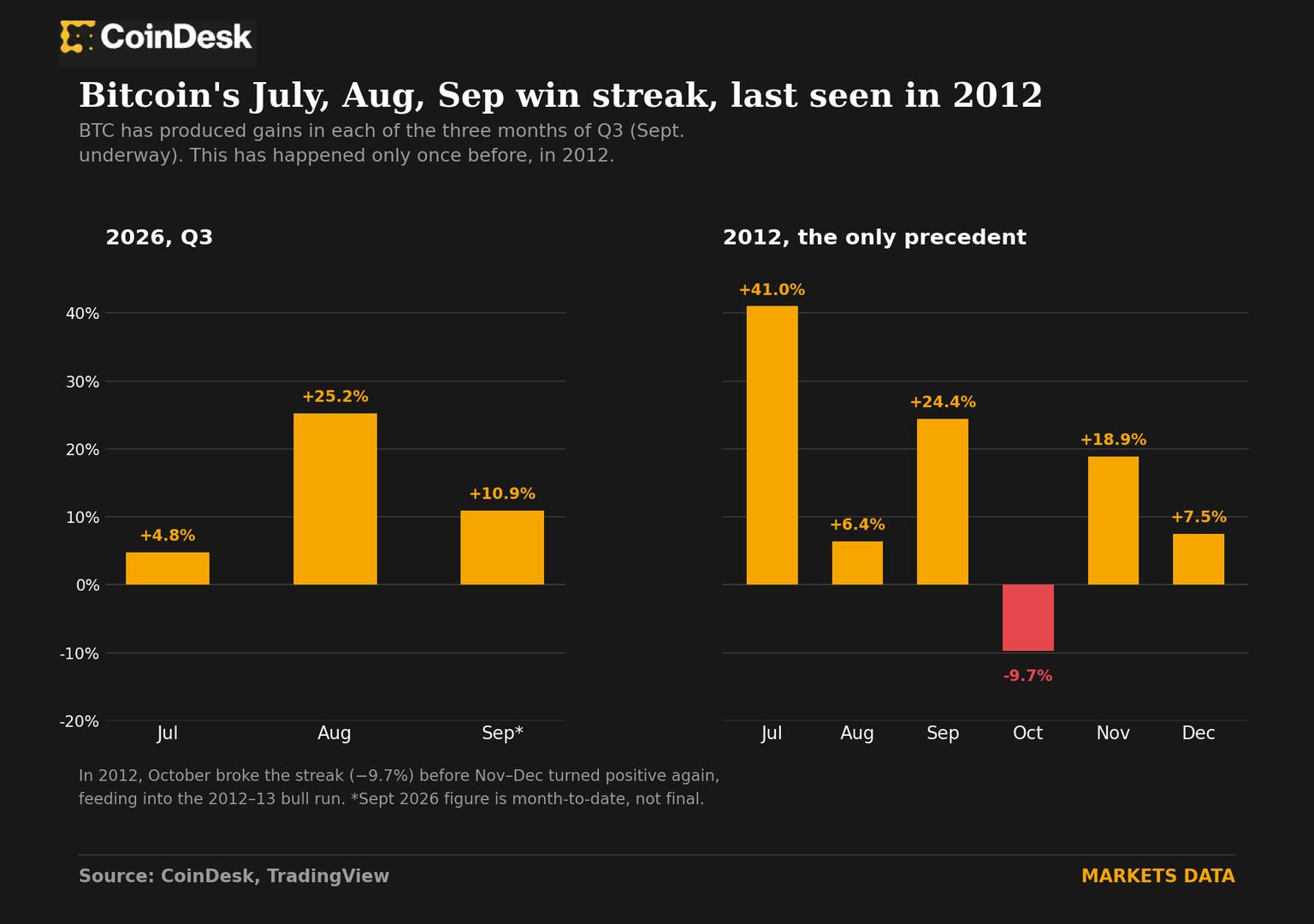
Bitcoin extended its rally through September, posting a 10% monthly gain that positions the asset for its first three-month winning streak since 2012. The performance reflects renewed momentum after a volatile summer marked by economic uncertainty and shifting Federal Reserve policy expectations.
The math is straightforward. Bitcoin gained ground in July, August, and September, creating consecutive monthly wins across the third quarter. This alignment rarely occurs in crypto markets, where volatility typically disrupts momentum over longer periods. The last time Bitcoin achieved a three-month winning streak was over a decade ago, making the current run statistically notable for a highly cyclical asset class.
Several factors underpinned September's 10% jump. Inflation readings came in cooler than expected, softening recession fears and prompting investors to reconsider risk assets. The Fed's interest rate trajectory shifted from aggressive hikes toward potential cuts, which typically benefits non-yielding assets like Bitcoin that compete with Treasury yields. Spot Bitcoin ETF flows remained positive as institutional money continued trickling into the cryptocurrency space through regulated vehicles launched earlier in the year.
The streak carries technical significance. Bitcoin needs to hold above key resistance levels for Q3 gains to stick. Breaking below support zones established during the rally invites liquidation cascades that can reverse months of progress in days. Traders monitored $26,000-$27,000 levels as near-term support, with weakness below $25,000 flagging potential reversal signals.
Historical context matters. The 2012 three-month winning streak occurred during Bitcoin's early adoption phase when price discovery dominated trading dynamics. Back then, volumes were thin and manipulation risk higher. Today's streak plays out on a vastly different playing field. Bitcoin trades across regulated exchanges, derivatives markets, and ETF wrappers that provide price anchoring and reduce wild swings from single large trades. Institutional participation has matured significantly, though retail remains a critical demand source.
What happens next depends on macro conditions. If the Fed pauses rate hikes and inflation continues declining, risk appetite should remain constructive for Bitcoin. Alternatively, economic data surprises to the upside could reignite inflation concerns and trigger aggressive hawkish Fed commentary, sending investors back to cash and bonds. Bitcoin's correlation with equities typically tightens during risk-off periods, meaning stock market weakness becomes Bitcoin weakness.
The September performance also highlights shifting narratives. Earlier in 2023, Bitcoin struggled as banking stress and regulatory pressure created headwinds. By late summer, the asset benefited from positive sentiment around AI adoption, lower real yields, and declining probability of a hard landing recession. Spot ETF inflows provided a steady bid without requiring retail FOMO or crypto-specific capital.
Three-month streaks represent medium-term trend confirmation. They suggest underlying conditions favor buyers over sellers for extended periods. But crypto markets punish complacency. A single poor inflation report or Fed policy reversal can erase weeks of gains. Bitcoin holders banking on the streak continuing should watch Fed speakers closely and monitor real yields on Treasury Inflation-Protected Securities. Those metrics will likely determine whether September's momentum carries into Q4 or reverses hard.