Duelbits, a cryptocurrency casino platform, pulled offline following a security breach that compromised $7 million in user and operational funds across four separate blockchains. The attack exposed vulnerabilities in the platform's hot wallet infrastructure, the systems designed to hold actively traded assets for fast transaction processing.
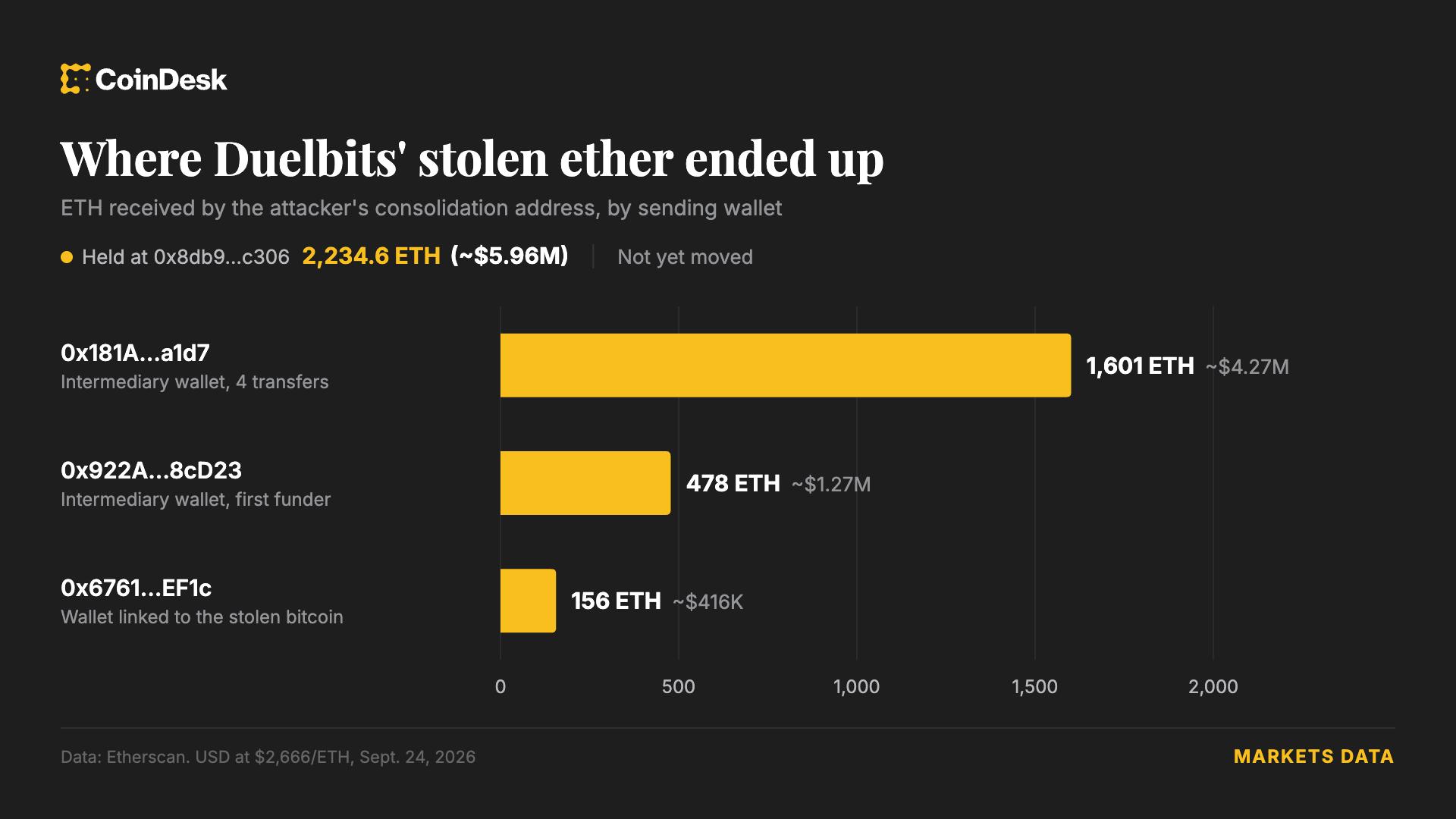
The breach hit Duelbits' operational wallets on Ethereum, Bitcoin, Polygon, and at least one other chain. Attackers consolidated roughly $6 million of the stolen cryptocurrency into a single Ethereum address, creating a traceable on-chain footprint that security researchers and law enforcement can monitor.
Hot wallet compromises remain among the most damaging attack vectors in crypto because these systems prioritize liquidity over security. Unlike cold storage solutions that keep assets offline, hot wallets maintain internet connectivity to process deposits and withdrawals instantly. This convenience creates attack surface. Duelbits kept too much value in these systems without adequate operational security.
The timing matters. Duelbits operates in an already-volatile segment. Crypto gambling platforms face constant regulatory pressure and attract sophisticated attackers who understand blockchain fund flows. The platform's previous security posture apparently underestimated these threats.
Blockchain forensics teams can track the consolidated funds across decentralized exchanges and bridges, though actual asset recovery depends on exchange cooperation and whether stolen tokens move to privacy-focused channels like Tornado Cash. The attacker chose Ethereum for consolidation, suggesting they may attempt conversion to stablecoins or fiat off-ramps through centralized exchanges.
Duelbits' offline status impacts thousands of users with locked balances and open positions. The platform must now decide whether to resume operations after replenishing reserves or potentially liquidate remaining assets to refund customers. Many crypto exchanges have recovered from similar incidents, but customer confidence rarely returns fully.
This incident reflects broader patterns in the crypto casino vertical. Platforms like Stake and other gambling services operate with minimal regulatory oversight and often underinvest in security infrastructure relative to their asset custody obligations. They compete on odds and promotions rather than operational robustness, creating systemic risk.
The $7 million figure positions this hack as moderate compared to major exchange breaches like FTX or Celsius, but it represents total loss for affected users unless Duelbits maintains insurance or can recover stolen funds through law enforcement channels. Most crypto gambling platforms carry minimal or no insurance.
On-chain security monitoring may have caught this faster than traditional finance systems would, but detection speed meant nothing without offline response protocols. Duelbits apparently lacked automated kill-switches or multi-signature approvals that would have prevented large transfers during unauthorized access.
For the broader ecosystem, this incident reinforces that custody standards vary wildly across platforms. Centralized exchanges like Kraken and Coinbase maintain significantly more sophisticated security than smaller operators. Users accepting casino-tier platforms implicitly accept casino-tier security.
The stolen funds sitting visible on-chain create opportunities for recovery if platforms cooperate with law enforcement. However, attackers may have planned rapid distribution through mixing services or international exchange withdrawals. The window for freezing assets likely compressed to hours after the breach occurred.