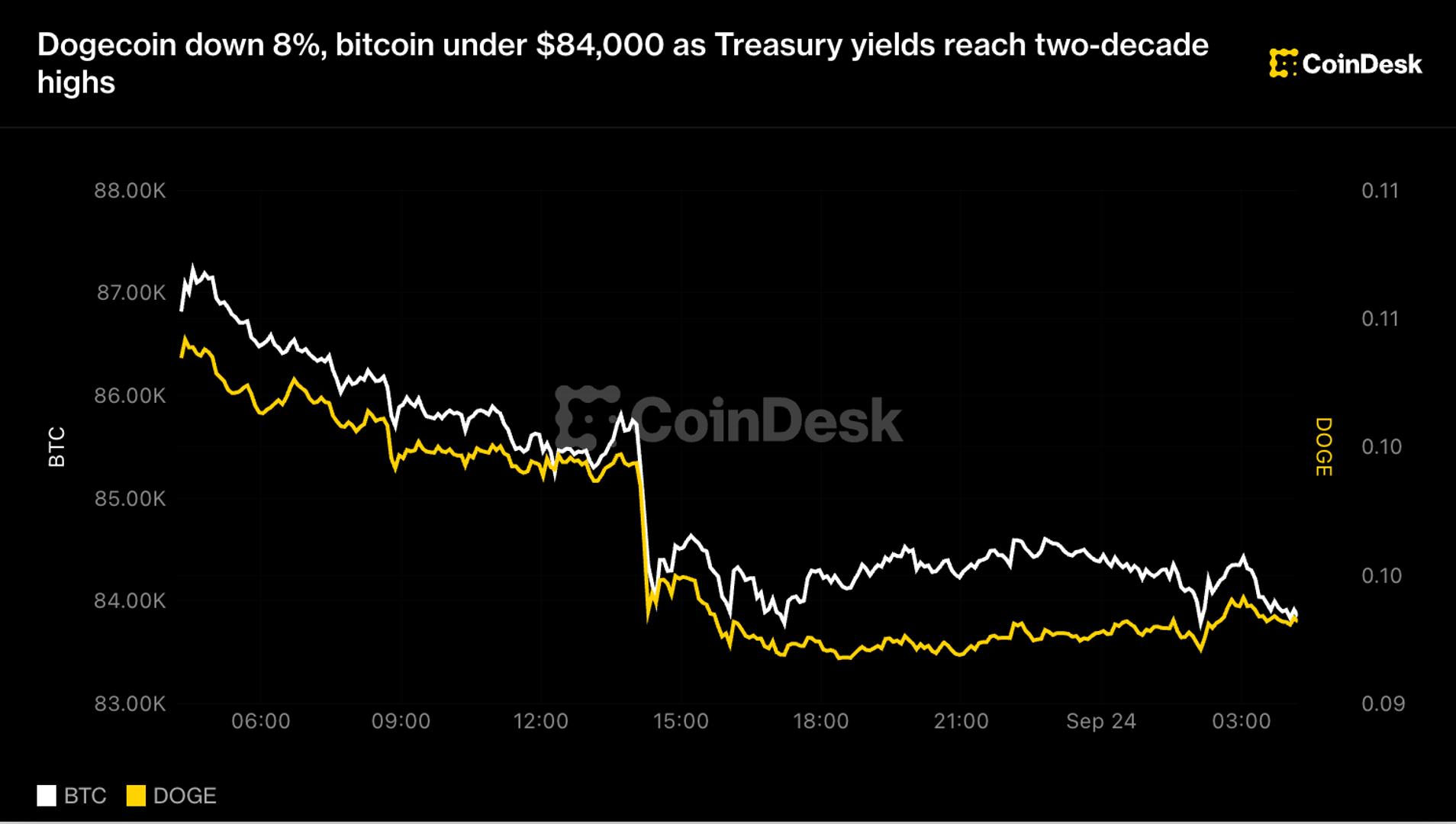
Bitcoin dropped below $84,000 on Wednesday as Treasury yields climbed to their highest levels since 2007, dragging the broader crypto market lower alongside renewed economic headwinds. Dogecoin suffered the steepest losses among major tokens, declining 8% as risk appetite evaporated across digital assets.
The catalyst was straightforward macroeconomic pain. A stronger-than-expected five-year U.S. business survey, combined with a poorly received Treasury note auction, forced yields higher. Oil prices rebounded sharply. These dynamics signal mounting inflation concerns and tighter financial conditions ahead, the traditional enemy of risk-on assets like crypto.
Treasury yields at 2007 highs matter because they represent the risk-free rate against which all riskier assets are valued. When yields spike, investors rotate out of volatile positions and into government bonds. Bitcoin, which still trades with high correlation to equities and risk sentiment, cannot escape this rotation. The token fell roughly 7% during the session, settling just under $84,000.
Dogecoin's 8% decline tells a subtly different story. The meme coin, which lacks the "digital gold" narrative protecting Bitcoin, sells on sentiment and community momentum. When macro conditions deteriorate, these speculative plays get hit hardest. Doge now sits vulnerable to further downside if the yield trajectory continues climbing.
The five-year note auction underperformance signals real stress in the Treasury market. Weak demand at auctions forces the government to offer higher yields to attract buyers. This creates a vicious cycle: higher yields compress valuations across riskier assets, including crypto. The mechanism is direct and unforgiving.
Oil's rebound compounds the problem. Higher energy prices feed inflation expectations, which push central banks toward maintaining higher rates for longer. The Federal Reserve signaled in December that interest rate cuts would likely slow in 2025, and economic data like this five-year business survey reinforces that hawkish stance.
Bitcoin briefly recovered from its lows but failed to sustain momentum above $84,000. The lack of follow-through buying suggests institutional demand remains weak. Ethereum and other altcoins fell in tandem, with most large-cap tokens down 5% to 8% on the session. Stablecoin exchange inflows reversed sharply as traders de-risked positions.
The broader pattern is clear: macro conditions trump crypto narratives in the short term. When real Treasury yields spike and economic data come in hot, even Bitcoin's institutional adoption story cannot shield the token from repricing. The market needs to see evidence that inflation is genuinely cooling and that the Fed's rate cycle has peaked. Until then, elevated yields will continue capping upside for risk assets.
The next flash point arrives with Friday's jobs report. Hotter-than-expected employment data could push yields higher still, potentially triggering another crypto selloff. Weaker numbers might offer relief.