# Bitget Hacker Moves $83 Million in Stolen XRP that Ripple Cannot Freeze
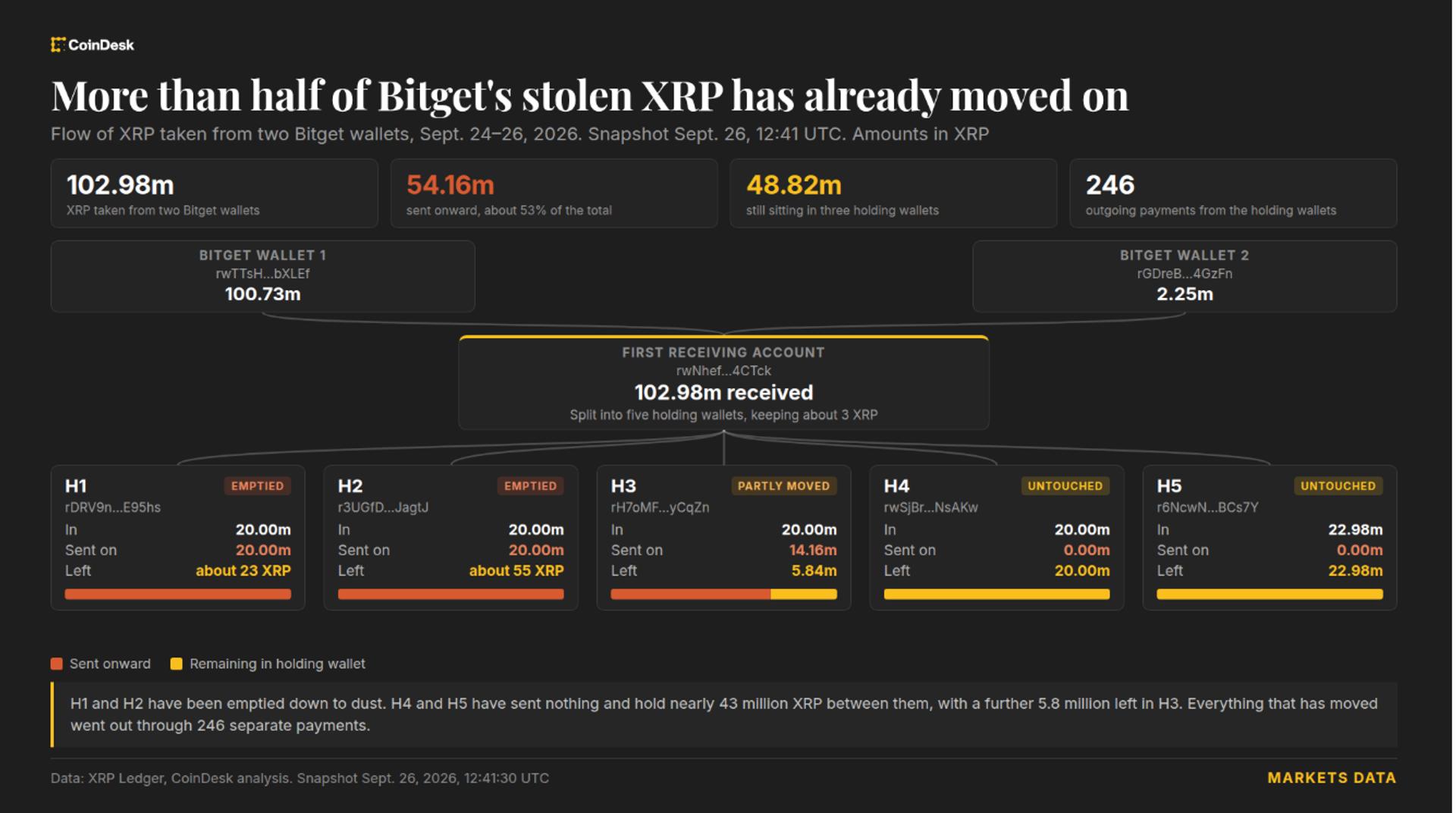
The Bitget exchange hack continues to unfold with a critical revelation: the attacker has successfully moved $83 million in stolen XRP across wallets, and Ripple holds no mechanism to stop the transfers. This development exposes a fundamental vulnerability in how XRP operates compared to other blockchain ecosystems.
Two wallets tied to the theft have been nearly emptied. A third wallet is currently being drained. Across five original holding accounts, approximately $75 million remains. The attacker's ability to move funds freely highlights the architectural difference between XRP's consensus ledger and systems where centralized entities maintain freeze capabilities.
Ripple controls certain administrative functions on the XRP Ledger, including the ability to disable accounts or blacklist tokens in specific scenarios. However, this power does not extend to arbitrary asset freezing once tokens move to independent wallets controlled by the attacker. XRP operates as a fully decentralized asset after transfer, without built-in mechanisms for third-party intervention.
The Bitget breach, which targeted the exchange's hot wallets, exposed the operational risks inherent in centralized trading platforms. Unlike Bitcoin or Ethereum, where transaction immutability is the default state, XRP's architecture includes optional regulatory rails. These safeguards only function when both the issuer and the receiving party enable them. A self-directed attacker moving funds through personal wallets operates outside this framework entirely.
Law enforcement and blockchain investigators can track the wallet addresses and monitor on-chain movements. Exchanges have begun implementing deposit filters to prevent the stolen XRP from being converted to other assets or fiat currency. However, these defensive measures represent containment strategies rather than actual recovery methods.
The incident highlights a paradox in blockchain security. Centralized exchanges face constant pressure to implement robust internal controls and self-custody solutions. Yet even when hackers successfully breach these systems, the immutable nature of public blockchains means stolen assets can move freely once they leave the exchange's control. Neither Ripple's governance capabilities nor network-level protocols can unwind transactions or permanently freeze addresses against the attacker's will.
Bitget has not released a final damage assessment, but the $83 million in moved XRP represents only a portion of the total breach. Other stolen assets including Bitcoin, Ethereum, and stablecoins remain subject to similar decentralization constraints. The exchange has activated its insurance fund to compensate affected users, signaling confidence in eventually accounting for losses through operational reserves.
This situation creates a fork in response strategies. Exchanges can implement transaction monitoring systems and coordinate with DeFi platforms to block stolen asset flows. They cannot, however, leverage blockchain protocol features to claw back funds. The attacker retains full custody and transfer rights as long as they control the private keys.
For the XRP community, the incident underscores both the immutability principle that underpins blockchain security and the vulnerability of centralized touch points. Ripple's inability to freeze the stolen XRP reflects the network's foundational design: once value moves from a regulated entity to an independent wallet, the ledger treats all transactions as equally valid. The distinction between legitimate and stolen XRP exists only in social consensus and exchange-level policies, not in protocol rules.
The stolen funds likely remain in holding wallets while the attacker evaluates conversion strategies, monitors regulatory responses, and determines optimal timing for asset liquidation. On-chain analysis will continue mapping fund flows, but actual recovery depends on law enforcement action, not blockchain protocol intervention.