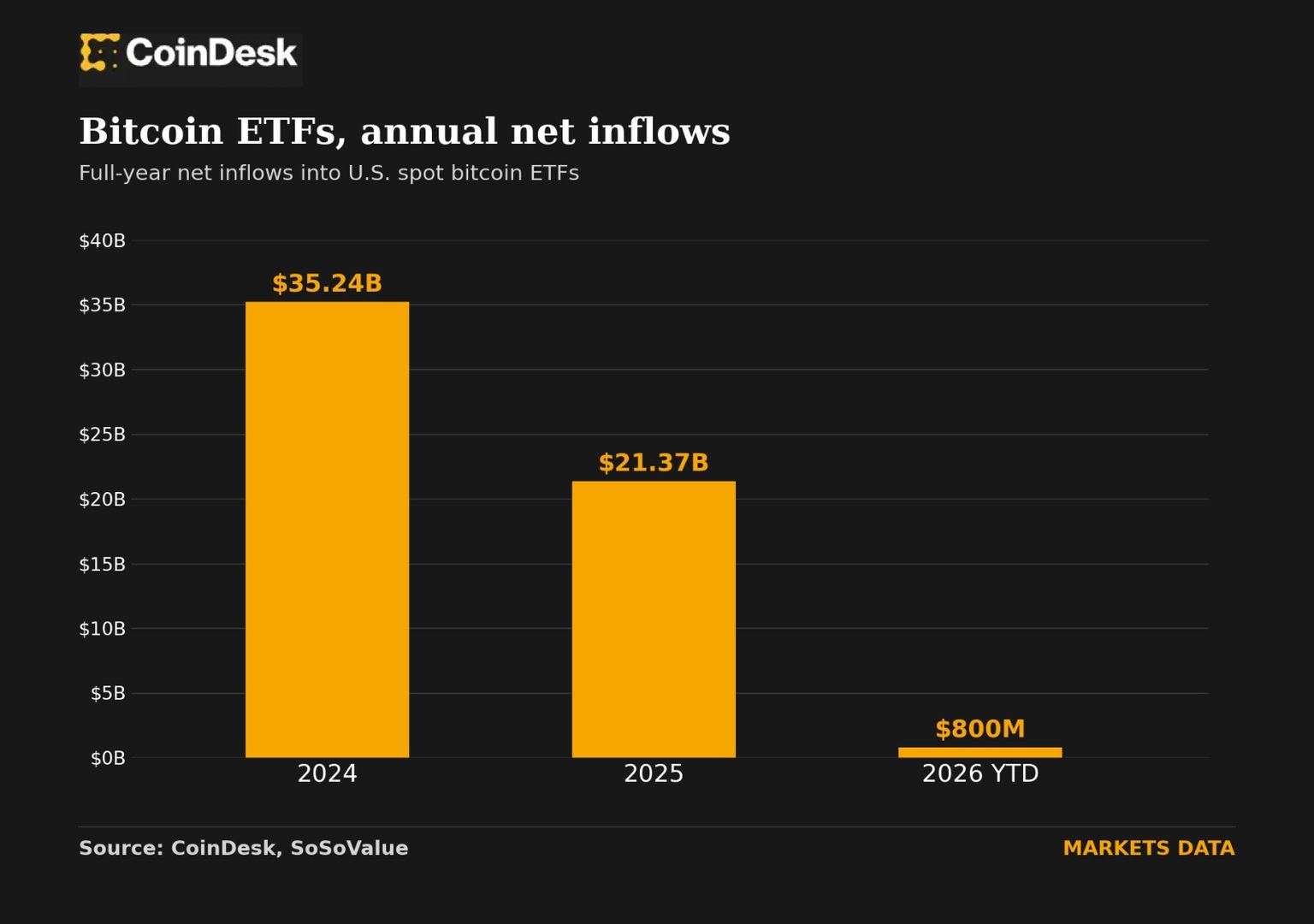
Bitcoin exchange-traded funds have swung from deep underwater to solidly positive territory in 2026, a reversal that underscores renewed institutional appetite for spot BTC exposure as the asset prices climb.
Through July, Bitcoin ETFs were bleeding capital at a $5.8 billion annual deficit. That pressure has now fully reversed. Year-to-date flows stand at $800 million in net inflows as of the latest data, marking a complete turnaround from the summer slump.
The shift reflects a broader pattern in institutional Bitcoin adoption. When BTC prices fall or consolidate, ETF investors exit positions and redeploy capital elsewhere. When prices run, those same investors buy back in through the easiest on-ramp available: regulated spot Bitcoin ETFs traded on major U.S. exchanges.
This dynamic matters because ETF flows serve as a barometer for institutional confidence. Large asset managers, pension funds, and wealth advisors who cannot or will not hold Bitcoin directly on cold storage will instead buy these listed products. The $800 million swing from $5.8 billion outflows tells a story about price action and sentiment working in tandem.
The outflow period during summer likely coincided with Bitcoin trading sideways or declining after reaching significant levels earlier in 2026. Institutions are less patient than retail hodlers. They rebalance based on price targets, risk management rules, and quarterly performance cycles. When BTC stops appreciating or begins losing value, outflows accelerate.
The reversal into positive flows suggests conviction has returned. Bitcoin likely regained momentum on the charts, triggering fresh buy signals among quant-driven funds and traditional allocators watching spot ETF performance metrics.
U.S. spot Bitcoin ETFs launched in January 2024 and have since accumulated roughly $60 billion in assets under management. These products represent the most significant institutional onramp for Bitcoin exposure since futures contracts launched nearly a decade prior. Each ETF shares the same underlying asset class but competes on fees, fund flows, and brand recognition.
The positive swing in 2026 flows indicates the 11-month turnaround narrative. Institutions rode the decline, capitulated into selling, then repositioned on recovery. This remains the rhythm of capital rotation in Bitcoin markets.
Sustained inflows going forward would require BTC to maintain price stability above key resistance levels. A breakdown or extended consolidation period could trigger another reversal. The $800 million positive figure represents a relatively small portion of total AUM but signals directional momentum matters for institutional participation.
Year-end 2026 flows will ultimately hinge on Bitcoin's price trajectory over the final months. If BTC reaches new highs, inflows could accelerate further. If volatility returns or bearish sentiment takes hold, those flows could stall or reverse once more. The ETF flow narrative remains tightly coupled to price action and forward-looking institutional risk appetite for digital assets.