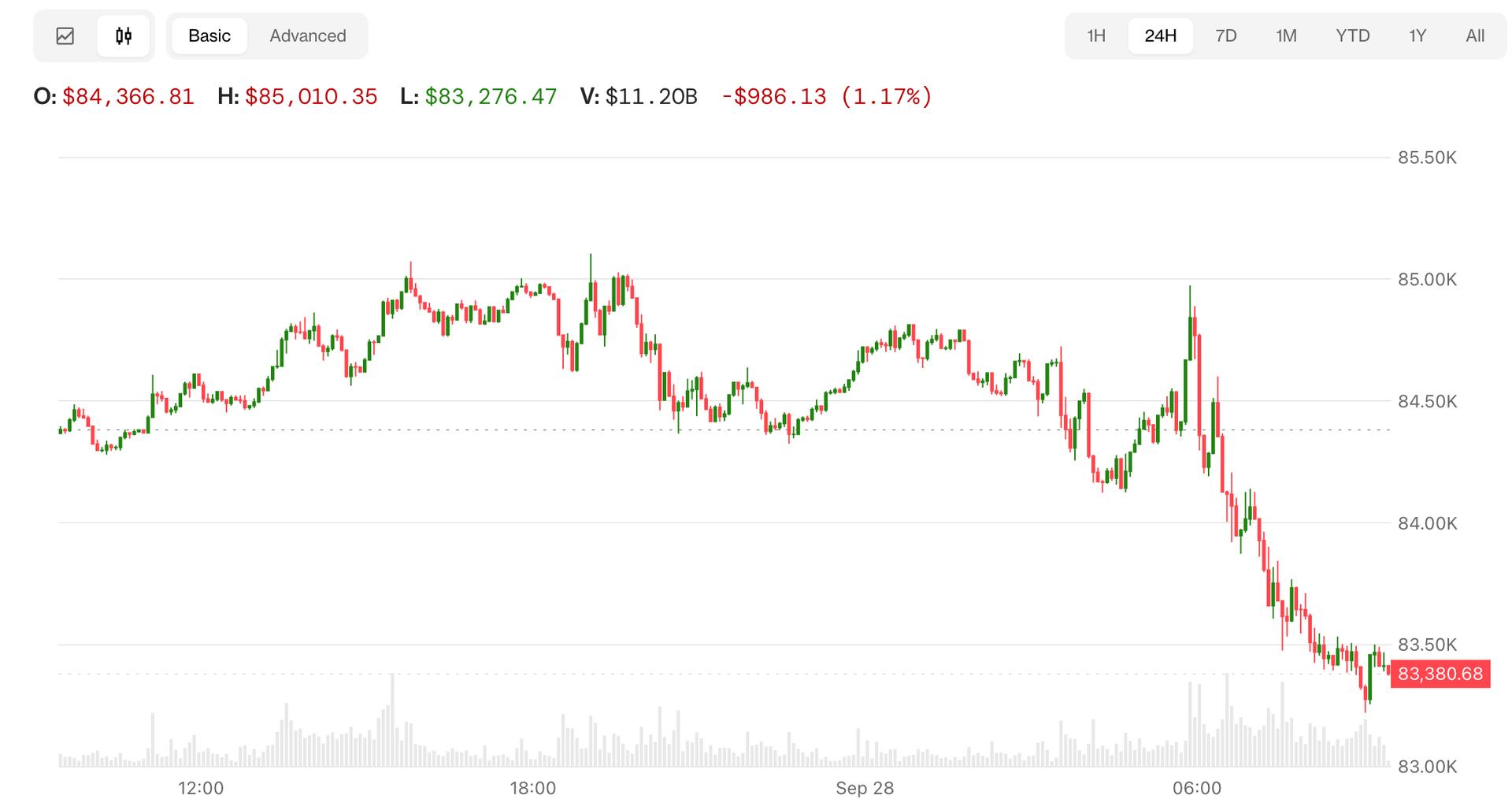
Bitcoin fell alongside broader market volatility on Sunday after President Trump signaled the possibility of additional military strikes against Iran before November's midterm elections. The cryptocurrency, which typically trades inversely to geopolitical risk escalation in equity markets, declined as investors rotated toward safe-haven assets and reduced exposure to volatile instruments.
Trump's comments created a two-sided market dynamic. His statement that the war "could end soon" offered a de-escalation signal that briefly supported risk assets. Simultaneously, his refusal to rule out further strikes introduced tail risk that prompted traders to lock in profits and cut leveraged positions. Bitcoin, which has increasingly correlated with equity indices and tech stocks this cycle, followed Nasdaq futures lower as uncertainty gripped institutional portfolios.
The timing matters for the crypto market. Midterm elections historically drive policy clarity and voter sentiment shifts. A major geopolitical event before November could reset market risk premiums, shift Federal Reserve policy expectations, and alter the trajectory of interest rates. Bitcoin and other risk assets benefit from lower rates and reduced inflation concerns. Military escalation typically does the opposite, tightening financial conditions and pushing capital toward government bonds and dollar strength.
Nasdaq futures declined sharply on the Iran headline, signaling that equity traders viewed Trump's threat as a material risk factor. Since 2020, Bitcoin has become more correlated with technology stocks and growth assets, losing some of its historical safe-haven premium. When equities sell off on geopolitical grounds, Bitcoin often follows rather than providing a hedge. The Sunday trading session reflected this dynamic precisely.
Trump's statement also created ambiguity around his administration's broader foreign policy direction. His claim that the war could end soon contradicted the willingness to launch new strikes, leaving markets unsure whether to price in escalation or resolution. This contradiction typically triggers volatility and forced liquidations in leveraged positions across crypto and equity markets.
The decline in both Bitcoin and Nasdaq futures underscores how sensitive crypto prices have become to macro events outside the blockchain space itself. A year ago, Bitcoin might have gained on geopolitical uncertainty as a store of value. Today, it declines alongside tech stocks as investors reassess portfolio risk in environments of policy uncertainty and potential military action.
Traders watching resistance and support levels should note that large geopolitical headlines can trigger cascading liquidations in crypto. Stop-loss orders cluster at round numbers, and forced selling by liquidated positions can amplify downside moves. Sunday's session demonstrated that crypto markets remain tightly wound to equity sentiment and headline risk.
What happens before the midterms will shape near-term price action. If Trump backs away from additional strikes, Bitcoin and equities could rebound quickly. If tensions escalate materially, expect sustained selling pressure as institutions reduce risk exposure heading into November.