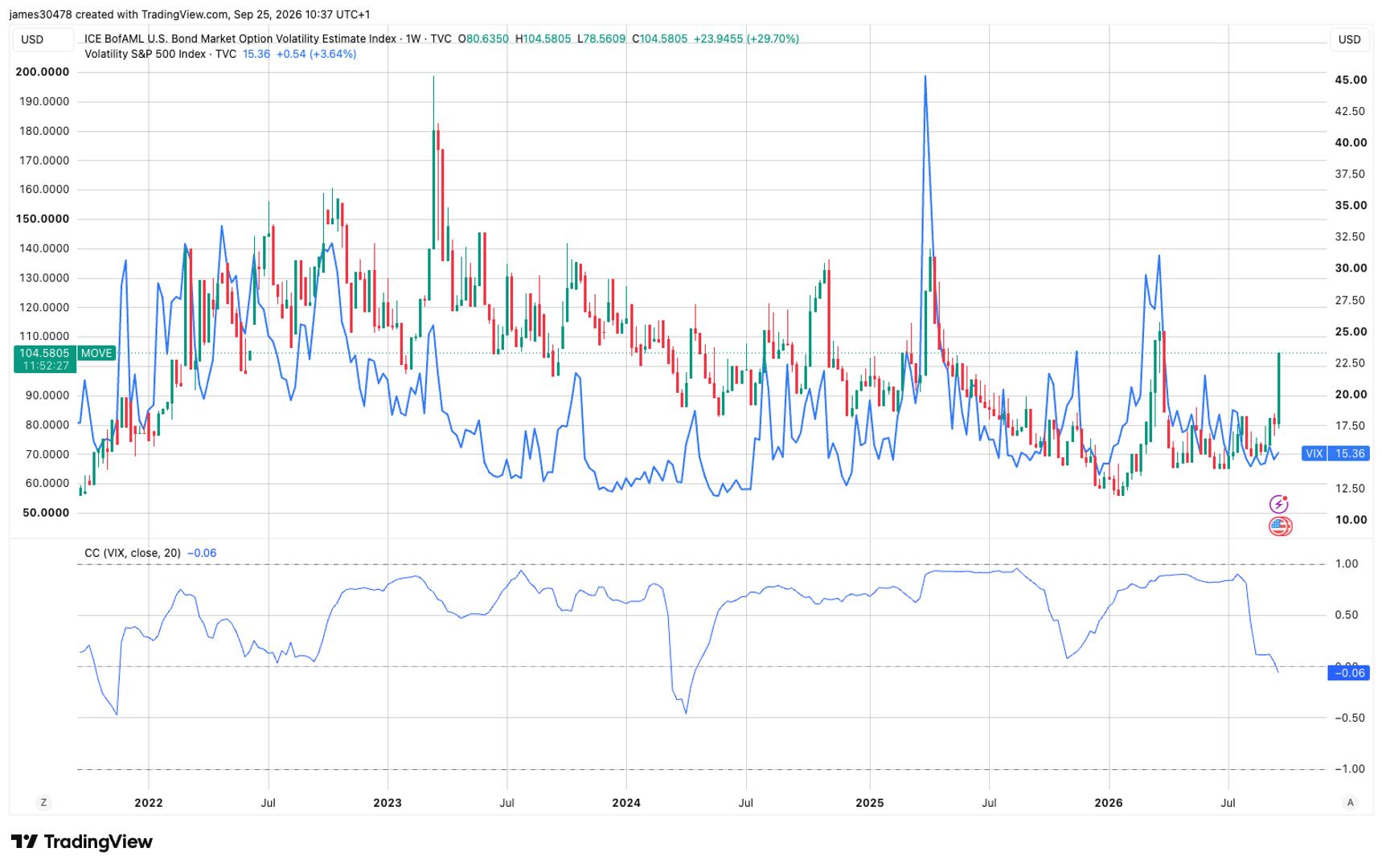
Bond markets are experiencing their most turbulent stretch since March, yet cryptocurrency traders and traditional equity investors appear largely unperturbed. The divergence reveals a fragmented risk landscape where traditional finance and digital assets are responding to entirely different signals.
The bond volatility spike reflects growing uncertainty around interest rate trajectories and inflation expectations. Treasury markets have absorbed recent economic data with heightened sensitivity, pushing volatility measures higher as investors recalibrate positioning. This turbulence typically precedes broader market stress, yet stocks and crypto have shrugged off the signal so far.
Bitcoin's volatility index, or BVIV, sits near yearly lows alongside the VIX, which measures S&P 500 implied volatility. This disconnect matters because historical precedent suggests bond volatility often leads equity and crypto volatility by weeks or months. When fixed income markets price in risk, risk assets typically follow. The fact that both traditional and crypto markets remain complacent despite bond turmoil suggests either exceptional confidence in current valuations or dangerous blindness to emerging stress.
The BVIV tracks 30-day implied volatility of bitcoin options. Its proximity to yearly lows indicates options traders expect minimal price swings ahead. Similar positioning in the VIX reflects equity traders' comfort with current stock levels. This synchronized calm across both asset classes masks what bond markets are telegraphing: something in the financial plumbing needs attention.
Several factors could explain the divergence. First, crypto traders may have tuned out traditional market signals entirely, operating on their own momentum narratives driven by Bitcoin halving cycles, exchange reserve flows, and on-chain metrics. The crypto ecosystem has matured enough to move independently from macro conditions for extended periods.
Second, equity investors may be anchored to the "Goldilocks" scenario where growth remains solid, inflation cools gradually, and central banks pause rate hikes. As long as that narrative holds, stock valuations appear reasonable. Bitcoin has increasingly correlated with risk-on sentiment and equity indices, so similar positioning makes sense within that framework.
Third, bond volatility may reflect technical rebalancing rather than fundamental repricing. Year-end portfolio adjustments and index rolls can temporarily spike volatility without signaling deeper stress.
However, bond markets have proven prescient during past market dislocations. The 2020 COVID crash saw Treasury volatility spike first. The 2022 crypto winter saw bond volatility elevated before crypto capitulated. Ignoring what bonds are signaling now carries real risk.
For bitcoin specifically, the low BVIV reading suggests limited tail risk priced into options markets. This means either traders expect consolidation or they're underestimating volatility that bonds already sense. The former represents complacency. The latter represents mispricing.
Wall Street's extended calm deserves scrutiny. When bond volatility rises sharply while equity and crypto volatility remain suppressed, historical patterns suggest the suppression won't last. The question becomes timing. Will traditional assets catch up to bond repricing gradually or sharply.
Traders in both crypto and equities should monitor this divergence closely. Bond markets don't always speak truth, but when they shout, the cost of ignoring them compounds quickly.