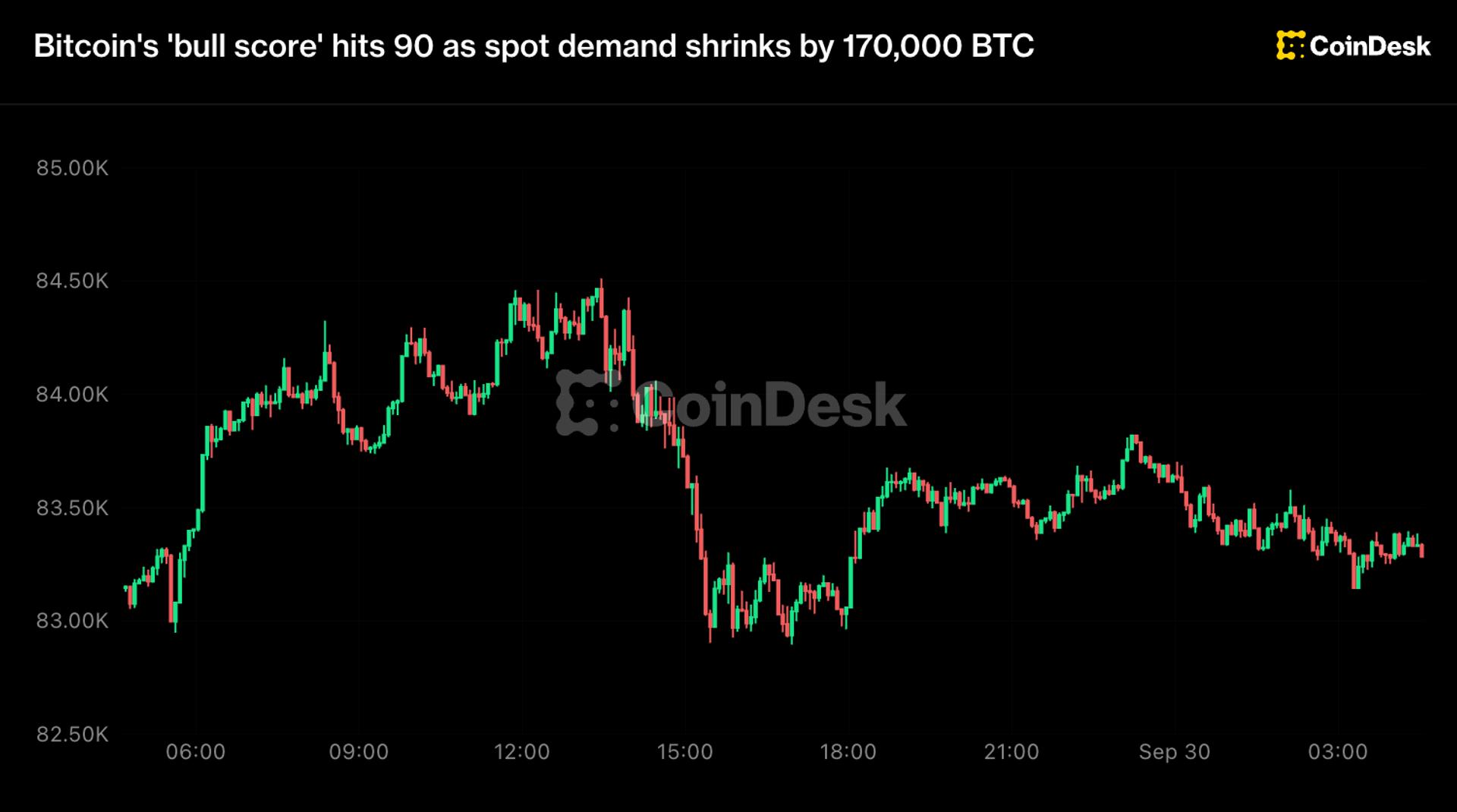
Bitcoin's explosive rally that pushed prices to an eight-month high is losing momentum, even as technical indicators suggest the market remains in bullish territory. CryptoQuant's "bull score" gauge has climbed near its upper limit, but actual buying pressure is already retreating. This divergence between what sentiment metrics show and what traders are actually doing reveals cracks in the current rally.
The bull score tracks onchain metrics to determine overall market health. When this gauge approaches its ceiling, historically it signals either a trend reversal or consolidation period. CryptoQuant data shows the metric sitting near maximum levels, but the composition of buyers has shifted. Retail accumulation has slowed. Whale movements have grown cautious. The institutions that helped propel prices higher are taking profits.
Bitcoin reached its eight-month peak recently, driven by institutional inflows and favorable macroeconomic conditions. The token benefited from expectations around potential Bitcoin spot ETF approvals and broader risk-on sentiment in markets. But velocity matters in crypto rallies. When buyers exhaust themselves before a gauge reaches its absolute ceiling, the pullback often accelerates.
CryptoQuant's framework examines multiple signals: transaction patterns, exchange inflows and outflows, holder accumulation rates, and volatility metrics. Each component feeds into the composite bull score. A score near maximum doesn't automatically trigger a crash. Instead, it signals the rally has likely exhausted its easy gains. Fresh buyers become scarce. Existing holders face pressure to decide. Lock in profits or hold for further upside.
Price action this week reflected this dynamic. Bitcoin traded sideways while the bull score lingered in overbought territory. This combination typically precedes either a 5-10% correction or a multi-week consolidation before the next leg higher. Traders familiar with this pattern started reducing leverage positions and trimming holdings.
The pullback in buyers matters more than the bull score itself. Onchain analysis shows fewer large transactions moving Bitcoin from exchanges to cold storage wallets. Exchange reserve levels, which typically drop during bullish phases, have stabilized. This suggests accumulation has paused. Profit-taking has commenced. The narrative shifted from "institutions are buying" to "who's left to buy."
Smaller traders and retail participants typically lag institutional moves by weeks or months. When whales and funds slow their purchases, retail enthusiasm eventually follows. The current pattern shows exactly that sequence unfolding.
What happens next depends on macro conditions and whether Bitcoin can find support above key technical levels. A dip to $42,000-$43,000 would test the 200-day moving average and remaining buyer interest. If that level holds, consolidation could last several weeks before a secondary rally. If it breaks, weakness could extend toward $40,000.
The bull score reaching maximum capacity while buying pressure fades represents a classic top-formation setup. Not a crash necessarily. Rather, a warning that the easy money has been made. Traders who rode the rally from $39,000 to $45,000 face a choice. Protect gains or wait for confirmation that buying pressure has truly dried up. CryptoQuant's metrics suggest the latter has already begun.