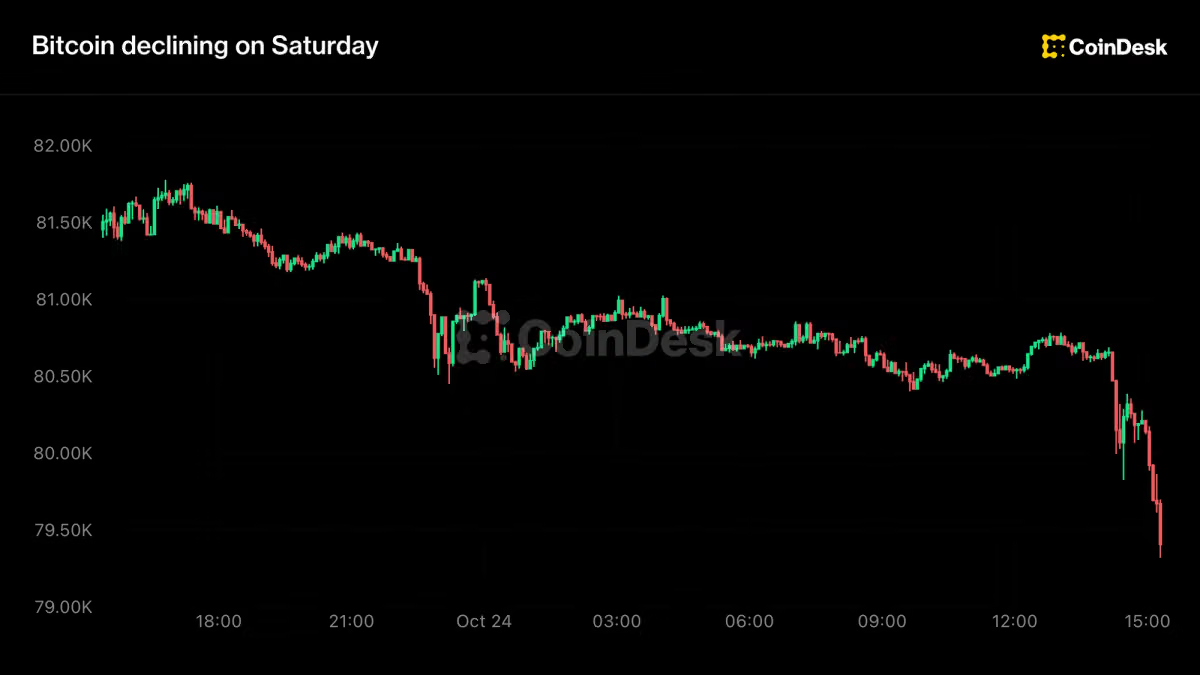
Bitcoin collapsed below the $80,000 mark over the weekend, marking its weakest position in over a month as geopolitical tensions mounted around U.S. Middle East operations and evacuations.
The world's largest cryptocurrency traded at $79,500 at its lowest point during weekend trading, wiping out weeks of gains built during the post-election rally that followed Donald Trump's U.S. presidential victory in November. The pullback reflects a broader risk-off sentiment gripping markets as investors reassess exposure to assets tied to geopolitical stability.
The sell-off aligns with elevated tensions surrounding American military presence and evacuation operations in the Middle East. These developments trigger flight-to-safety behavior among institutional and retail traders alike, pulling capital from higher-risk assets like crypto toward government bonds and traditional safe havens. Bitcoin typically experiences downward pressure during periods of geopolitical uncertainty, as uncertainty reduces appetite for volatile, non-yielding assets.
The $80,000 level had served as critical support for Bitcoin throughout late 2024 and into early 2025. Breaking below this threshold signals weakening technical support and potentially unlocks further selling pressure if the broader geopolitical situation deteriorates. Weekend trading volumes spike during geopolitical events, often creating conditions for rapid price movements with thinner liquidity.
Bitcoin's recent trajectory tracks closely with macro risk sentiment. After climbing toward $100,000 following Trump's election victory, the cryptocurrency retreated as markets digested expectations around tariff policy, Fed rate decisions, and global trade dynamics. The current pullback represents a test of conviction among holders who positioned for higher prices based on pro-crypto policy signals from the incoming administration.
Altcoins suffered worse losses than Bitcoin during the weekend move, with Ethereum and smaller-cap tokens declining 5-8% as risk-off conditions spread across digital assets. This pattern reflects how geopolitical events quickly reset portfolio positioning, forcing systematic deleveraging across the sector.
The weekend move also highlights liquidity constraints in crypto markets relative to traditional markets. Bitcoin's $80,000 breakdown occurred on relatively light volume compared to weekday trading, suggesting that relatively modest selling pressure triggered cascading liquidations in leveraged positions. Perpetual futures exchanges showed increased liquidation volume, indicating overleveraged traders received margin calls as prices fell.
Recovery from this level depends on either stabilization in geopolitical tensions or a broader market reset that restores risk appetite. Bitcoin historically rebounds sharply once geopolitical headlines fade from focus, assuming no fundamental shifts in macro policy occur. Traders will watch for confirmation that Middle East tensions stabilize before committing fresh capital to re-entry positions.
The $80,000 level now functions as a flashpoint for technical traders. A sustained break below this support could accelerate selling toward $75,000 or lower, while a recovery back above $82,000 would suggest the weekend decline represents a temporary shake-out rather than a trend reversal. Current market structure suggests heightened volatility persists until geopolitical clarity emerges.