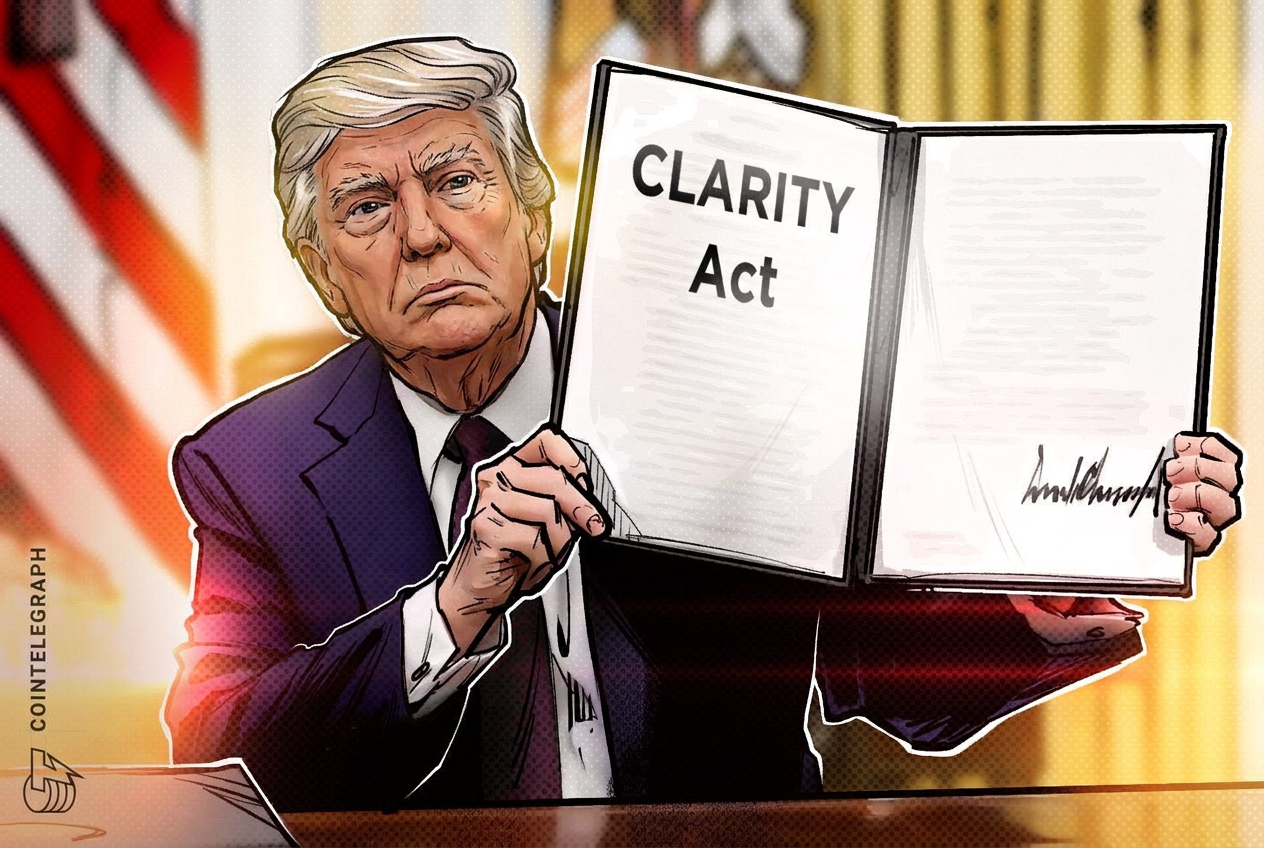
Donald Trump called on the Senate to pass the CLARITY Act, a crypto market structure bill, during a Wednesday White House address. The push came alongside crypto industry leaders backing the legislation.
Trump framed the bill as essential to keeping the United States ahead of China in digital assets and blockchain development. The CLARITY Act aims to establish clearer regulatory frameworks for cryptocurrency trading and custody, addressing jurisdictional gaps between the SEC and CFTC that have hampered institutional adoption.
The bill's passage would define which tokens qualify as securities versus commodities, a distinction that has created legal uncertainty for exchanges and projects operating in U.S. markets. The legislation also proposes clearer guidelines for custody standards and market surveillance requirements.
Trump's involvement marks a shift in the administration's crypto stance. Earlier regulatory tension between the industry and federal agencies has given way to direct executive support for legislative clarity. Industry figures including major exchange operators and blockchain developers have publicly endorsed the CLARITY Act as a necessary step toward competitive U.S. crypto infrastructure.
Senate passage faces timing pressures before the current legislative session concludes. Supporters argue speed matters given global competition. China's central bank digital currency programs and crypto regulations have moved faster than U.S. policy, they contend, creating competitive disadvantages for American blockchain innovation.
The CLARITY Act balances industry requests for regulatory certainty against consumer protection concerns. It maintains existing anti-fraud provisions while streamlining application pathways for compliant exchanges. Stablecoin issuers would face new disclosure requirements under the proposal.
Crypto leaders present at the White House event emphasized that regulatory clarity attracts institutional capital and drives talent to U.S.-based projects rather than offshore alternatives. Passage would reshape how tokens trade domestically and signal regulatory maturity to international investors.
The bill's advancement depends on Senate floor priorities and potential amendment negotiations. Both parties have expressed measured support, though debates over consumer saf