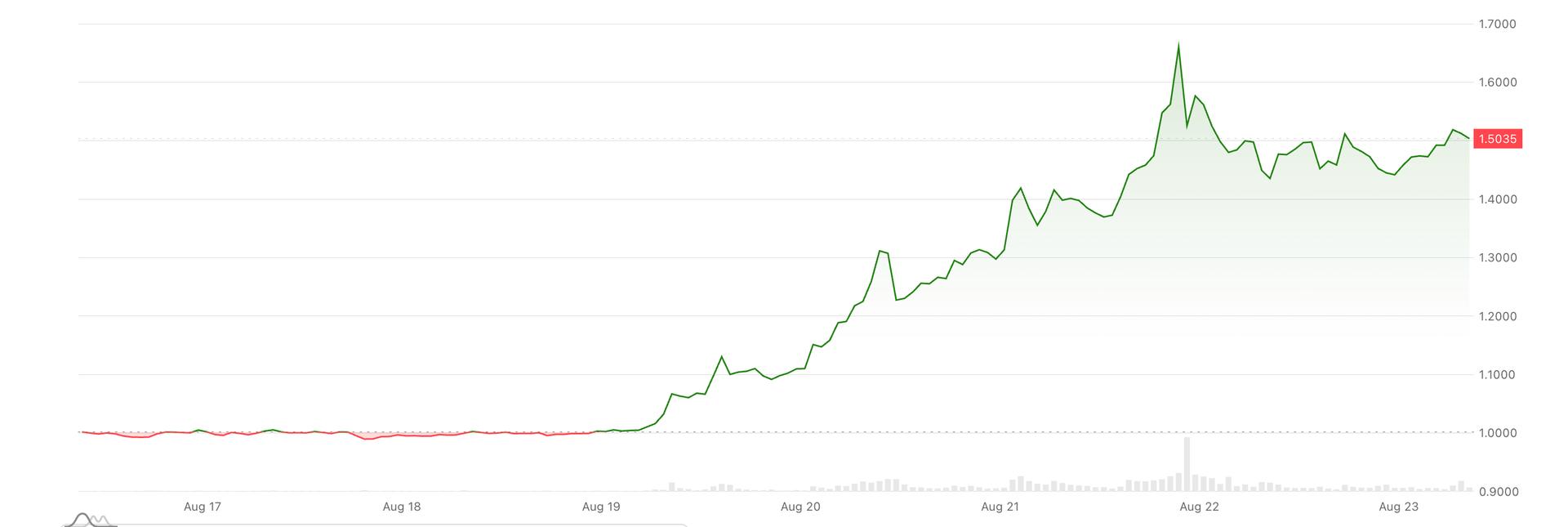
XRP rallied 50% this week, marking its strongest seven-day performance since November 2024, as traders bet on supply-side mechanics and renewed momentum in the Ripple ecosystem.
The token climbed from around $2 to over $3, driven by a combination of technical strength and narrative shifts within the XRP community. The surge reflects growing retail interest and institutional positioning ahead of what analysts view as a pivotal period for the asset class broadly.
The rally centers on two dynamics. First, talk of Treasury-style buyback mechanisms has circulated through XRP communities, with some traders invoking "curve control" language typically associated with central bank monetary policy. This framing suggests Ripple could engineer supply reductions or price stabilization through strategic token purchases or burns, similar to how governments manage yield curves.
Second, XRP benefits from broader momentum in the altcoin complex. Bitcoin's strength has lifted the entire sector, but XRP's outperformance suggests specific catalysts. The token's use case in cross-border payments through Ripple's RippleNet corridors remains its fundamental narrative, though adoption metrics have plateaued in recent years.
Ripple itself has faced regulatory headwinds. The company settled its SEC lawsuit in 2023, paying $125 million, but avoided admitting XRP qualified as a security. That clarity improved sentiment around the token, though institutional adoption remains limited compared to hype cycles in 2017 and 2021.
The buyback narrative carries risk. Ripple controls a significant portion of XRP supply through escrow arrangements. If the company signals active purchasing or burning, it could temporarily juice price momentum. However, supply management doesn't address fundamental adoption gaps or network activity metrics. XRP transaction volume remains flat compared to Bitcoin or Ethereum.
Technical traders point to XRP breaking above key resistance levels around $2.70, which unlocked algorithmic buying and triggered stop-losses on short positions. This created a feedback loop that accelerated the move higher. Weekly closes above $3 would confirm the breakout and likely attract momentum fund inflows.
The "curve control" framing is novel but speculative. It borrows language from monetary policy to suggest Ripple could stabilize or support XRP's price through selective market operations. No formal announcement has materialized. If Ripple did commit to buybacks or burns, it would signal management confidence in the token's long-term value, similar to corporate share repurchases. The tax and accounting implications for Ripple remain unclear.
Historically, XRP rallies tend to correlate with broader crypto momentum and retail FOMO rather than genuine adoption improvements. The November 2024 peak preceded a decline, suggesting this week's gains lack fundamental ballast. Traders should monitor whether XRP sustains above $3 or retreats toward $2.50 resistance.
The next catalyst likely depends on Ripple announcements or regulatory developments. Partnership expansions in emerging markets could renew the cross-border payments narrative. Conversely, further SEC scrutiny or delayed adoption metrics could deflate enthusiasm quickly. For now, XRP trades on momentum and supply-side positioning rather than network fundamentals.