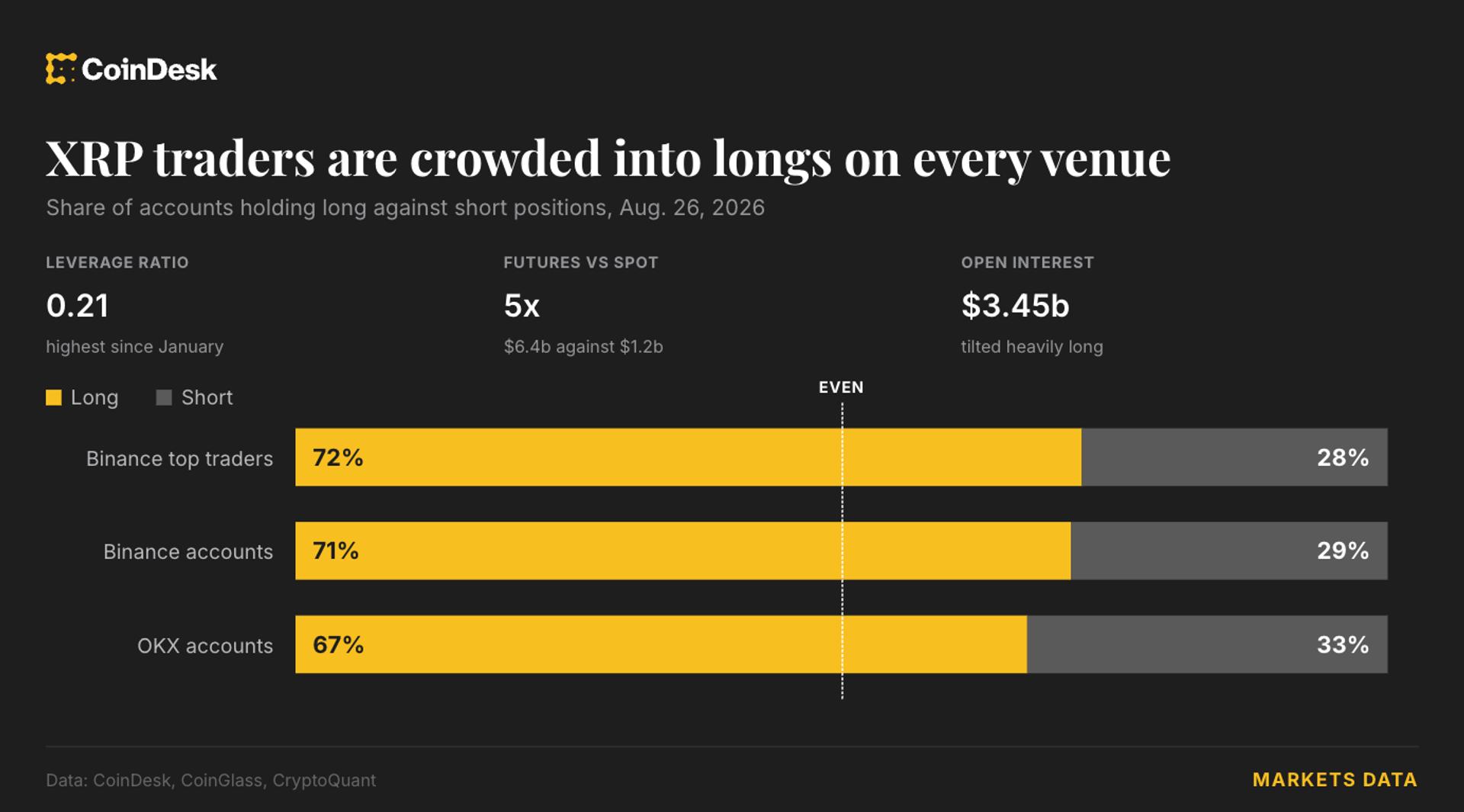
XRP's explosive 44% rally has triggered a flood of leveraged trading, with data from CryptoQuant revealing the token's estimated leverage ratio on Binance hit levels unseen since January. The imbalance between long and short positions has grown pronounced as futures volume exploded to more than five times the level of spot trading activity.
The spike in leverage exposes XRP to liquidation cascades if momentum reverses. When leverage ratios climb this steeply, price movements that would normally be absorbed by the market become triggers for forced selling. Long positions get wiped out at key support levels, which then triggers stop-losses on other leveraged accounts, creating a waterfall effect downward.
CryptoQuant's data cuts through the noise of social media hype. The leverage ratio measures the aggregate borrowed funds in leveraged positions relative to the total value of collateral deposited. When that number spikes, it signals traders have become aggressive and overleveraged. A single catalyst for bearish sentiment can spiral into a mass liquidation event.
The futures-to-spot volume ratio tells a companion story. When futures volume runs five times higher than spot trading, it indicates traders care more about directional bets than actual price discovery. Spot trading reflects real buying and selling of the asset. Futures reflect leverage and speculation. XRP's ratio suggests the recent rally has been powered by margin traders, not organic demand from institutions or users actually moving tokens.
This matters because XRP needs sustainable inflows to maintain higher prices. If the 44% rally rests entirely on leverage-driven futures positions, the structure remains fragile. A single liquidation event on margin positions could trigger the unwind that erases weeks of gains in days or even hours.
Ripple's XRP token has proven volatile when leverage cycles turn. Previous rallies fueled by margin trading have reversed sharply when institutional or whale sellers emerged. The January leverage peak CryptoQuant references likely preceded a pullback, making the current reading a warning sign rather than a bullish indicator.
The risk compounds because leverage amplifies both gains and losses. A trader buying XRP spot at 100x leverage sees their $100 position control $10,000 worth of XRP. A 1% move in XRP's price swings that position by $100, a 100% return or total loss. When thousands of traders stack leverage at similar price levels, the liquidation price becomes a magnet. Algorithms programmed to trigger stop-losses at certain price points turn that magnet into a wrecking ball.
For traders riding the rally, the question becomes whether XRP's fundamentals justify higher prices or whether the move reflects pure leverage. Ripple's partnerships with banks and payment corridors provide real use cases, but those developments move slowly. A 44% price move in weeks rarely aligns with changes in network activity or adoption.
Smart traders who accumulated XRP before the rally started should consider taking profits. The leverage data suggests risk-reward has shifted from favorable to dangerous. New entrants chasing the momentum face a different calculus entirely. They arrive late in a cycle where most gains sit behind them and most losses sit ahead.