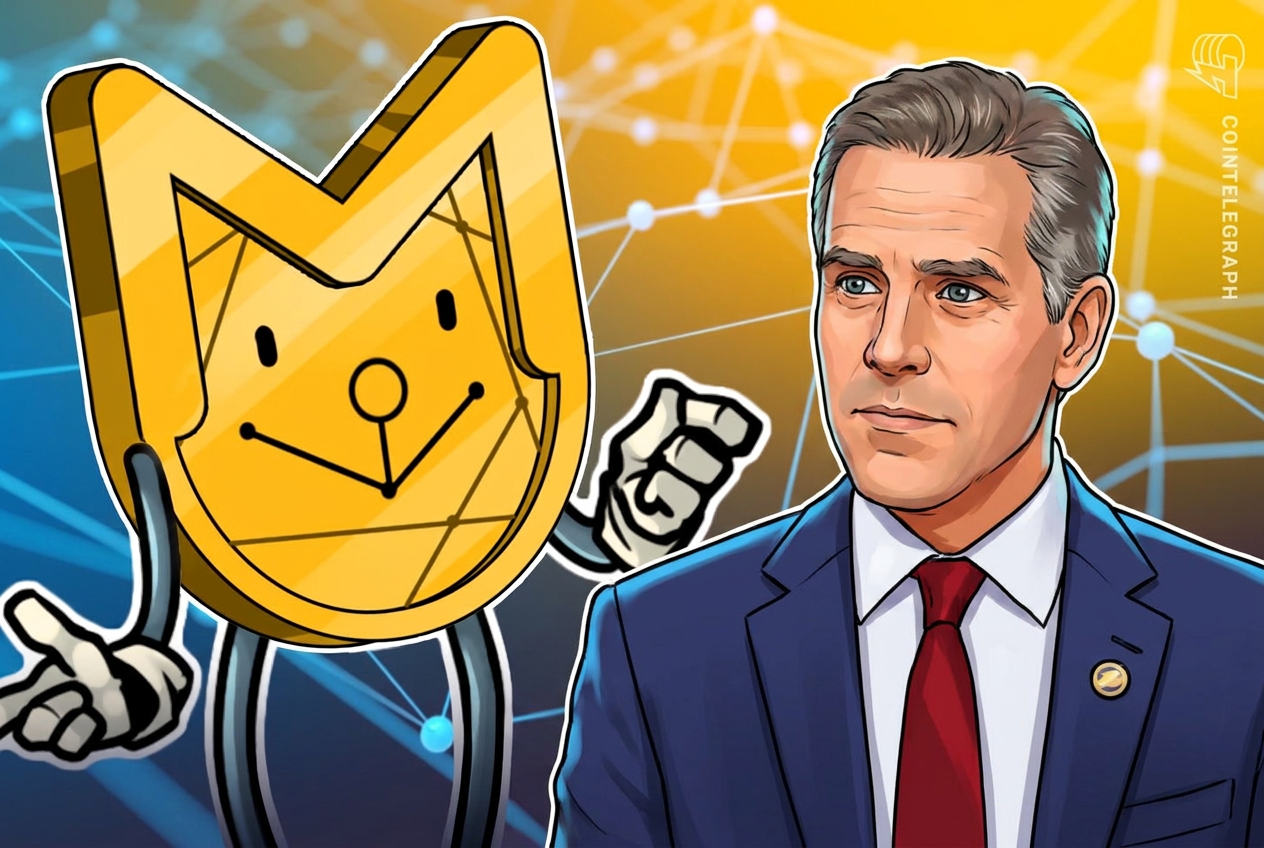
Hunter Biden is launching a memecoin called LAPTOP and plans to distribute 200 million tokens across three recipient groups: Substack subscribers, mailing list members, and holders of Trump's memecoin, according to reporting from the Wall Street Journal.
The distribution strategy reveals a deliberate cross-pollination approach to bootstrap liquidity and awareness. By airdropping tokens to Trump memecoin holders, Biden gains access to an established and engaged community. Trump's memecoin has become a significant cultural and financial asset within crypto circles since its launch, commanding real trading volume and holder loyalty. Redirecting that attention toward a competing token tied to Biden's son represents a calculated play in the increasingly absurd landscape of political memecoins.
Substack and mailing list distribution suggests Biden intends to leverage his existing digital audience. The Substack platform has become a stronghold for independent creators and newsletter writers, many operating outside traditional media gatekeeping. This channel provides direct access to engaged readers already primed to receive crypto-related information.
The LAPTOP token name carries obvious symbolic weight. It references the controversial laptop seized during investigations into Hunter Biden in 2020, making the memecoin itself a statement about that narrative. The branding transforms a political liability into a trading asset, which characterizes how memecoins function in crypto culture. They operate as cultural artifacts first and financial instruments second.
The timing matters. Crypto adoption continues climbing among retail participants unfamiliar with traditional market mechanics. Memecoins like DOGE, SHIB, and more recently Trump's offering have demonstrated that tokens attached to recognizable names and narratives can attract substantial trading activity regardless of fundamental utility. These tokens function as social experiments that test how far brand recognition and cultural momentum can drive price action.
Hunter Biden's entry into memecoin territory follows a broader trend of public figures monetizing their personal brand through tokenization. The distinction here involves direct political positioning. A Biden memecoin operating simultaneously with Trump's memecoin transforms crypto into another arena where American political polarization plays out in real time.
The regulatory environment remains unclear. Memecoins exist in a gray zone relative to securities law. The SEC has taken inconsistent positions on whether tokens constitute securities requiring registration. A high-profile memecoin launch by someone connected to the Biden administration could invite regulatory scrutiny, particularly if the distribution appears structured as an unregistered securities offering.
Token airdrop mechanics carry inherent volatility. Early holders typically dump tokens immediately after distribution, creating sell pressure that can crater prices. LAPTOP's three-tier distribution across different audience segments means timing mismatches in when recipients claim and trade tokens.
The memecoin space has evolved from pure novelty into a legitimate market segment with billions in aggregate value. Political memecoins now function as direct expressions of partisan preference. Holders engage in token speculation while signaling their political identity simultaneously. This dual utility explains why Trump's memecoin generated massive trading volume despite lacking any technological innovation or use case beyond cultural positioning.
Hunter Biden's LAPTOP token enters a crowded field. Success depends on whether distribution to Trump holders drives genuine adoption or simply creates arbitrage opportunities that dissipate quickly. The cross-political airdrops suggest mutual recognition that both communities operate within the same speculative ecosystem, despite opposing partisan interests.