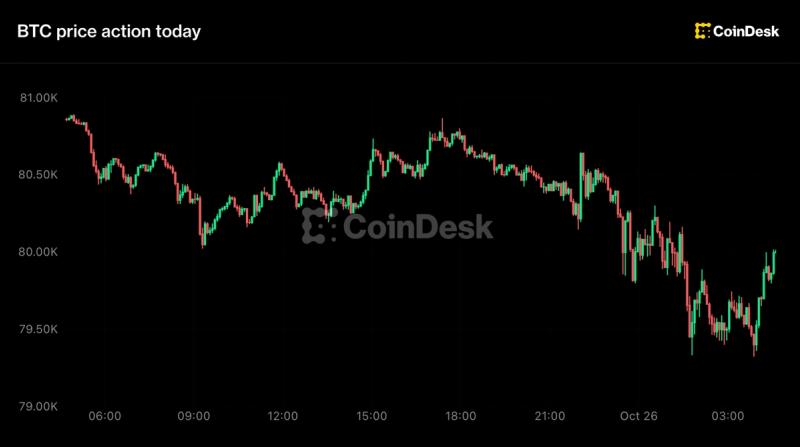
Bitcoin dropped below the $80,000 level on Wednesday as traders reduced exposure across crypto markets ahead of the Federal Reserve's policy meeting. The pullback reflects broader risk-off sentiment spreading through digital assets as investors braced for potential rate decisions that could reshape liquidity conditions.
Ethereum and XRP absorbed the heaviest selling pressure among major cryptocurrencies. Ether's decline extended recent weakness in crypto markets, while XRP's losses tracked broader altcoin volatility. The twin momentum reversals signal traders are unwinding positions ahead of Fed communications, a pattern that has repeated multiple times this year as rate expectations shifted.
The de-risking pattern appeared coordinated across regions. Goldman Sachs cut its Kospi target by 25 percent, signaling reduced risk appetite for growth-oriented assets in Asia. Tech stocks and high-beta plays typically lead crypto declines during periods of Fed uncertainty because both asset classes benefit from low rates and expand when tightening expectations ease. Conversely, when rate hikes loom or rates remain "higher for longer," capital rotates toward safer instruments.
Traders responded by cutting leveraged long positions and taking profits on recent rallies. Bitcoin's slide below $80,000 reversed some of the momentum built over the past month. The $80,000 level has functioned as technical resistance and psychological support since late 2024, making breaks in either direction closely watched by algorithmic traders and funds managing systematic exposure.
The AI trade absorbed particular pressure in Asian sessions, extending a correction that began earlier this week. Mega-cap technology names that powered 2024 performance faced profit-taking as valuations stretched relative to earnings. Crypto markets often amplify tech sector moves because many investors view Bitcoin and Ethereum as high-risk, growth-oriented alternatives to traditional equities. When growth narratives falter, both complex capital redirects toward bonds and cash.
Fed meeting timelines create predictable volatility patterns in crypto. Traders typically reduce leverage ahead of policy announcements because central bank communications introduce tail risk that options markets price in at elevated levels. The cost of hedging positions spikes, making outright long exposure less attractive relative to cash-and-carry strategies. Once the Fed delivers guidance, either a rally emerges or sellers dominate depending on whether the outcome proved more or less dovish than priced in.
Bitcoin's sub-$80,000 level triggered stop-losses held by trend-following traders, amplifying downward momentum. Ether weakness suggested broad-based deleveraging rather than a flight to Bitcoin as a safe haven. When Bitcoin holds up better than altcoins during drawdowns, it signals capital consolidation around the leading asset. Wednesday's pattern reversed that dynamic, indicating traders exited risk positions entirely rather than rotating through the capital structure.
The timing matters because Fed meetings historically deliver outsized volatility for unhedged crypto positions. Institutional players holding large derivative exposures reduced risk by selling spot or closing leveraged longs. Retail traders likely followed larger players in cutting exposure, creating cascade effects as technical levels broke.
Traders now await Fed communication to determine whether the current pullback marks a capitulation washout or the start of a deeper correction. Bitcoin typically retraces 5-10 percent ahead of major monetary policy events, with reversal strength varying based on whether the Fed delivers hawkish surprises or market expectations hold.