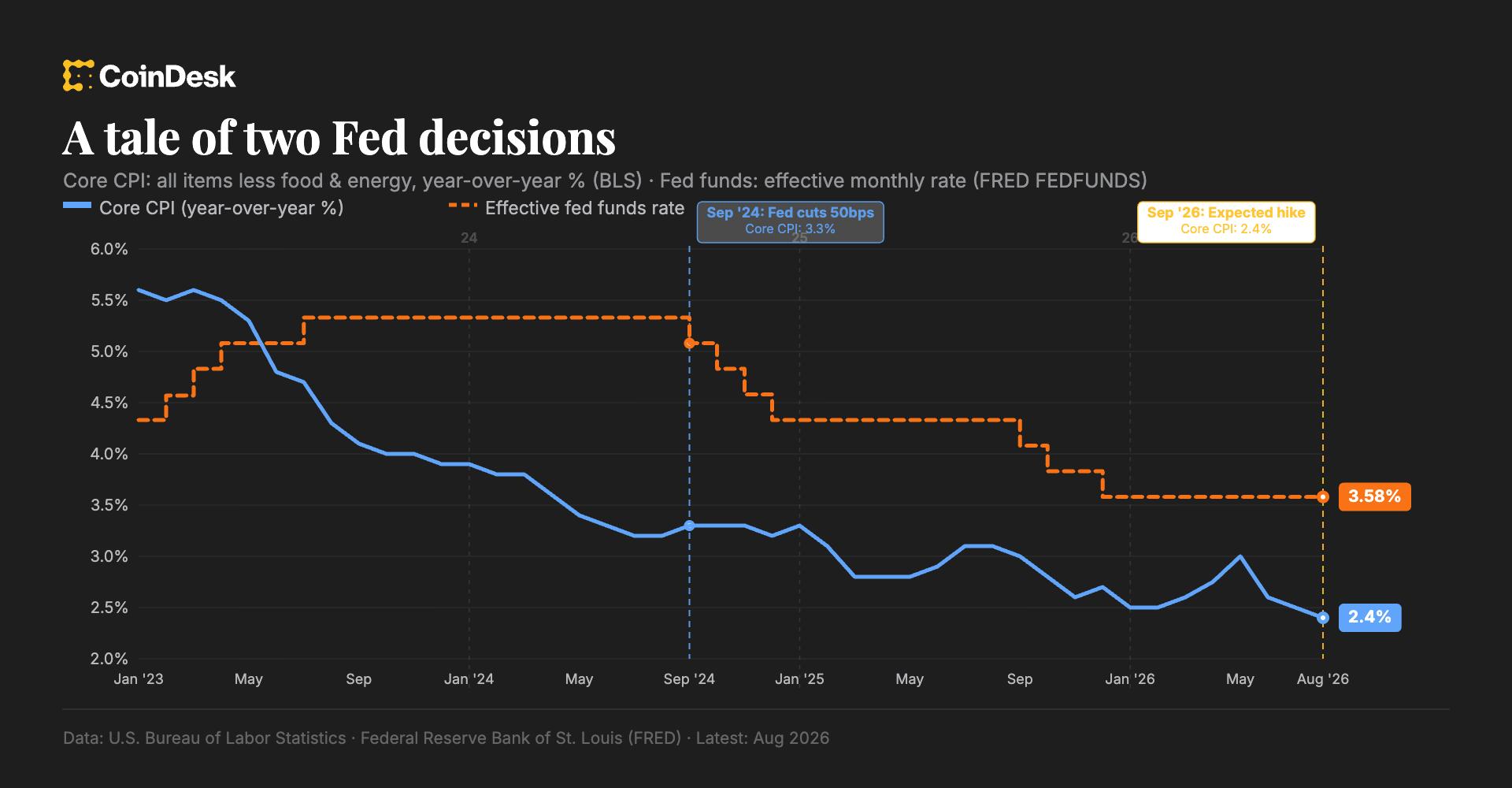
Goldman Sachs joined other major financial institutions Friday in reversing its prediction that the Federal Reserve would hold rates steady at next week's meeting. The investment bank now expects the Fed to raise rates, abandoning its previous forecast of a pause in the central bank's tightening cycle.
This reversal matters because Goldman Sachs had been one of the more dovish voices among Wall Street's heavyweight forecasters. When the bank flips, it signals a shift in consensus thinking about where the Fed heads next. The move also underscores growing conviction that rate hikes will continue despite inflation cooling from its 2022 peaks.
The timing is notable. Goldman made this call late Friday, after markets had closed, suggesting the bank wanted minimal spotlight on the reversal. The move brings Goldman in line with other major institutions that had already shifted their expectations toward another rate hike. This convergence of forecasts typically precedes Fed action, as banks position themselves based on private conversations with policymakers and their own economic models.
According to the article's headline framing, the economist quoted views this rate hike as a Wall Street-driven decision rather than an inflation-fighting necessity. This perspective gains traction as inflation data has cooled considerably from its recent highs. If the Fed raises rates despite moderating price pressure, it suggests the central bank is responding to other pressures. Wall Street's concerns about financial conditions, asset valuations, and employment figures could be driving the decision instead.
The shift in Goldman's forecast follows months of debate about whether the Fed would pivot to rate cuts or continue hiking. Markets had begun pricing in a pause, but fresh economic data and banking sector stress earlier in 2023 changed calculations. Goldman's reversal confirms the Fed remains committed to tightening, at least through the near term.
This development carries indirect implications for cryptocurrency markets. When the Fed raises rates, it typically pressures risk assets including crypto. Higher borrowing costs reduce the appeal of speculative investments, and liquidity tightens across markets. Bitcoin and other digital assets have shown sensitivity to Fed policy shifts throughout this cycle.
The broader economic narrative here centers on Fed independence versus market dynamics. If rate decisions genuinely respond to Wall Street preferences rather than inflation metrics, it raises questions about central bank credibility and policy consistency. Markets will watch the Fed's communication closely at next week's meeting to understand whether another hike is truly warranted or simply reflects financial sector pressure.
Goldman's late-day forecast change demonstrates how quickly consensus can shift on major policy questions. When the most influential voices on Wall Street align, they carry weight with policymakers and shape market behavior. This alignment now points toward continued Fed tightening, potentially restraining asset prices across traditional and digital markets in the weeks ahead.